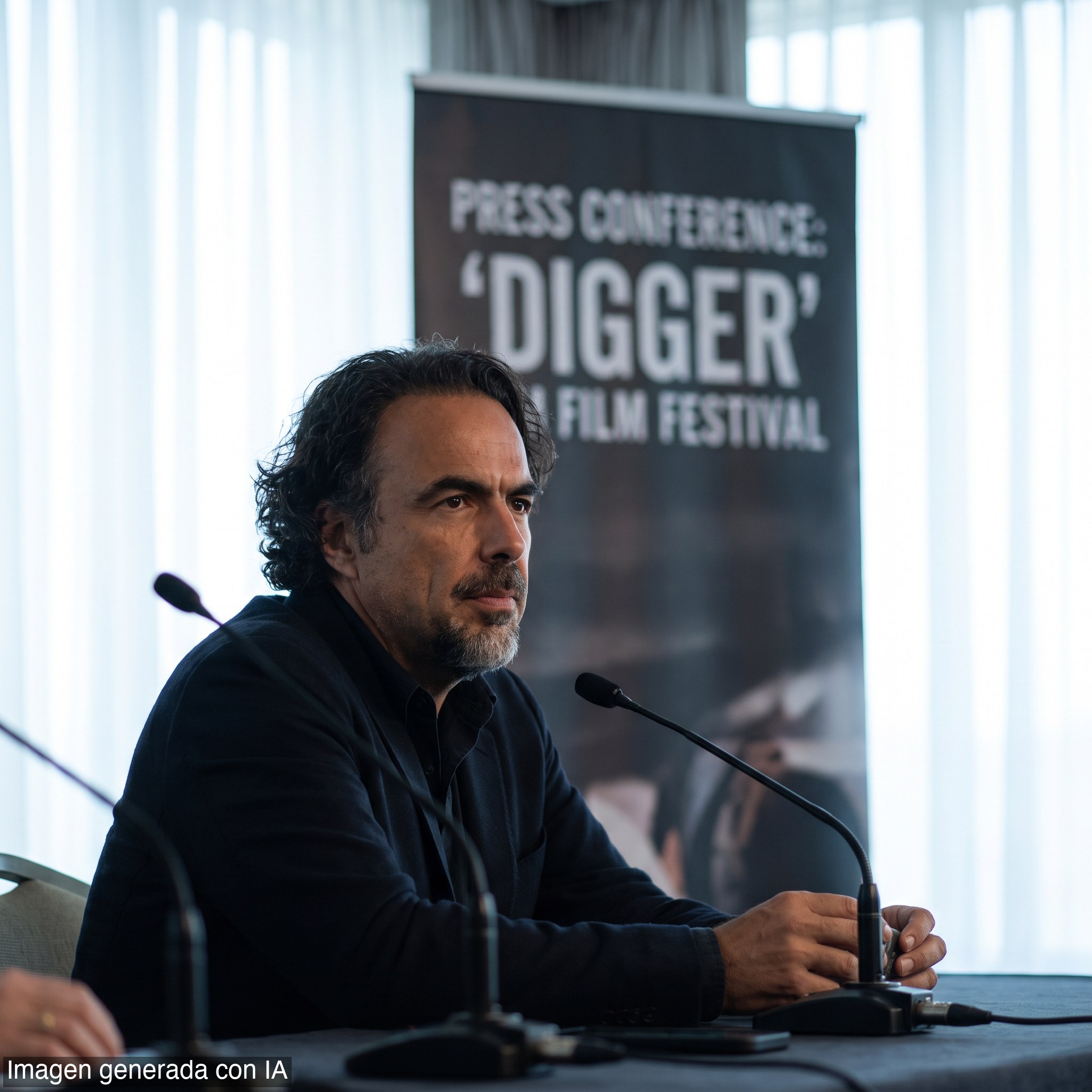
Alejandro González Iñárritu's new film 'Digger' opened with a brutal math problem: $8 million in its first weekend against a reported $180 million budget.
The climate-change satire stars Tom Cruise, John Goodman, Riz Ahmed, Sandra Hüller, Michael Stuhlbarg, Jesse Plemons, and Emma D'Arcy. It is projected to bring in only $50 million worldwide by the end of its theatrical run. That would make it Cruise's lowest opening weekend in 19 years.
Critics also came out swinging. The Hollywood Reporter called the film 'so meta that you watch in excruciating weariness as it disappears up its own ass.' IndieWire said it was 'so detached from human truth that its most believable character is a one-eyed animatronic cat.' 'Digger' currently holds a 53% critic rating on Rotten Tomatoes, the lowest for Iñárritu and the lowest for Cruise in close to a decade.
Not everyone hated it. Anne Hathaway, Mandy Patinkin, Jane Fonda, and Guillermo del Toro posted positive reactions after the opening. Del Toro wrote on X, 'Love the arts FUCK the charts.'
Iñárritu said the idea started after 'The Revenant,' when he and his writing partner Sabina Berman struggled with dramatic weather changes while shooting in Canada. He said, 'A one-degree difference in the climate, people don't understand what that means.' He also said the Arctic was melting and that powerful people were excited because receding ice would create more channels to transport more materials.
The movie's structure is intentionally layered. It begins as a story about oil tycoon Digger Rockwell, then reveals that Rockwell is being played by actor Curtis Markson in a stage production called 'Fossil Fools.' At the end, the play is revealed to be based on actual events, including an environmental catastrophe caused by an exploded well.
Iñárritu said the scariest part was not the climate catastrophe on screen. 'The acting tone was the most scary part for me,' he said. 'Tone, you cannot write — you have to feel it and hear it.'
For founders, the playbook is simple: big ideas do not rescue weak execution. A project can have a famous name, a huge cast, and an ambitious thesis, and still run into the hardest part of the business — making the work land with customers. In this case, the customers were moviegoers, and the early verdict was unforgiving.
The deeper lesson is about incentives. If the story, the tone, and the market do not line up, the budget becomes a liability instead of a moat. The math is simple: scale does not fix product-market fit.


