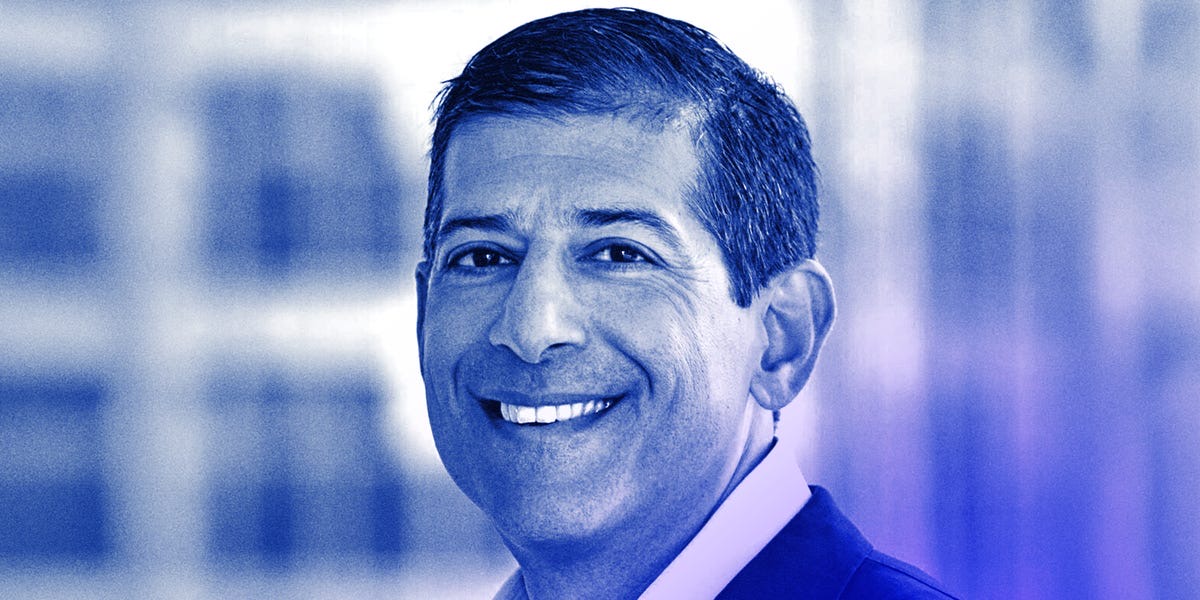
Here's the playbook behind one of the most important operators in hedge funds, a man who has never traded and rarely meets backers.
Ajay Nagpal, president and chief operating officer of the $95 billion Millennium Management, has spent 13 years turning an industry built on star traders and billionaire founders into an organization designed to outlast them. When he joined in mid-2013, the New York firm managed less than $20 billion. Today it manages five times that and trades across countless asset classes from more than 140 outposts worldwide.
The firm has now raised $22 billion in fresh capital, more than it managed when Nagpal arrived. That matters because many of Millennium's peers are closed to new money, including Balyasny Asset Management. Taking in that much cash in choppy markets, while competing fiercely for investing talent, is a test of whether the infrastructure can carry the weight.
His background explains the approach. Nagpal spent 16 years in banking, and after the 2008 financial crisis he adapted quickly at Barclays, which had acquired Lehman Brothers out of bankruptcy. He focused the bank's prime brokerage on multistrategy hedge funds like Millennium, the kind of clients that banks could no longer serve with the same risk appetite. Millennium was the unit's biggest client during his time as global head of prime services, so his move to the firm surprised many in the industry.
The math behind Millennium's model is simple, and it is a useful one for any founder. The firm runs independent teams across asset classes and geographies rather than one portfolio with one decision-maker. It employs more than 7,200 people and runs 370-plus investing teams. Underneath sits what a former executive called the "core": technology, investor relations, trade settlement, recruiting and risk review. Those non-glamorous functions let the firm monitor the risk of hundreds of portfolios, and it is quick to cut investing talent that loses money.
Nagpal, according to that former executive, "industrialized" these operations, giving part of Millennium the feel of an old-school investment bank. Nagpal himself has described the goal as balancing scale with a personal feel for trading teams.
Recruiting is where the system shows its strength. The business development group, dozens strong, reports to Nagpal since he added president to his title in 2022. It replenishes and expands the portfolio manager roster, offering talent either a seat inside Millennium or a pool of capital to run as an independent manager. Business Insider has reported that the firm hired roughly 160 portfolio managers in 2024, about three a week.
Founders should take note of the trade-off. A machine that does not depend on one person is valuable, but it also demands discipline in systems, hiring and cost control. Nagpal's career shows that the least visible functions often decide whether growth holds.
For founders building past their own involvement, the lesson is clear. Start by documenting how decisions get made, invest in the back office before you feel you need it, and build a pipeline of talent so the next hire is never a scramble. Millennium's founder, Izzy Englander, launched the fund in 1989. The firm is betting that the machine, not the man, is what lasts.


