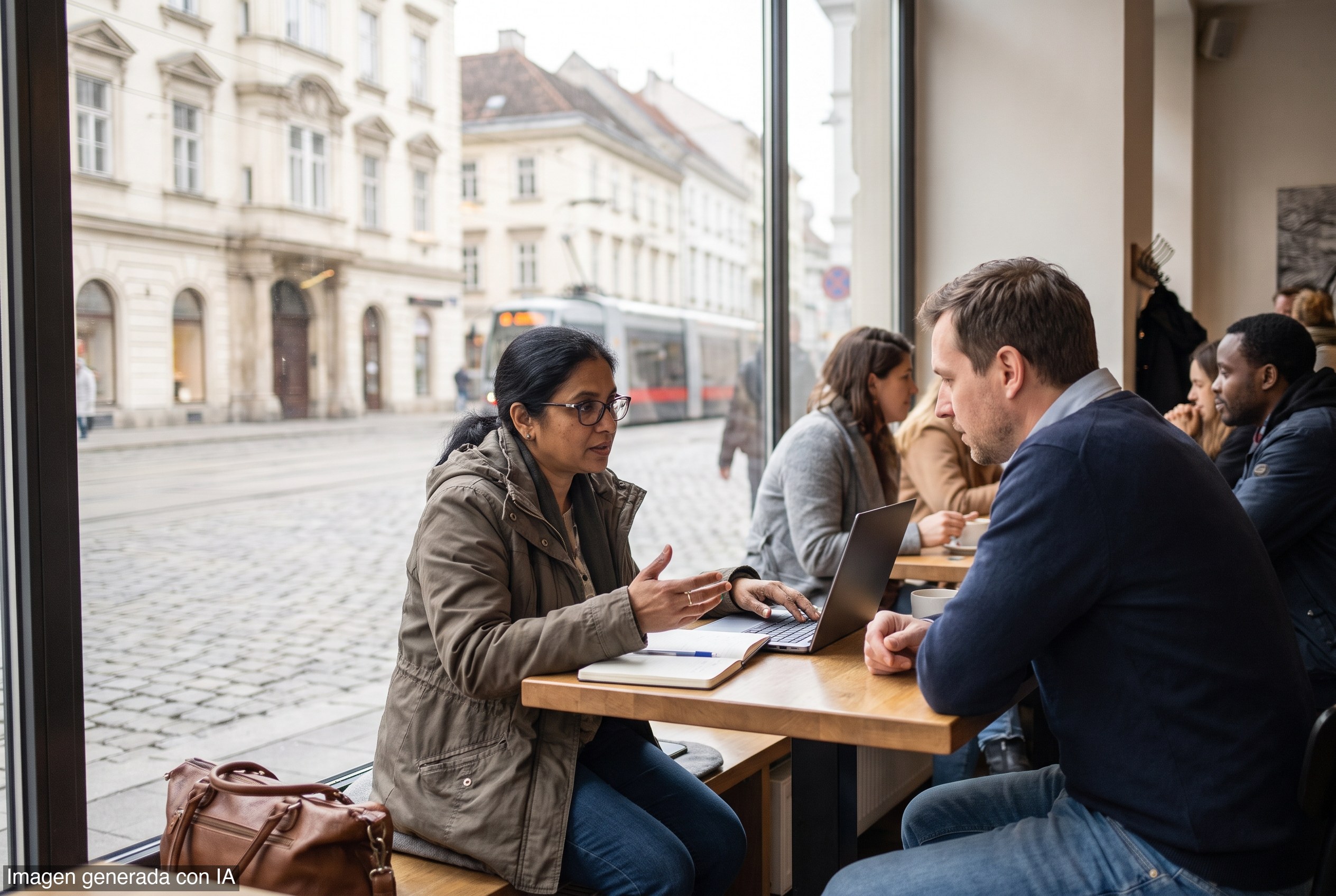
Moving abroad in your late 40s is not a clean reset. It is a high-friction reallocation of your time, identity, and support network, and it can hit every part of your life at once.
That is the reality behind one woman’s move from India to Austria to join her partner after years of long distance. She first met him four years earlier while hosting an Airbnb experience in India. Two years later, in the middle of the pandemic, they became life partners. After another gap for visa formalities, she moved to Austria.
The timing mattered. She said she was at the peak of her career as a content creator at a New York-based agency and had built a life in a city she loved. Many people told her it was a mistake. Still, she went through with it during the pandemic, navigated cross-border bureaucracy, learned a new language, and rebuilt her career in a new country.
She said the move required downsizing her life to what really mattered. One of the hardest tasks was gathering more than 40 years’ worth of belongings into a bag. When she arrived, her partner’s things were still in boxes in their new house, and the two unpacked everything they owned together.
The practical reset went far beyond housing. She said she had to figure out public transport, navigate bureaucracy, open a new bank account, and get an Austrian phone number. She also started learning German before the move and found herself in a classroom where none of the other students knew English.
That environment pushed her into a new kind of resilience. She said the adult language classroom helped her meet people from around the world who were also relocating, and that learning together made her a better communicator.
The biggest professional tradeoff was leaving behind an established identity. She stepped down from leading the content practice at a New York agency and left behind her identity as a bestselling author in India. Instead of looking for employers, she looked for clients. She became a content consultant to companies around the world, worked as a travel writer, and published her first poetry anthology.
She also had to rebuild her social life. Her first friends in Austria were her partner’s friends, and joining a local book club gave her a way to meet people with similar interests.
For founders, the playbook is simple: big life changes are expensive when your systems are brittle. If you move, leave, or restart, the cost is not just emotional. It is operational. The people who adapt fastest are the ones who rebuild routines, relationships, and revenue channels one by one.
There is also a market lesson here. The digital world made it possible for her to stay connected to her professional identity while changing countries. That kind of flexibility is a real asset. It lets talent move, clients follow, and work continue even when geography changes. In a world that still rewards mobility, the winners are often the people who can rebuild without waiting for permission.


