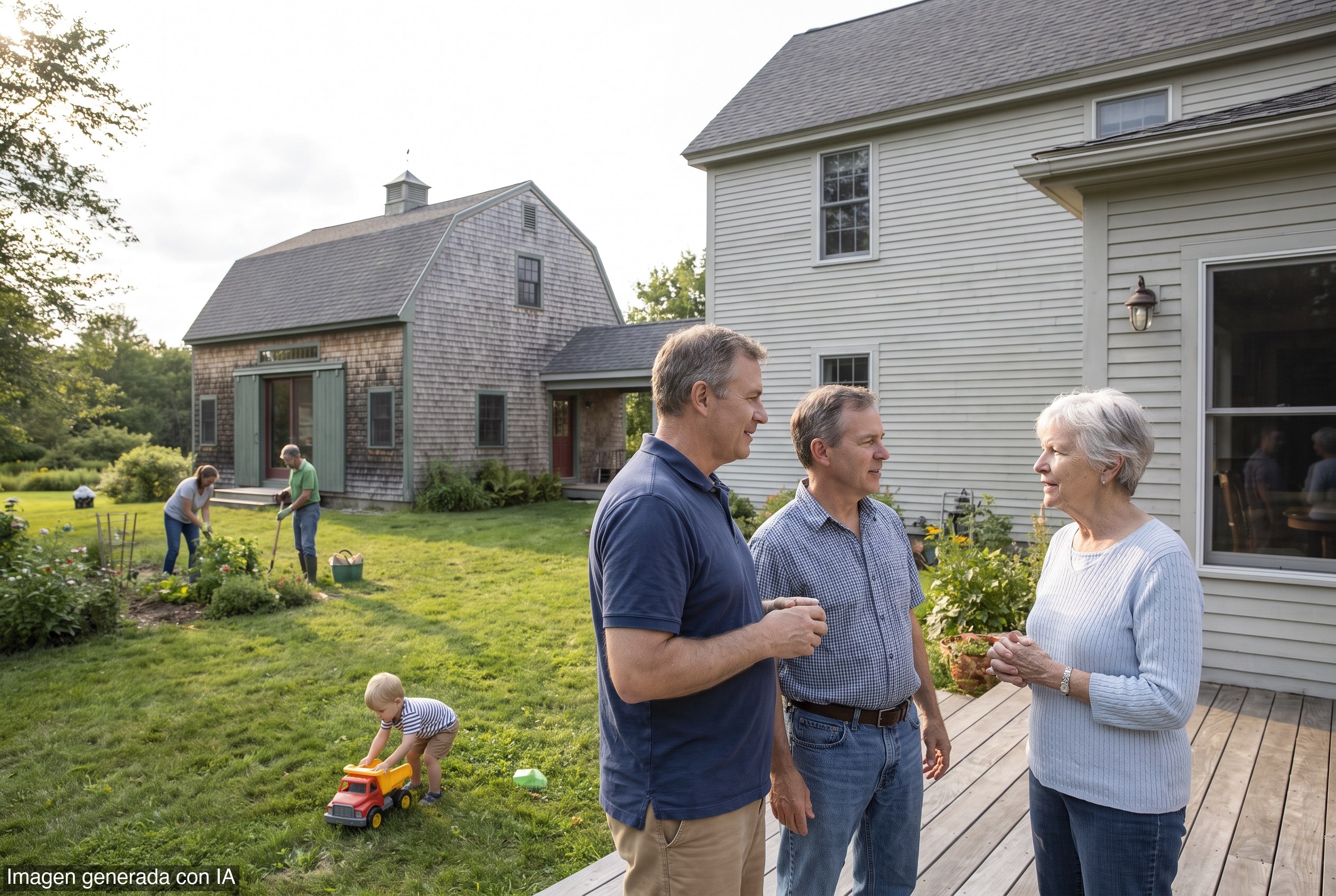
A Massachusetts family is making multi-generational living work in a very practical way: two houses, one property, and nine family members plus three dogs.
Taylor Bunting said she and her husband built their home on the same land where her parents, younger siblings, and her brother's fiancé live. The two houses are just a short walk apart, and the family has been there for six months.
The setup started taking shape in 2024. Bunting and her husband had been living about 15 minutes from her childhood home, where her parents, three siblings, her brother's fiancé, and two golden retrievers were already packed in. Her parents bought land in their Massachusetts hometown, built a house large enough for all six of them, and found room left over for Bunting and her husband to build their own.
The payoff is simple: more help, less friction, and no scramble for childcare. Bunting said the family can watch her daughter for date nights, workouts, or chores, and that she never has to worry about finding a sitter she trusts. She also said her daughter gets direct access to grandparents, aunts, and uncles.
That matters because childcare is expensive, especially in Massachusetts, and the family says this arrangement removes that burden. Bunting also said the setup does not feel crowded. The family shares some spaces, including a pool and a detached garage, but still keeps boundaries. They wash and return borrowed clothes, and they ask before taking anything from each other's pantry.
The family is already thinking about what comes next. Bunting said the current property is not large enough for additional houses, so they have begun looking for a bigger piece of land down south in case each sibling wants a house of their own someday.
For founders and operators, the lesson is straightforward: sometimes the cheapest support system is the one you build close to home. This is not about nostalgia. It is about reducing recurring costs, protecting time, and making daily life more resilient without adding headcount.
That is the part worth watching. When childcare, housing, and family logistics all get harder, arrangements like this can become a real economic advantage. Start smaller than you think, but think clearly about the cost of isolation.


