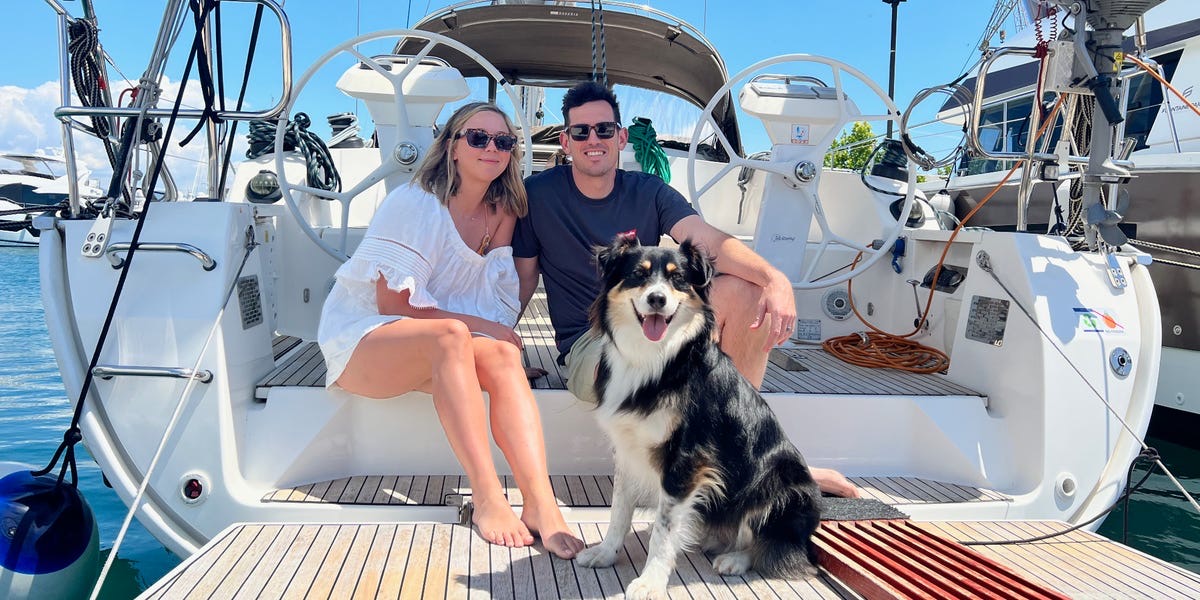
Most people file the big dream under 'someday.' This couple put a date on it. After her husband first raised the idea of buying a boat and sailing around the world, they realized the trip would only happen if they moved it up. They were in their 30s, and waiting for retirement meant waiting too long.
Here's the playbook. They already had some savings, but they set a target of more than six figures before buying a boat. For more than two and a half years, most of their income went to a dedicated boat fund. Discretionary spending took a back seat. As they describe it, those choices weren't always fulfilling, but each one moved them closer to the water.
The purchase came in August 2022. They flew to Croatia, a well-known market for used boats thanks to its large charter fleet, inspected several vessels and settled on a spacious sailboat built to balance comfort and speed. After a successful survey and sea trial, the deal closed. An unfavorable exchange rate added thousands of dollars to the final price, and the total came in at over 100,000 euros. Sending most of their life savings overseas was, in their words, daunting.
Preparation mattered as much as the purchase. Her husband's naval background gave them a head start on navigation, but neither had handled tight spaces under sail on their own vessel. They took a few sailing lessons covering departures from the marina and entering the fuel dock before heading into the Adriatic.
The money side was just as deliberate. They researched living costs by watching sailors' YouTube breakdowns and talking with people on Instagram already living the same life. They estimated a budget of about $50,000 AUD a year. Her income was the bridge: she negotiated reduced hours and kept her job in Australia through the end of the year, while her husband's long-service and annual leave added to the cushion. Her plan was to launch a marketing consultancy and work remotely from the boat over Starlink internet once her contract ended.
They became live-aboards in May 2023. The sailing turned out to be the easy part. Their first summer brought a run of breakdowns, and they added solar panels, battery systems and new electronics, with each fix bringing more expense. Mornings went to repairs. Afternoons went to Aperol spritzes by the water.
For the next few years, the lesson is one founders will recognize: resilience is built through repeated exposure to things going wrong. Storms and pitch-black nights taught her to work through fear, and the discomfort came with a sharper sense of connection to the environment.
Their numbers show what the model can deliver. They have explored 20 countries across five continents. Their largest travel cost is time, not money, and they have chosen to spend it slowly.
The editorial takeaway is about sequencing. Most founders assume freedom arrives after the business succeeds and the bank balance is comfortable. This couple reversed the order: they funded the experience first, accepted a tighter budget and a steep learning curve, and used a portable income stream to keep the plan alive. For anyone with a long-deferred goal, the question worth asking is not when you can afford it, but what you would need to change now to start.


