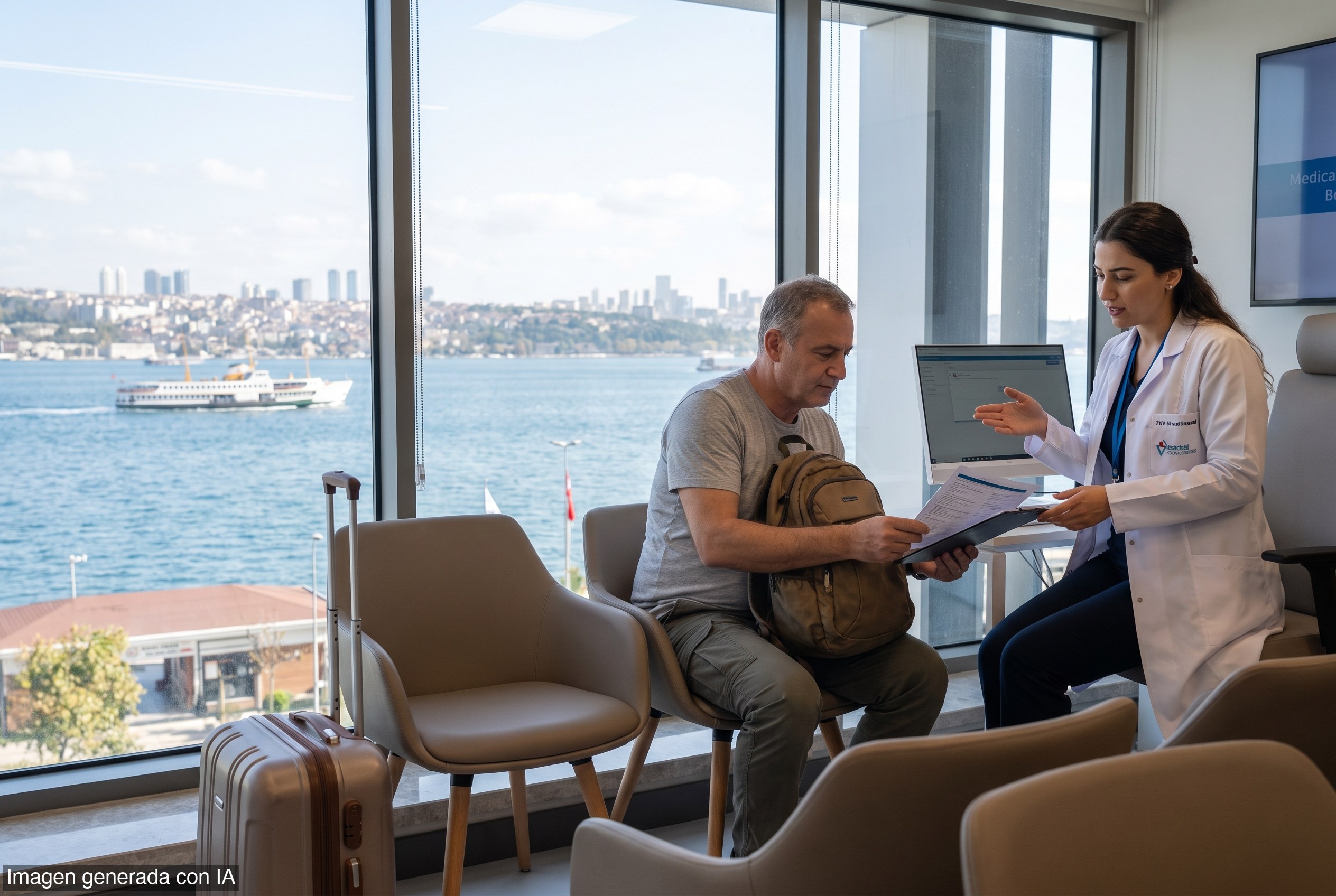
One traveler says he spent about $7,500 on a two-week medical trip to Turkey that bundled a full-body checkup, cosmetic procedures, and travel. He used airline miles for a business-class flight from Chicago O'Hare to Istanbul, then booked care through Memorial Hospitals Group and a separate dental clinic.
For $1,100, he received a full lab panel, cardiology tests, a chest X-ray, a dental radiograph, a thyroid ultrasound, a whole-abdomen ultrasound, and exams in internal medicine, ophthalmology, urology, and dentistry. He also paid $88 for teeth cleaning and x-rays at a cheaper dental clinic outside Memorial Hospital.
The cosmetic portion cost $6,035 and included an upper and lower blepharoplasty, canthoplasty, and removal of four moles. That price also covered an overnight hospital stay, transportation to and from his Airbnb and the airport, two follow-up appointments, and an English-speaking translator. He paid another $55 for post-surgery medications.
He said he arranged pricing months in advance through WhatsApp and described the communication as crystal clear. He also said the care was fantastic, and that he built a friendship with his translator. During the trip, he added massages and a haircut, paying $20 for a haircut, face shave, and face mask in Istanbul, compared with about $45 for a haircut in Florida including tip.
He said the American healthcare system does not offer the results it should. He added that the United States spends nearly twice as much on healthcare as residents of comparable countries, yet Americans have shorter life expectancies.
He also pointed to the risks that keep some travelers home. Nearly 100 Americans died between 2009 and 2022 from cosmetic surgeries in the Dominican Republic, and he said his own mother offered to come with him because of her anxiety about medical care abroad.
The playbook here is simple: if domestic care is expensive, uneven, and hard to trust, founders and consumers alike will keep looking for alternatives. Medical tourism is no longer a side hustle in global healthcare; it is a market that continues to grow.
For patients with the right risk tolerance, the upside is obvious: lower prices, bundled service, and faster access. For the U.S. healthcare system, the signal is less flattering. When Americans are willing to fly across the world for care, the pricing and experience at home are failing to compete.


