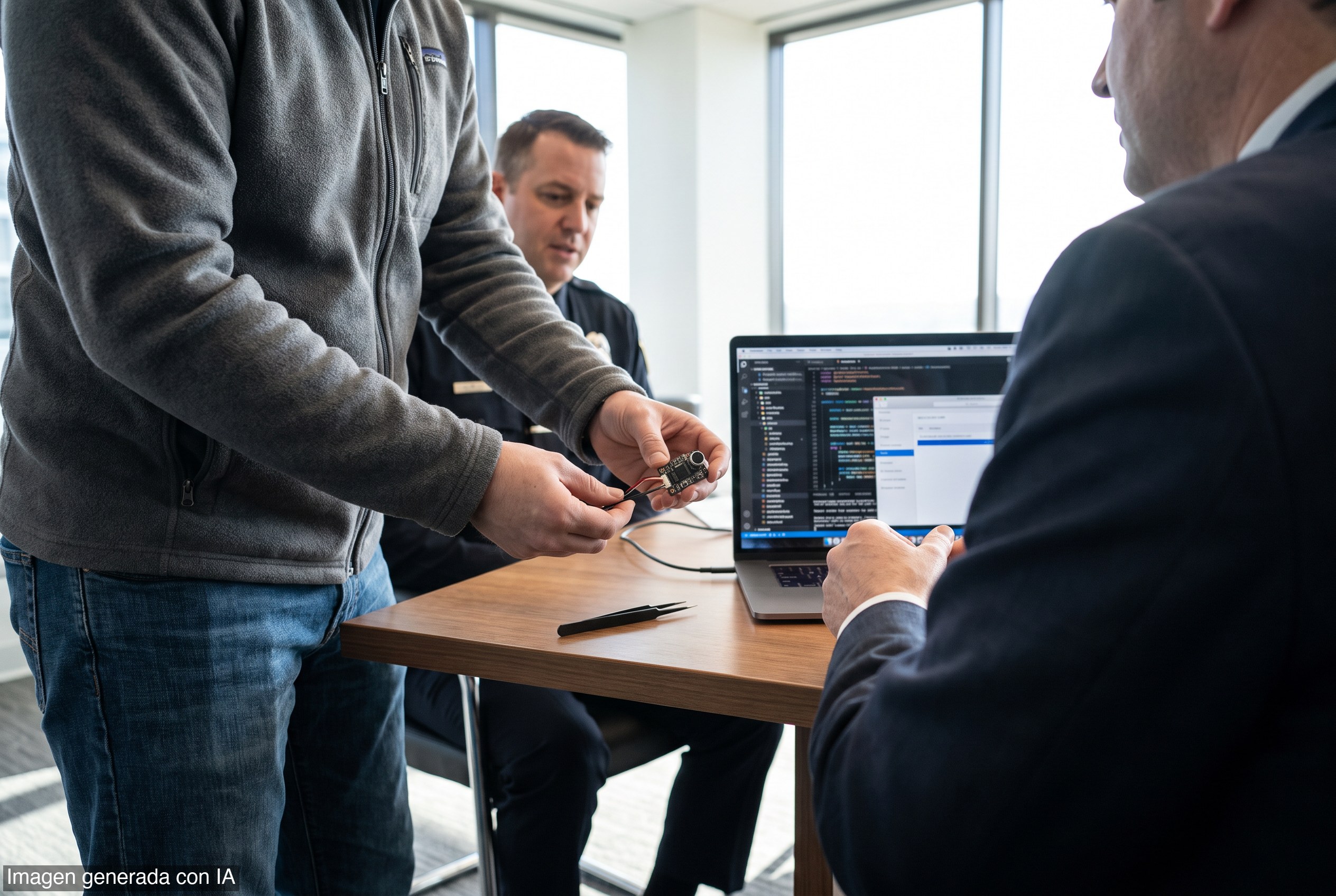
Authorities say a now-former OpenAI employee used a $24 microcontroller sold on Amazon to bug an executive office at OpenAI's San Francisco headquarters.
The device, identified in an FBI complaint as a Seeed Studio XIAO ESP32-S3 Sense, is a postage-stamp-sized gadget with a built-in microphone and Bluetooth connector. According to the complaint filed on October 8, an account associated with the suspect's spouse queried a chatbot about optimizing the device's ability to record and store information secretly.
The accused, 35-year-old Abdulrahman Alfozan, was arrested the next day and charged with 'using or attempting to use an electronic, mechanical, or other device to intercept oral communications.' Alfozan has not yet entered a plea, and his attorney did not immediately respond to a request for comment on Wednesday.
If bought directly from the China-based manufacturer, Seeed Studio, the device sells for about $14, not including sales tax and shipping fees. The company, based in Shenzhen, China, and also with offices in the United States, did not immediately respond to a request for comment on Wednesday.
The hardware is not exotic. The device is often used by tech hobbyists to build home systems, and it can also be programmed to record audio and save it to a memory card without an internet connection. The FBI says the prompts entered into a chatbot sought speech-activated recording software and encryption tech that would, in theory, obfuscate the contents of the recordings.
That is the bigger lesson for founders and operators: surveillance hardware is cheap, easy to buy, and easy to hide. The compliance and security burden now sits with the people running offices, not just the people breaking into them. If your company handles sensitive conversations, the cost of ignoring physical security can be far higher than the $24 price tag suggests.
Founders who get this right move faster because trust inside the building is not optional. When a tiny device can turn an executive conference room into evidence, the playbook has to include basic controls, tighter access, and a real security culture.


