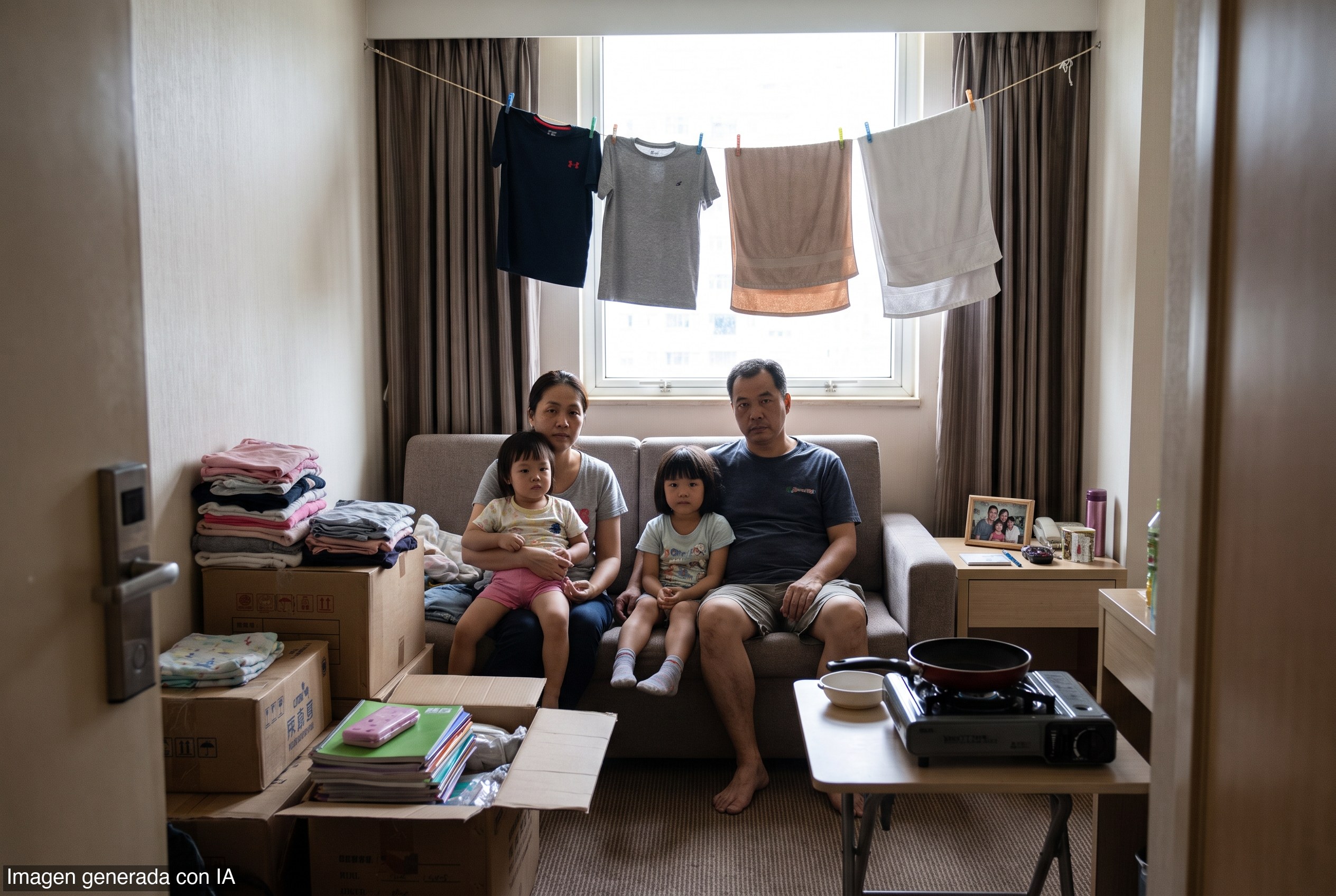
A family's plan to rent while building a new house turned into a nearly three-month stay in an extended-stay hotel.
What was supposed to be a two-week stopgap became a much longer housing search. The family had lived in the same home for eight years before deciding they needed a change. But multiple families were competing for each house, and the author says being self-employed with dogs put them near the bottom of the list.
During that stretch, the family of five — the author, her husband, their 1-year-old daughter Talia, two dogs, and a cat — had to fit their lives into a hotel room. They moved everything into two storage units and packed only what would fit in their SUV: a large suitcase, a bag for Talia, toys, books, diapers, a litter box, a travel stroller, and a travel wagon.
The family quickly learned how limited space changes daily routines. By the second week, the author was making weekly trips to storage just to rotate her daughter's toys. She also said hotel life made her feel boxed in, from slow elevators to constant dog walks and repeated trips to the supermarket.
Parenting rules changed, too. The author said she had usually been against junk food and screen time, but the hotel breakfast buffet had limited vegetarian options, and screen time became a practical tool while she worked in the same room as a toddler. Fifteen minutes of 'Miss Rachel' or 'Gracie's Corner' bought enough quiet to focus.
The hotel also became a small community. The family met other guests including vacationers, business travelers, military members waiting for traditional housing, truck drivers, and people whose employers maintained corporate accounts. The author also said she bonded with staff, including a front-desk worker who spoke only Spanish and helped her translate for other guests.
When the family finally left, the author expected relief. Instead, she felt homesick for the place that had held them while they waited.
The math is simple: housing delays do not just create inconvenience. They change how founders, parents, and families use time, money, and attention. For readers trying to build a business or a life with less friction, the lesson is familiar: when the market tightens, flexibility becomes a survival skill, not a luxury.


