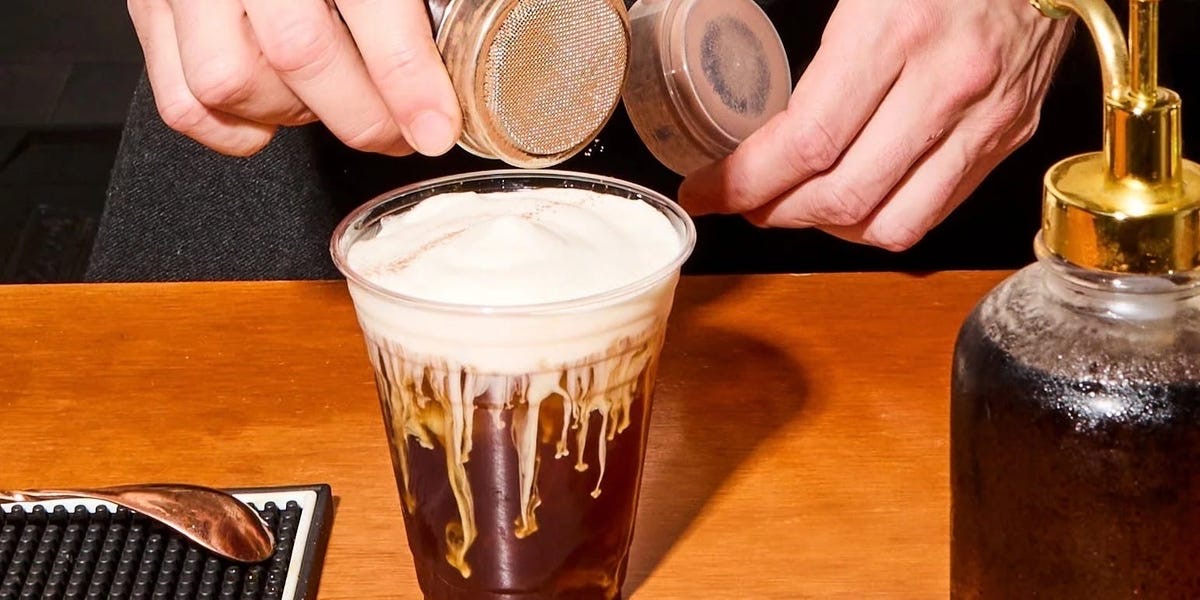
Giving away coffee doesn't sound like a business model. For Brandon Sardi, founder of San Francisco-based Poorboy Coffee, it became a marketing experiment with a surprisingly strong result.
Poorboy started out doing pop-ups at wine bars. Sardi ran hundreds of them in the company's first couple of years, and the model was hard to justify. His team spent hours preparing, hauling equipment and setting up, all while hoping enough people would stop by for a $5 drink. Founders who have run event-based sales will recognize the problem: high labor cost per transaction and no guarantee of traffic.
Poorboy later shifted to private catering, where clients pay in advance. The economics improved, and Sardi said he largely stopped doing public pop-ups. But he missed the community-facing side of the business.
That gap led to 'Who Gives a Hand,' a pay-what-you-want pop-up series. Customers can take a drink for free or contribute any amount they choose, and every dollar collected goes directly to another local small business. Sardi told Business Insider the goal was marketing: 'I want people to hear more about Poorboy, and especially in a good light.'
The first event was slow, a familiar feeling from the old pop-up days. The customers who did show up, though, were generous. Sardi said nearly everyone contributed, some paid more than they would for a typical drink, and some gave as much as $50. He set up a live tracker showing the running total, which encouraged others to add to the pot.
Over three hours, the event collected $957. That is more than double the roughly $450 in sales Sardi said a typical pop-up brought in. He passed the money to the owners of AK Meats, a family-run San Francisco business.
Not everyone paid. Roughly as many people stopped by, but more took their drinks without paying. Sardi said that was within the spirit of the model, though he suspects some customers didn't fully understand the concept.
The second event collected about $500. Sardi's staff declined payment for their time, wanting to contribute to the effort themselves. Sardi added another $500 of his own money so Poorboy could again pass $1,000 to another local business. He is planning more pop-ups, including one in New York City.
Founders should note the real costs. Ingredients, transportation, staff time and a full day of work all come out of the budget. The model works only if the marketing payoff justifies that spend.
Here's the math as Sardi frames it. Customers get a good coffee and the freedom to decide what it's worth. Poorboy gets a chance to introduce itself to potential customers and build goodwill. A local small business gets a cash infusion with no strings attached.
The model also reflects the voluntary exchange that free enterprise depends on. Nobody was forced to pay, and the people who did chose their own amounts. Sardi's own perspective is the most telling part of the story. He started Poorboy with about $500 and knows how hard it is to bootstrap an idea. 'To be able to, after the pop-up, give that chunk of change to someone and make someone's day and see their reaction,' he said, 'it's kind of priceless.'
For founders weighing a similar experiment, the lesson is to measure before you scale. Track the cost per event, the gross collected and the marketing reach, then decide whether the goodwill is worth the spend.


