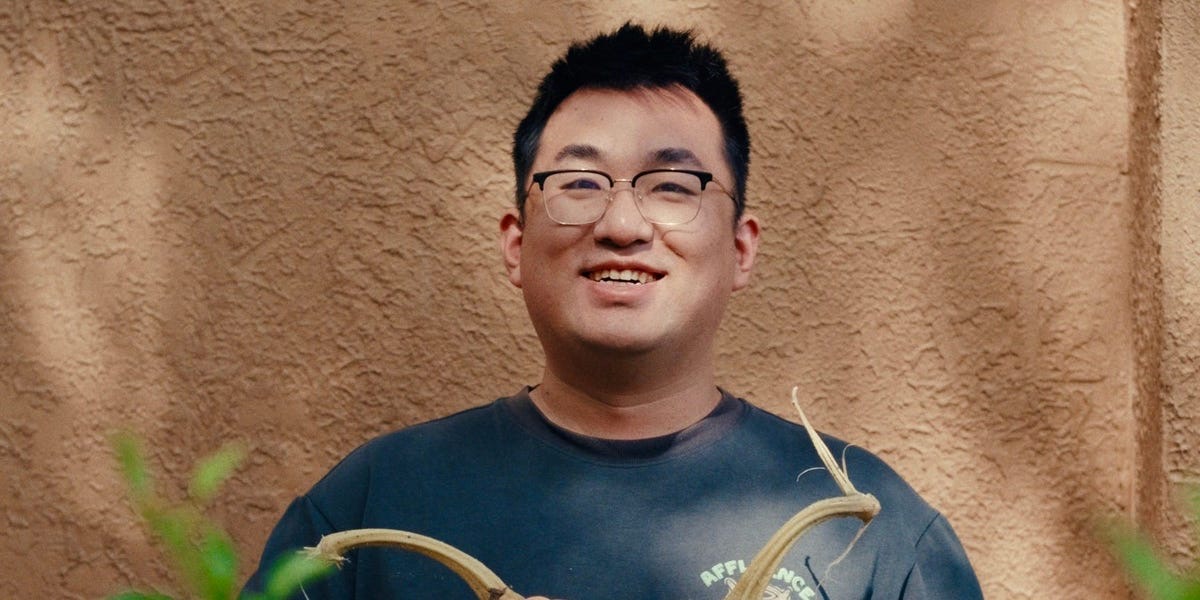
Zhu Guanlin was a final-year engineering student in China when he started to doubt the path in front of him. He had two acceptance letters at 21: one to study electrical engineering at a university in Virginia, and one from the Culinary Institute of America. His family had produced engineers for generations, and his parents were shocked to learn he had applied to culinary school at all. They did not see cooking as a stable career.
The cost was real. He moved to New York City in 2019 for a two-year associate degree, where tuition was nearly $40,000 a year. His parents paid for the first year, but he did not want to keep taking their money. He worked, earned a scholarship, and funded the rest of his time abroad himself. The school's Curricular Practical Training program let him work legally in the US during internships, and after graduating he took jobs at Michelin-starred restaurants in New York and later in San Francisco.
The math on the corporate ladder was blunt. The highest position he reached in the US was chef de partie, the supervisor of a single station. He concluded that unless he became a sous chef or chef de cuisine, he would not grow professionally. Seeing those kitchens up close also stripped away some of the mystique. He missed the parts he cared about most, like the culture behind the cooking, and he found those roots in China.
He went back at the end of 2023 to help co-manage a classmate's restaurant in Dali, in Yunnan province. Business was slow at first, then picked up after about six months. That experience gave him the confidence to open his own place. In February 2025 he launched Plum, investing 400,000 Chinese yuan, or about $60,000. The restaurant sits in a courtyard with 35 seats, and the team has grown from four employees to 10.
The menu refuses to pick a single identity. One dish can combine Western components, Chinese technique, and Japanese or Italian influences. His focaccia, for example, carries a French-style sauce and is topped with sautéed porcini mushrooms prepared in the Chinese style. Demand has been strong: the restaurant has been fully booked every day recently. Even so, his own calculations put break-even four or five years out, a reminder that a full calendar does not equal a profitable P&L.
He also built his staffing model around a different idea of labor. Restaurant staff in China typically get four days off a month. Plum gives everyone two consecutive days off each week, plus compensatory time for holidays. His reasoning is operational as much as humane: when chefs are overworked, they lose focus. He also admits that kitchen culture in China can be cliquey, with master-apprentice hierarchies and group ties based on clan or locality that make newcomers feel shut out. He is still working out what a better kitchen looks like. He first copied the quiet, orderly discipline of the New York and Michelin kitchens, then concluded it was unnecessary. When people feel cohesion and real appreciation for their work, he says, they take initiative on their own.
For founders, the lesson is less about Michelin stars than about leverage. Zhu paid for his training, tested his skills under pressure, and returned to a market where his cultural knowledge was an asset rather than a cost. His family came around once they saw he could build a career outside engineering, and they helped fund Plum. Here's the playbook his story suggests: know your unit economics before you commit capital, stress-test your calendar against your break-even timeline, and treat your team's time off as an operating decision rather than a favor.


