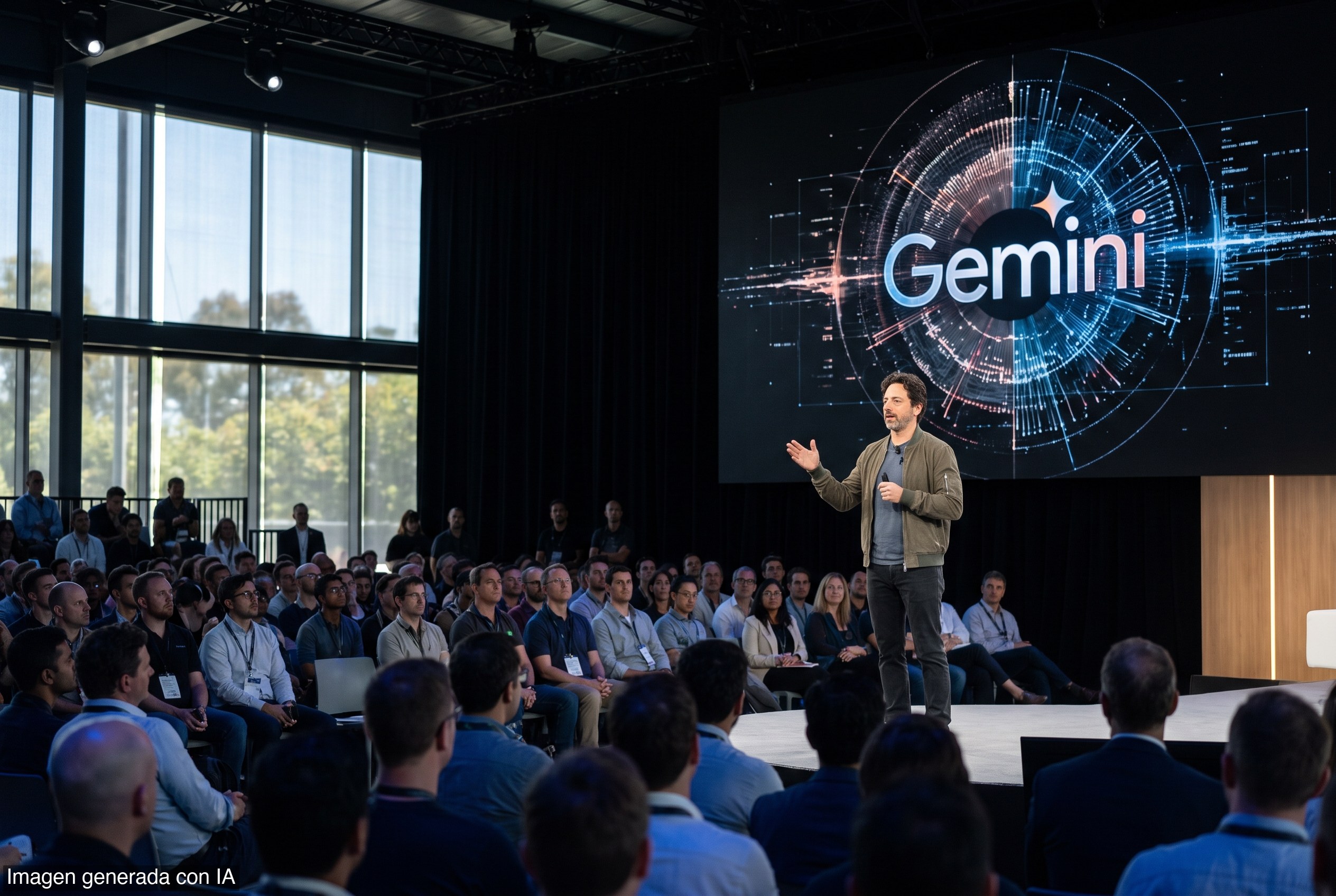
Google may be approaching a pivotal moment in AI, and Sergey Brin says the company is already feeling it inside the lab.
In a roundtable on Google’s new Gemini 4 model, called Argon, the company cofounder said AI development is accelerating internally and that models are now helping build their successors. That idea is known as recursive self-improvement, or RSI: AI helps build better AI systems, creating a flywheel that speeds up the pace of new model development.
Brin pointed to the releases of Google’s Flash models before Gemini 4 as evidence that this was happening. He said Google was 'starting to get onto that RSI treadmill.' He also said, 'And now our researchers and the model work hand in hand to make the next version of the model.'
Google’s own safety report for Argon says some parts of the AI research and development cycle are getting automated. It said, 'AI agents now operate as high-leverage assistants that author a majority of production code and bug fixes, though code changes remain subject to human review before submission.'
Brin has been increasingly involved in Google’s Gemini efforts and has used his power as cofounder to shift resources to projects he sees as most effective, including pushing for more focus on RSI. Google employees have also been testing a superior version of Argon, internally known as Carbon, which some staff compared to being on par with Anthropic’s Opus 5.5 model for coding tasks.
Others at Google appear to share that view. In a post on X, Vihan Jain, an RSI leader for Gemini at Google DeepMind, wrote that when the 'post-training demand shifts from asking for raw chips to asking for Argon quota,' the RSI flywheel has reached a new gear.
The math is simple: if models can speed up the next round of model-building, the company that gets there first can compound faster than rivals. That could mean better margins on research and development, faster product cycles, and a bigger lead in the AI race.
But the same flywheel also raises the stakes on control. Brin’s comments, along with Google’s own safety language, show a company betting that automation will accelerate progress while still keeping human review in the loop. For founders building with AI, the playbook is clear: move fast, but keep a human hand on the wheel.


