Scale.
The Latest
NBC Pulls Anti-Israel Ad From 'SNL' Special After Backlash Over $400 of 'Taxpayer Money'•Jensen Huang's Nvidia Comeback Could Usher in an 'Age of Resentment,' Warns Economist Steve Hanke•The Army Has Received Just 180 of Nearly 12,000 Abrams Rounds Due by Summer, and Taxpayers Are Still Paying•Why One Parent Swapped Christmas Gifts for Family Trips, and What It Actually Costs•Musk's Free SpaceX Shares for Every Child: A Gift Worth Watching, and a Reminder That Stakes Beat Subsidies•I Spent a Day Riding, Eating and Cleaning With Robots. Here's the Free-Market Scorecard.•A Budget Traveler's Honest Take on ASKY Airlines: Cheaper Than You Think, Less Consistent Than You'd Like•A Texas Relocation Broker Is Heading to Florida, and Her Clients Say the Tax Math Is Next•Booking Your First Cruise? Here Are the 7 Costs and Surprises Founders Should Plan For•Shake Shack's Holiday Shakes Ranked: The Christmas Cookie Is Sweet, the Hazelnut Chocolate Is Worth Watching•NBC Pulls Anti-Israel Ad From 'SNL' Special After Backlash Over $400 of 'Taxpayer Money'•Jensen Huang's Nvidia Comeback Could Usher in an 'Age of Resentment,' Warns Economist Steve Hanke•The Army Has Received Just 180 of Nearly 12,000 Abrams Rounds Due by Summer, and Taxpayers Are Still Paying•Why One Parent Swapped Christmas Gifts for Family Trips, and What It Actually Costs•Musk's Free SpaceX Shares for Every Child: A Gift Worth Watching, and a Reminder That Stakes Beat Subsidies•I Spent a Day Riding, Eating and Cleaning With Robots. Here's the Free-Market Scorecard.•A Budget Traveler's Honest Take on ASKY Airlines: Cheaper Than You Think, Less Consistent Than You'd Like•A Texas Relocation Broker Is Heading to Florida, and Her Clients Say the Tax Math Is Next•Booking Your First Cruise? Here Are the 7 Costs and Surprises Founders Should Plan For•Shake Shack's Holiday Shakes Ranked: The Christmas Cookie Is Sweet, the Hazelnut Chocolate Is Worth Watching•
Scale.
Sections
The outlet
Grow

Goldman: Chinese exporters can raise prices overseas as quality improves

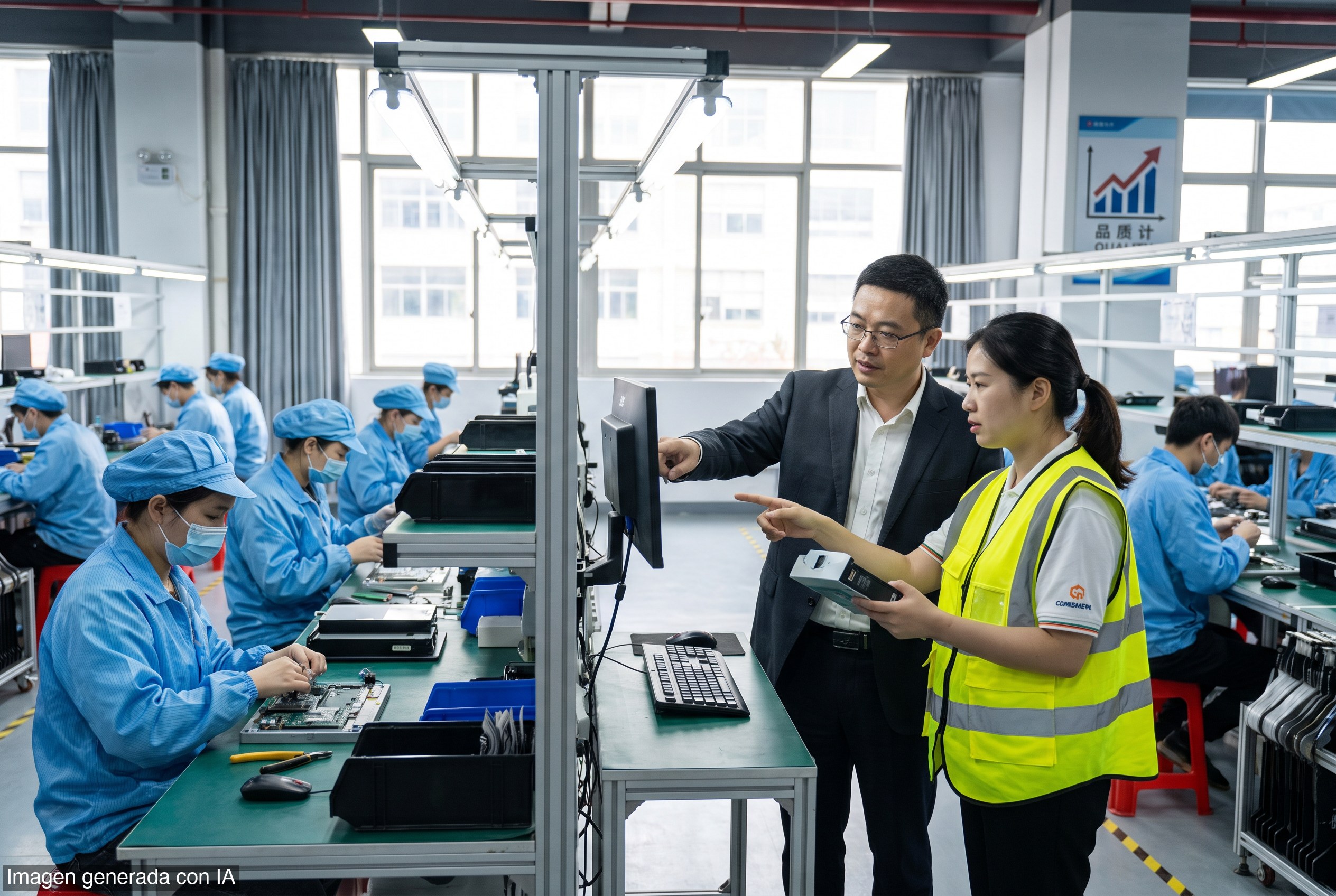
Chinese companies are not winning foreign markets only by being cheap. Goldman Sachs says many products enter at a discount, then get more expensive as quality and features improve.
OCT 14, 2026
Photo: Imagen generada con IA

Chinese companies are challenging a long-held assumption about their export boom: that they only win abroad on price.

Goldman Sachs says its research shows Chinese products often enter foreign markets at a discount, but later become more expensive as quality improves and new features are added. Trina Chen, co-head of Greater China equity research at Goldman Sachs, said on the bank's 'Exchanges' podcast that the instinctive view links Chinese products with price cuts, but the pattern is more nuanced.

Goldman analyzed 11 sectors and 40 Chinese and global companies to see where Chinese firms are taking market share. The firm found Chinese products typically launch at about a 30% discount to incumbent rivals, but prices often rise in later years.

The bank pointed to several examples. Chinese electric vehicles sell at roughly a 20% discount to comparable global models, and Chen said that gap has stayed stable over the past three to four years. Robot vacuum cleaners have moved even further, with Chinese products entering the US market at around a 40% discount and now commanding a roughly 60% premium as manufacturers keep innovating.

Chen said the price cuts often come later, when established competitors lose market share and try to defend it. She also said Chinese companies tend to gain share fastest in modular, consumer-facing, high-growth products, while progress is slower in mature business-to-business markets that depend on trust, servicing networks, local distribution channels and long operating histories.

The finding lands at a time when policymakers from Washington to Brussels are grappling with a surge in Chinese exports, part of what some economists have called 'China shock 2.0.' China’s weak domestic demand and years of deflationary pressure have also fueled concern that its exporters could push prices down overseas.

The bigger lesson for founders and operators is simple: low-price entry is not the full playbook. Chinese firms appear to be using discounting to break in, then using product improvement to protect margins and lift pricing power. For competitors, that means the threat is not just cheaper imports, but rivals that can climb from discount to premium while expanding their offer.

Founders who get this right move faster. If price is your only edge, it can disappear fast. If product quality, feature velocity and distribution improve with scale, pricing power can follow.


RO
Rachel Otis
Grow Columnist

Rachel Otis covers growth: sales, marketing, pricing and the strategy calls that turn a small business into a bigger one.

More from Grow

NAPA Bets on Video-Game Training to Fill 642,000 Empty Auto Tech Jobs
Thomson Reuters Bets on Open-Source AI From Both the US and China to Cut Costs
She Quit Her Finance Job for a Cinnamon Roll Bakery. A Year In, the Hardest Lesson Was Hiring
