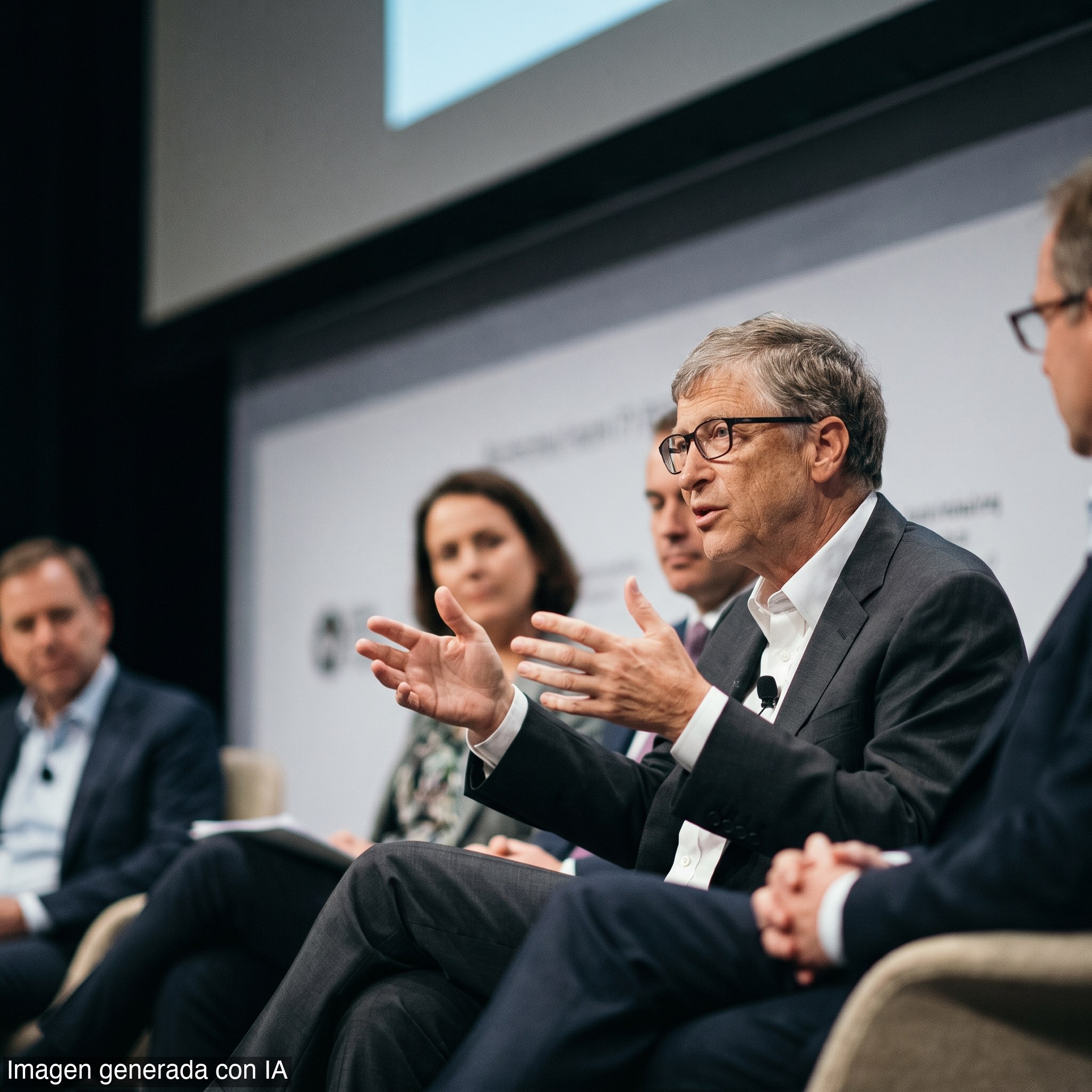
Bill Gates says artificial intelligence is headed for two phases, and the first one could be messy for workers and consumers.
In an interview on NBC's 'Meet the Press,' Gates said AI can eventually help with the high cost of living and expensive healthcare, but not yet. He said humanity is entering a period of adjustment that is probably 20 years long, during which AI will change the job market and could empower criminals if safeguards are not in place.
The second phase, he said, is when people start seeing the payoff. Gates said a combination of humanoid robots and AI could help build houses, grow food, and handle many other tasks. 'You could call it an era of abundance,' he said.
Gates also said humanity will still have to deal with the question of purpose and how to use newly acquired free time. But he said his focus is on getting through the period of turmoil without too much damage.
His comments fit a broader split in the AI debate. Tech leaders have argued that AI could drive medical breakthroughs, boost productivity, revitalize economies, and make essential goods more affordable. Critics have warned about job losses, environmental strain, utility-grid pressure, copyright issues, privacy risks, and cybersecurity threats.
Gates has not been blind to those risks. He said AI is powerful enough to 'drive events that cause a billion deaths' and argued that law enforcement and politicians need to be involved in deciding what safeguards and monitoring should look like. He said that would add some overhead for the industry, but not dramatically slow what companies are doing.
The White House office overseeing science and technology policy took a different view. Michael Kratsios said that if a company believes it is developing unsafe technology, it can simply stop.
For founders, the playbook is simple: the upside story is real, but so is the transition cost. If AI is going to reshape revenue, headcount, and customer behavior, the companies that win will be the ones that plan for both phases at once — the disruption now and the productivity later.


