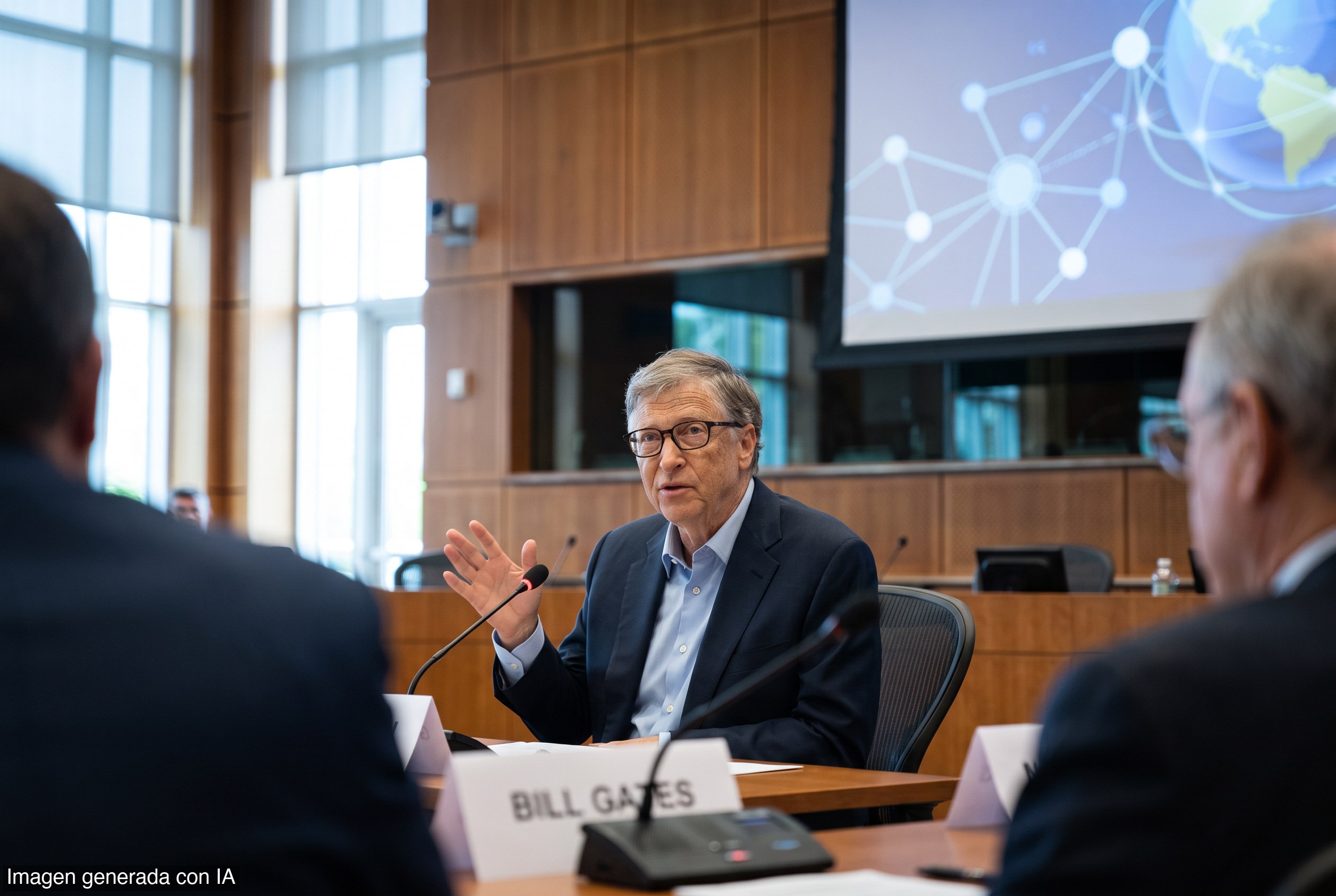
Bill Gates is warning that artificial intelligence could be dangerous on a scale few tech leaders are willing to say out loud.
In an interview with NBC's 'Meet the Press,' the Microsoft cofounder said AI is 'certainly powerful enough to drive events that cause a billion deaths.' He also said the industry needs government regulation and argued that 'law enforcement and the politicians' should join the discussion about 'what safeguards and monitoring look like.'
Gates said he worries about bad actors getting access to advanced AI tools. He added that the threat is not just theoretical, pointing to concerns that range from hacking to biological weapons and fraud. Gates also said AI could affect jobs, children, learning, and human relationships.
The warning marks a sharp shift for a figure who was once among AI's most visible optimists. Gates said in an August essay that the world has no plan to roll out AI safely and that he believes the public needs time to prepare for 'social, political, and economic upheaval.' He also said that if someone had a credible plan for slowing down AI advances globally, he would likely support it.
The debate is already splitting the tech world. Anthropic CEO Dario Amodei has also called for pacing AI development through regulation, and he recently said the 'most effective method of pacing is via regulation.' At the same time, Satya Nadella has said AI companies should handle things on their own, even as he warned employees that companies must take time to make the technology safe.
Donald Trump has taken a different tone, mocking Amodei and signaling little interest in broad regulation, even as he pledged to create an 'AI Force' to 'watch over' AI companies.
For founders, the message is simple: the cost of AI failure is no longer just a product risk. It is a policy fight over who carries the burden when a technology scales faster than its safeguards. If government steps in, the winners will be the firms that can absorb compliance and prove trust. The losers will be the ones betting that speed alone can outrun scrutiny.
The bigger issue is accountability. When a tool can scale damage as fast as it scales output, the market does not get to police itself forever. The question now is whether Washington writes the rules before the next crisis does it for them.


