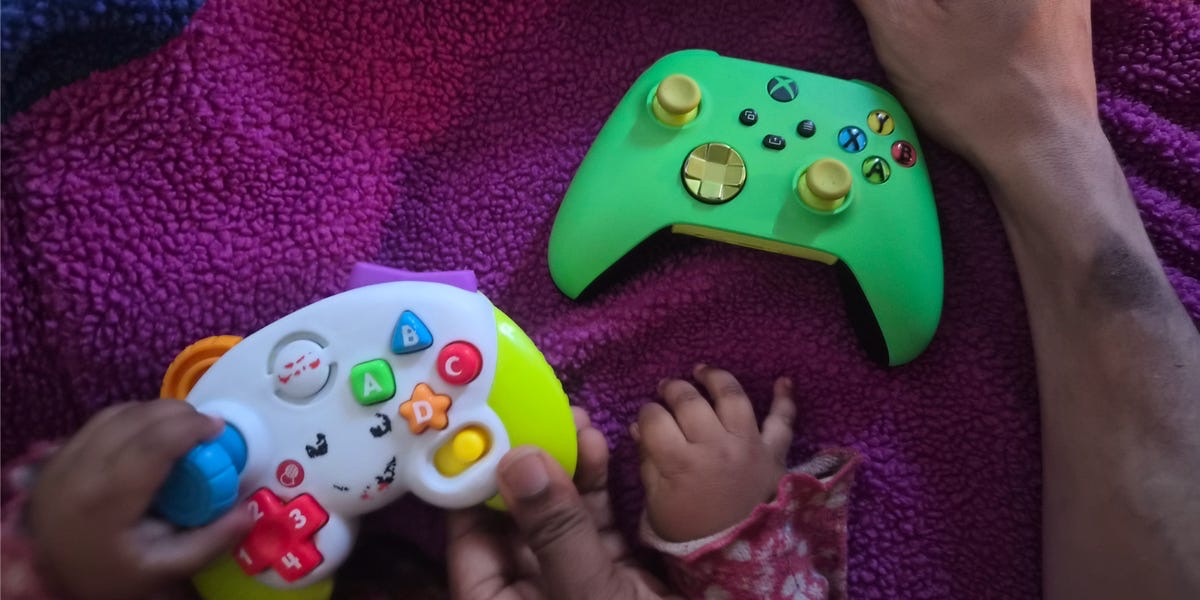
Here's the playbook one gaming couple built after becoming first-time parents, and why it matters beyond the living room.
The author and her husband met in a Halo Infinite lobby and spent years gaming together, often 20 to 30 hours a week. After their daughter was born, that number dropped to zero for a stretch. Now, with Grand Theft Auto 6 set to release on November 19, they want back the shared hobby, but they have two problems they never expected: finding time to play and deciding what is appropriate when a 15-month-old is in the room.
The household adapted in stages. They started with quick multiplayer matches in Halo Infinite that could be dropped at a moment's notice, then moved to the campaign of the remastered Halo: Combat Evolved in short, slow sessions. Big open-world games took longer. Her husband played all of Starfield while she was asleep or half-awake, and Cyberpunk 2077 still sits in the backlog.
The turning point came during a Fallout 4 session. A headshot landed, and their daughter's head snapped toward the screen. The sound had pulled her in. The author says she had played violent games for years without a second thought, and realized she had missed how much her daughter was now watching.
Their response looks a lot like childproofing. They look for settings that reduce or turn off blood and gore, or change the color of blood. They lower the volume so gunfire does not startle their daughter, play with subtitles, and sometimes one of them wears headphones. They also check for options that reduce bright flashes. The author plans to review GTA 6's menu for each of these on day one, and notes that many accessibility options improve the experience for adults too.
Their scheduling rules are simple. Violent missions wait until their daughter is asleep. Naps are now prime gaming time. When only one controller is available, they pass it back and forth, the same method that got them through pregnancy.
The math is simple for any household running on limited hours. Two adults with full-time responsibilities and a toddler have maybe a few protected windows each week. Founders in that position face the same constraint, and the couple's approach is a reminder that a fixed, scheduled block beats waiting for free time that never arrives. They may not finish GTA 6 in launch week or even launch month. But they have a plan, a schedule, and a shared goal, and that is the structure most people need to keep a valued habit alive.
The editorial reading is this: a family that protects its own time and makes deliberate choices about what its children see is exercising the kind of household discipline a free-market society depends on. Parents who treat their hours as a scarce asset, and who set their own rules rather than waiting for a rulebook, are the ones who keep their priorities intact. The lesson travels well beyond gaming.


