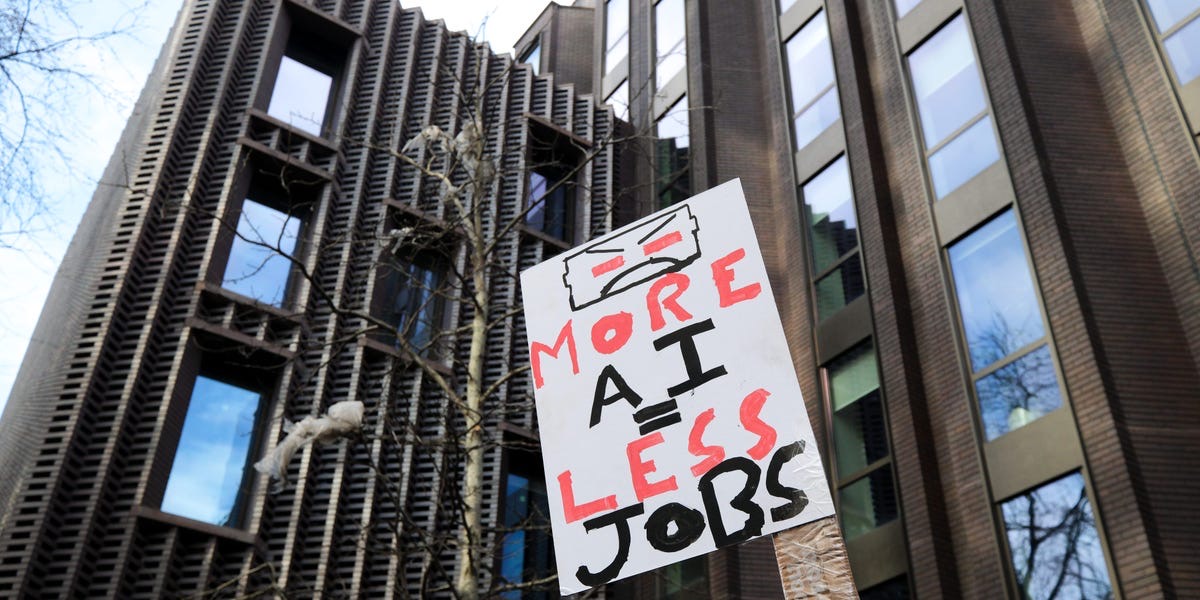
The fear that AI will eliminate millions of jobs has dominated the conversation for months. Tejas Bhakta, a former Tesla machine-learning engineer and now founder of Morph, thinks the opposite is more likely.
Speaking in an interview with MTS Live, Bhakta said he expects more unemployment fears to give way to more busywork. "Some people have this take that we're going to have mass unemployment as a result of this," he said. "I almost feel the opposite. Like, I think we're going to have more bullshit jobs. Just way more."
Bhakta's argument starts with the job market as it already exists. He pointed to procurement officers producing paperwork "that no one cares about or will ever read." He estimated that 40% of internet jobs are "not actually doing anything." In his words, "Basically most jobs are UBI right now," meaning universal basic income, a phrase he used to describe roles that function as income support rather than productive work.
He went further. "In order for that organism to keep surviving, it needs these people to have UBI," he said. "Otherwise, the economy falls apart. And so, we'll just have more jobs that are fake jobs while AGI does all of the work."
His view sits between two camps. Anthropic CEO Dario Amodei warned in May 2025 that AI could wipe out 50% of all entry-level white-collar jobs. AI's top executives have since shifted their tone in 2026, arguing the technology could spark a new hiring boom. Bhakta, by his own framing, belongs to the boom camp, though with a far less optimistic tint.
Business Insider did not receive a response from Bhakta to a request for comment.
For founders, the takeaway is less about labor statistics than about cost structure. If a large share of payroll in the wider economy is paperwork that few people read, every new AI tool that automates a task still leaves the overhead in place unless leaders decide to cut it. Companies that get the most from AI will be the ones that question which roles create value and which exist to satisfy process. Taxpayer money and private payrolls alike are the bill for that process, and a free-market economy rewards the firms that stop paying for work no customer asks for.


