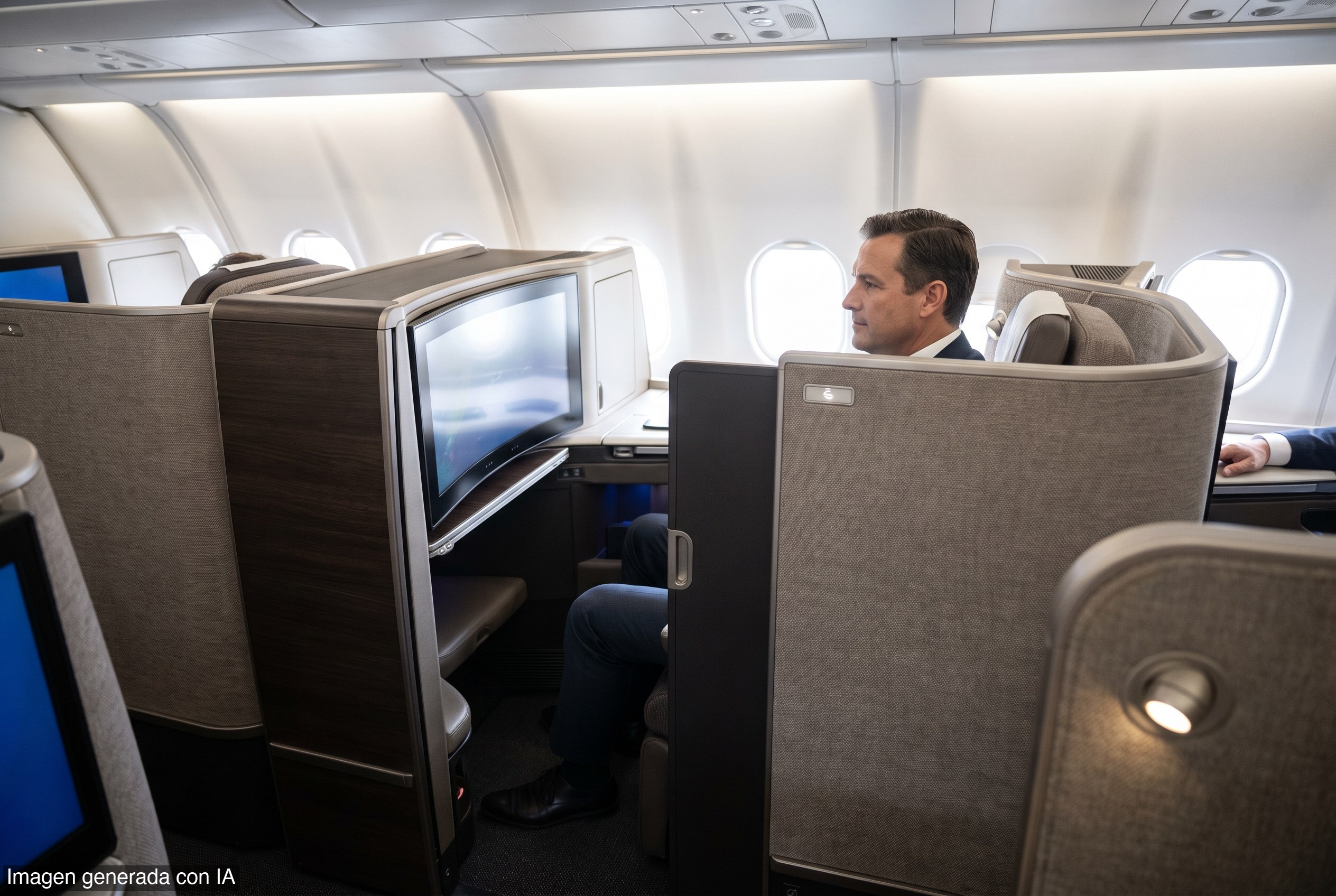
Etihad Airways is bringing a new aircraft to its fleet in 2027, and it is using that rollout to expand its premium offering. At Dubai’s annual Arabian Travel Market trade show in September, the UAE airline unveiled mock-ups of new first- and business-class cabins planned for its future Airbus A330neos.
The first of 15 new A330neos will enter service in September 2027, serving regional and medium-haul routes from Etihad’s Abu Dhabi hub, the airline said. The layout is small but high-end: four first-class suites, then 24 business-class seats.
Both cabins include privacy doors, lie-flat seats, 4K screens, Bluetooth connectivity, and wireless charging. Etihad also built in sleek control panels beside the seat, plus 60-watt USB-C and 110-volt universal power outlets. In First, the 32-inch 4K screen dominates the suite. Business class gets a 17.3-inch screen.
The cabin design shows how much Etihad is trying to maximize space inside a smaller widebody jet. The trade-off is that First feels more like a private room, while business class is a tighter version of the same idea. One reviewer said the suite felt spacious, but not dramatically larger than some business-class cabins they had flown.
Etihad is also leaning hard into the premium experience. First-class passengers will receive a Giorgio Armani amenity kit with ESPA skincare, premium loungewear, slippers, and a full turndown service. Business-class passengers get a different amenity kit with LaNeige skincare, while loungewear and slippers are available on longer flights.
The first-class buddy seat is meant for dining or socializing, but there are limits. Etihad said travelers in business or economy cannot join them, saying, 'Cross-cabin guests are not allowed.' The airline also described a drawer it calls the 'personal powder room,' which is actually a vanity compartment with a mirror and space for toiletries.
The bigger story is not just comfort. It is pricing power. The review noted that premium cabins are likely to come at a steep price, and gave a real-world example: in April, a round-trip first-class ticket from New York to Abu Dhabi on Etihad’s Boeing 787 cost about $6,000, versus roughly $3,800 in business class and $400 in economy.
That is the math for airlines and for travelers alike. Etihad is betting that a smaller number of higher-paying customers will justify the space, hardware, and service. For founders, the lesson is familiar: premium positioning can lift revenue, but every square foot and every extra feature has to earn its keep.
Founders who get this right move faster. The question Etihad now has to answer is whether this level of luxury creates enough demand to protect margins while keeping the cabin full.


