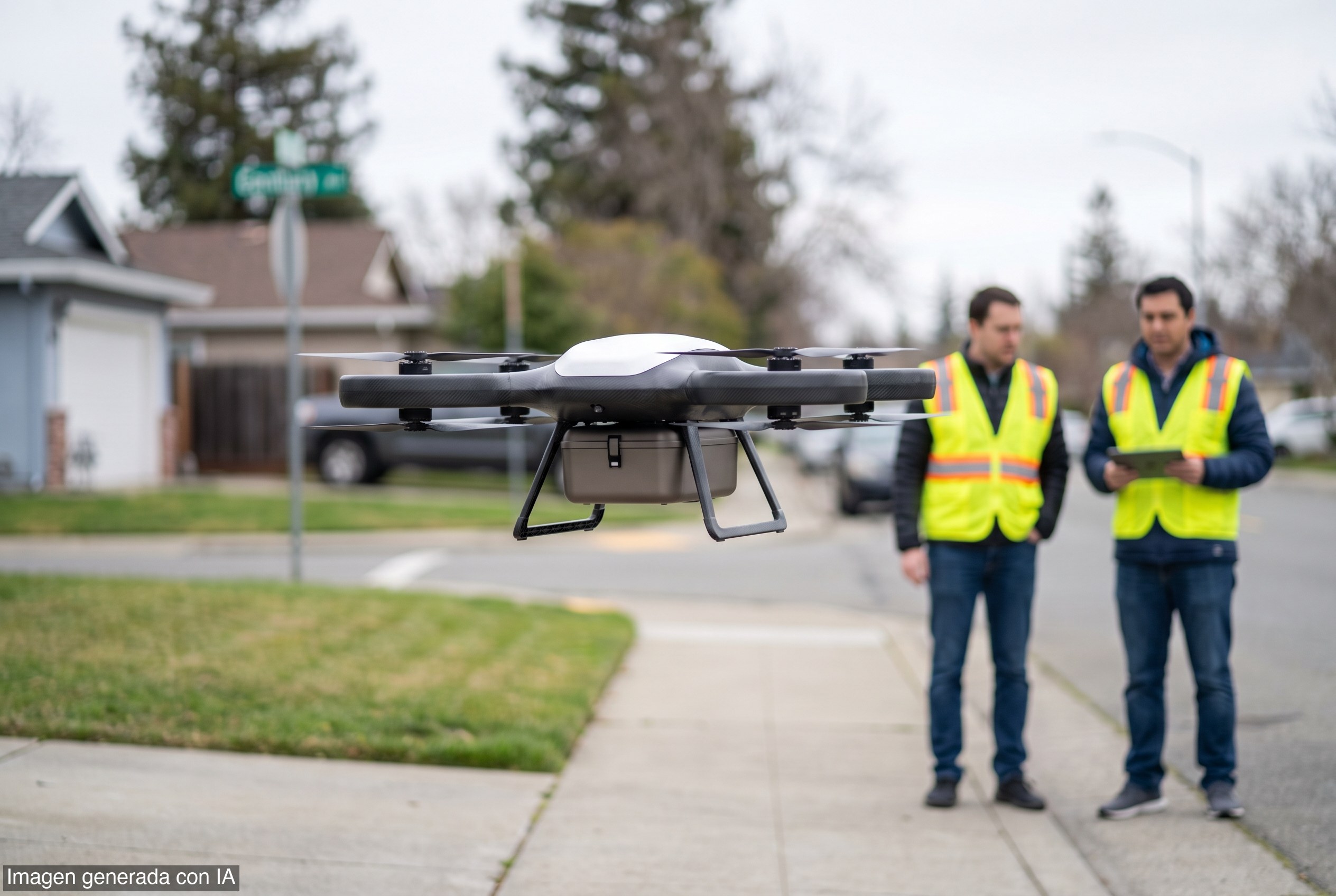
DoorDash says its new delivery drone could take flight in Northern California in the coming months, bringing a lighter and quieter option to short-range drop-offs.
At a media event at company headquarters on Tuesday, Stanley Tang, DoorDash cofounder and chief product officer, said the drone was designed in-house and will launch 'in the coming months'. Outside on the rooftop, the drone sat on a platform with six propellers spinning. Harrison Shih, head of DoorDash Air, said the propellers were not spinning fast enough to lift off, but the sound was roughly what people would hear overhead in flight.
DoorDash is making a direct comparison to Amazon's Prime Air drone. Shih said the company is 'significantly lighter' than Amazon's drone and that DoorDash built with acoustics in mind 'from the ground up'. A DoorDash spokesperson said the drone weighs under 55 pounds. Amazon has said its drone weighs around 78 pounds.
Tang said the propellers were designed to be slow-spinning, and that the sound is comparable to a 'passing car while dropping off.' DoorDash said the service will handle lightweight deliveries between three and five miles. Tang said 80% of 'typical DoorDash restaurant orders' are light and small enough to be handled by drones.
The company said Chipotle and Popeyes will be its first partners for the drone service.
For founders, the playbook here is straightforward: cut friction, cut noise, and narrow the use case until the economics work. DoorDash is not trying to replace every delivery method. It is targeting small orders, short distances, and a product that can win on customer experience as much as on speed.
That is where the real competition sits. If drone delivery is going to scale, it will need more than novelty. It will need lower operating drag, fewer complaints, and a route to margins that customers can hear less and use more.


