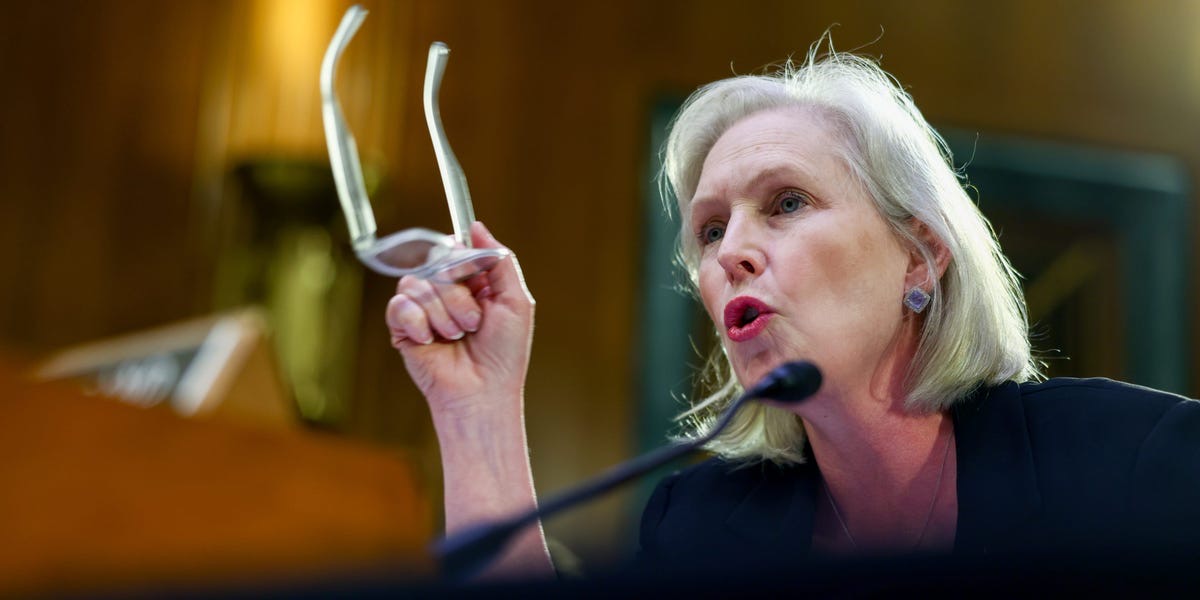
Two Democratic senators have introduced legislation that would expand the list of advanced degrees qualifying for a higher federal student-loan borrowing cap. Sens. Kirsten Gillibrand and Jeff Merkley introduced the bill on Tuesday.
The backdrop is a repayment overhaul from President Donald Trump's administration. It placed a $100,000 lifetime borrowing cap on graduate degrees and a $200,000 cap on professional degrees. The administration also planned to limit professional-degree status to 11 programs, such as medicine and law, while excluding nursing, social work, and education.
Lawmakers in both parties pushed back. They argued that restricting borrowing for nurses would worsen the healthcare worker shortage. A lawsuit blocked the administration from implementing the new limits on July 1, and the Democrats are now trying to write professional status for an expanded list of degrees into law.
The bill would keep professional status for programs that already qualify and restore it to nursing, public health, and physician assistant programs. It would also give the education secretary authority to add other programs that meet the professional-degree requirements. Earlier this year, a bipartisan bill had called for advanced nursing degrees to be included, noting that tuition for some programs exceeded the borrowing cap. The Department of Education, however, has said that most advanced nursing programs borrow within the limits.
Merkley said in a statement that 'nurses, teachers, and social workers are dedicated public servants,' adding that 'we're already facing a shortage of these critical workers.' Gillibrand said students pursuing social work or nursing 'should not have to break the bank to serve their communities.' She added: 'This bill would help our students, our universities, and our communities, and I'm determined to get it passed.'
Democratic lawmakers also say they plan to step up oversight of the student-loan industry and of Trump's repayment changes through hearings, investigations, and legislation.
What this means for the money side: every expansion of federal loan eligibility is a larger obligation for taxpayers, and every cap is a decision about who gets to borrow and at what price. Founders hiring in healthcare, education, and social services should watch how the cap rules settle, because they shape the talent pipeline and the cost of the credentials their hires carry.
The editorial reading here is simple. Federal lending is a transfer of taxpayer money, and expanding it by statute, program by program, is how the administrative state grows. Free enterprise depends on workers who can afford training without open-ended government credit, and on institutions that answer to the market rather than to Washington's list of approved degrees. A bill that deepens federal control over which programs qualify deserves scrutiny, whatever the party sponsoring it.


