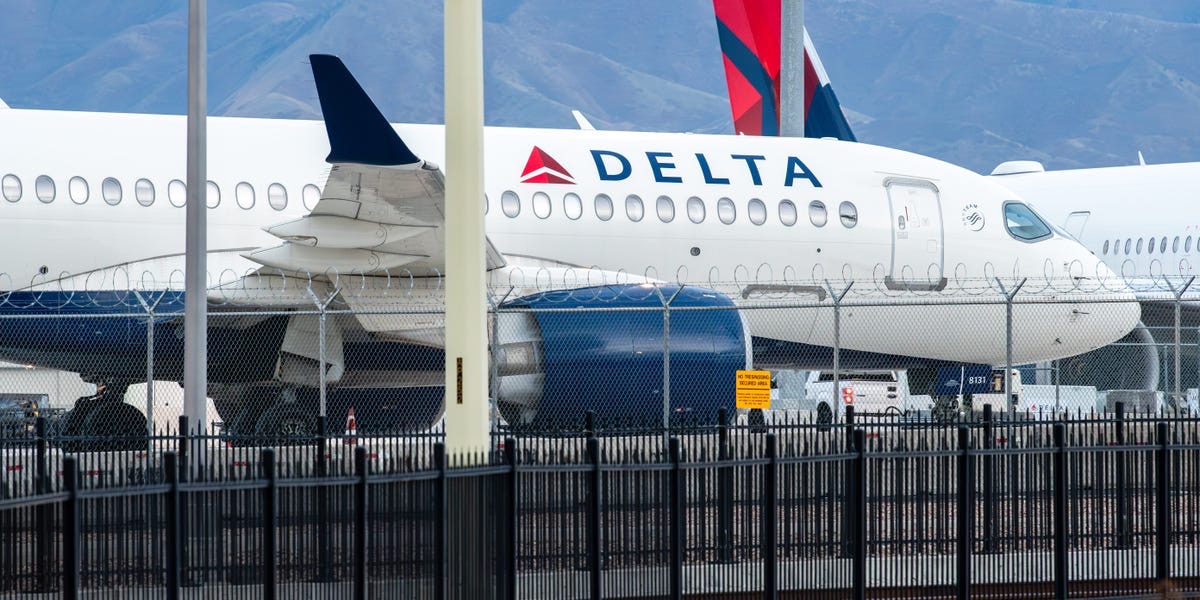
Delta Air Lines delayed or canceled hundreds of flights on Sunday, and by the count of the flight-tracking platform FlightAware, nearly 1,300 Delta flights were delayed. The Federal Aviation Administration said the airline was experiencing issues with its 'weight and balance automation system.'
The disruption landed on the heels of a nationwide ground stop the week before, which the FAA attributed to a failure in its communication systems. This time, the agency was clear on where the problem sat. 'These delays are not related to any FAA air traffic systems,' the FAA said on X, directing passengers to 'check with Delta for the latest information.'
That distinction matters for anyone who holds a ticket. A weight-and-balance system is the software that calculates how a plane's load is distributed before takeoff, a step that cannot be skipped. When it fails, the aircraft cannot leave the gate, regardless of how the crew, the airport or the air traffic control tower is performing. A single point of failure in an airline's internal tooling can ripple across an entire schedule within hours.
Delta did not immediately respond to a request for comment on Sunday. Business Insider's Noah Sheidlower, who was flying from Orlando to New York, reported that his flight had been delayed for hours.
The timing adds to the pressure. The new round of delays comes as people across the country are stockpiling emergency supplies amid a series of technology outages, a sign that confidence in the systems people depend on is wearing thin.
Here is what the episode shows. Airlines have built their operations on software that many travelers never see, and the cost of an outage falls first on the customer and the carrier's own shareholders, not on the government. When a company runs a tight, technology-dependent network, it carries the risk of its own tools. Investors and customers reward carriers that keep their systems running, and they punish the ones that do not.
The principle at stake is accountability. The FAA has made clear that its air traffic systems were not the source of this disruption, which places the responsibility squarely on Delta to fix its own operation and to make passengers whole. Free enterprise works best when companies answer for their failures directly, and when travelers can choose another carrier after a day like Sunday.


