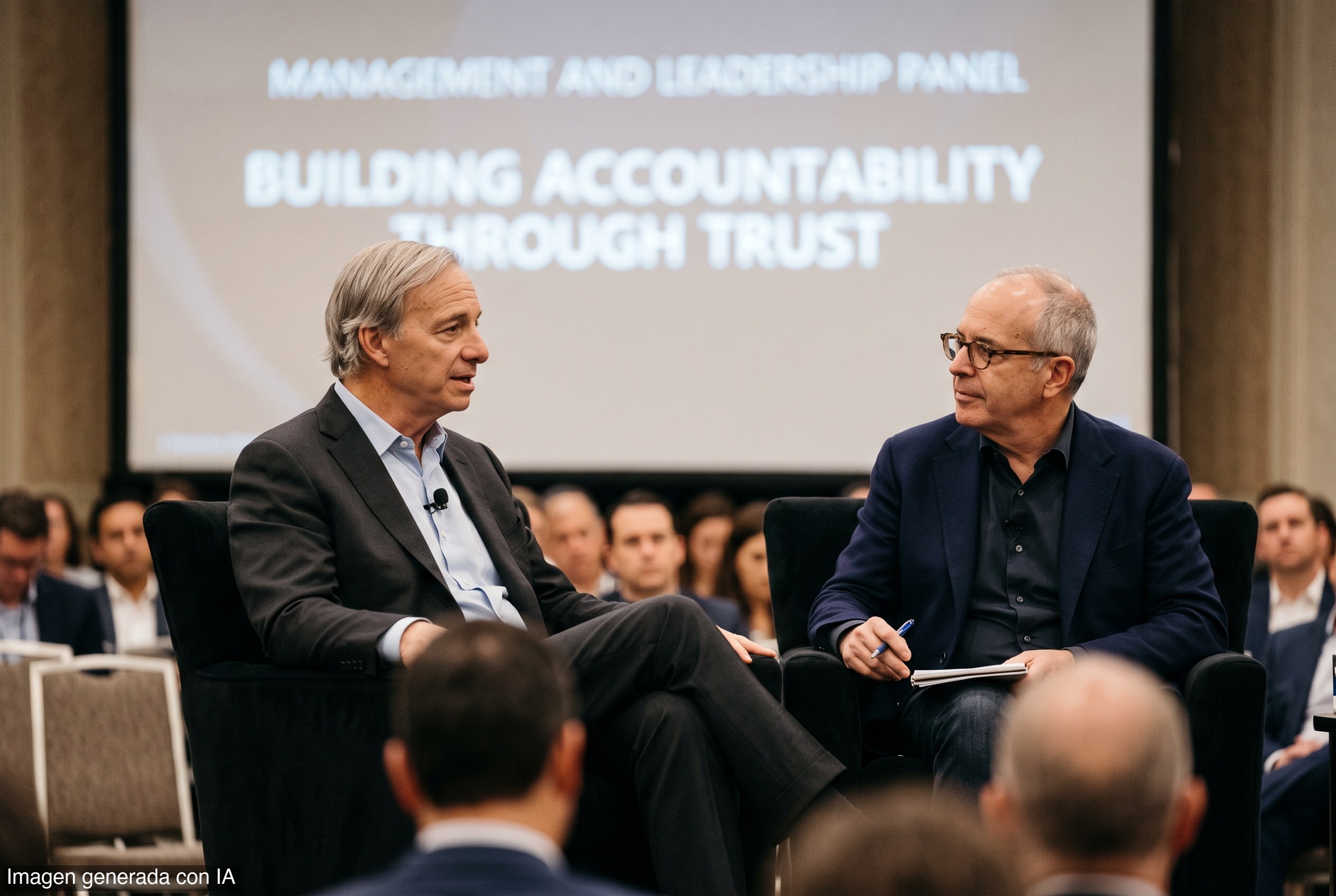
Ray Dalio and Toto Wolff made the same point from two very different worlds: high standards only work when leaders also show genuine care.
At the Milken Institute Asia Summit in Singapore last week, Dalio said his mantra is 'meaningful work and meaningful relationships.' He argued that 'tough love' has to include both discipline and mutual caring. Wolff, the billionaire CEO of Mercedes F1, backed that view with a hard-earned example from a difficult season.
Wolff said he had put 'pressure and pressure' on a senior Mercedes technical leader after the team’s run of eight straight constructors’ championships ended. After Wolff publicly said Mercedes’ car did not deserve to win a race, the executive told him he was thinking about leaving because he could not handle the pressure anymore.
At dinner, Wolff said he changed course. He offered the executive a contract allowing him to leave on one month’s notice, far shorter than the usual notice period for senior technical staff, and told him to set his own salary and bonus.
That shift mattered more than compensation alone. Dalio said money matters, but employees and leaders are also driven by connection, purpose, and belonging. Wolff added that workers are not motivated by pay alone, and that leaders who understand personal priorities like recognition, time with family, or space for a hobby are better positioned to keep them.
Dalio took that one step further, saying that once people have enough money to meet their needs, happiness is no longer closely tied to wealth. 'The greatest determinant of happiness is a sense of community,' he said.
For founders, the lesson is practical. You can push for performance, but pressure by itself is a weak operating system. Teams stay in the game when they know the mission, understand the standard, and believe the leader cares about the person doing the work.
The math is simple: if your best people feel only fear, they will start looking for the exit. If they feel accountability plus trust, they are more likely to stay, improve, and deliver. Founders who get this right move faster because they spend less time replacing talent and more time building with it.


