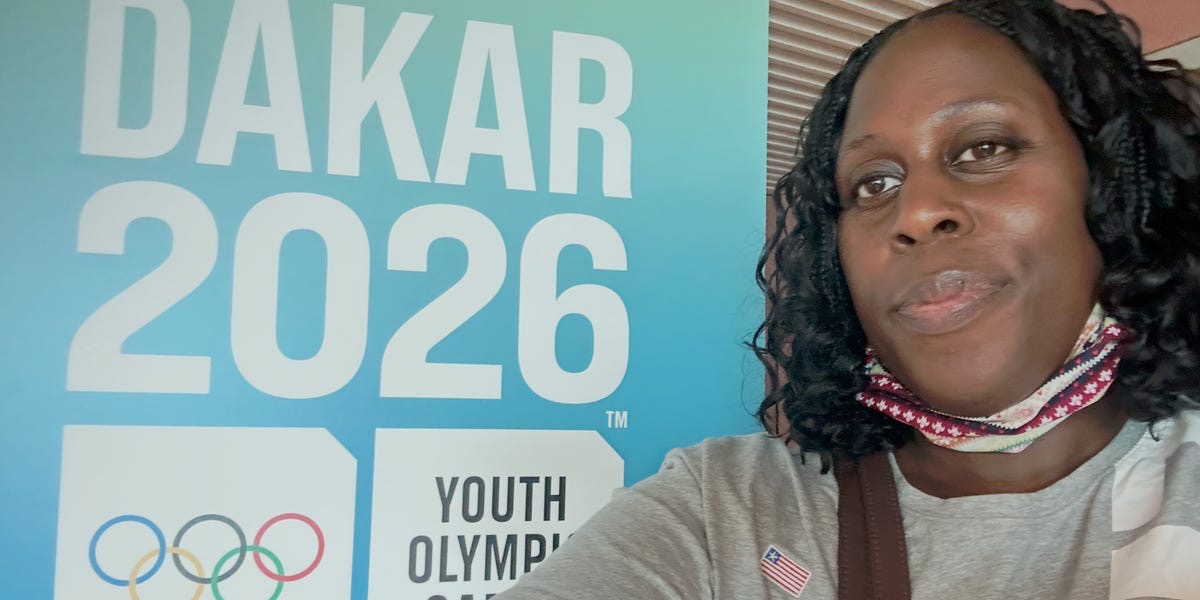
Business Insider's Manseen Logan attended the Dakar 2026 Youth Olympic Games, the first Olympic event held in Africa, after covering Tokyo 2020 and Paris 2024. He went in expecting something monumental, and he found it: taekwondo demonstrations in which young athletes broke boards more than 10 feet high, and breakdancing competitions with Senegalese drummers and dancers performing alongside them.
The cultural blend stood out. A young volunteer stepped into a circle of drummers and began breaking, and Logan described it as a moment that showed how dance has evolved across traditions. For him, the most heartwarming sight was elementary-school-aged children in school uniforms watching the matches. The hosts reported making more than 960,000 competition, ceremony, and Fan Zone tickets available to kids, students, associations, and sports clubs, a move that put the Games in front of the country's youngest citizens.
The logistics were harder. Venues were spread hours apart, and Logan said a round trip from his Airbnb near the taekwondo venue to the Olympic Village took four hours. Complimentary buses and trains helped, and organizers launched an app showing bus schedules. But for the second week of the Youth Games, Logan and a colleague were told at accreditation that the free transport cards had run out. They paid about 1,500 West African francs, roughly $2.50, each way for most of their train rides. The cards turned out to be available. A volunteer at the train station finally sent them to a supervisor on the top floor with a desk full of free cards, but only on their last day in Dakar.
Logan also found the volunteer corps uneven. Organizers cited more than 6,000 volunteers, and while many were helpful, Logan said some seemed uninterested in the work. He learned to look for the oldest volunteer in any space.
The fix for LA 2028 is not complicated. Logan's first recommendation is to push public transportation hard to keep roadways clear, a priority in a city already known for gridlocked traffic. He also suggests separate buses for volunteers, participants, and media, and he credits Dakar for reserving designated spaces on trains so riders weren't packed in as cars filled up.
The editorial lesson is about cost and discipline. Free transit is not a perk; it is operational infrastructure that keeps athletes, staff, and press moving and keeps spending off the public tab. Every ticket that goes unused and every card that runs out at the wrong moment is a small failure of planning. Taxpayers in host cities should expect organizers to budget for the commute as carefully as they budget for the stadium, and Dakar's experience shows that a well-supplied, well-signed transit system can carry a Games. Its missing cards show how quickly that system can fail without clear inventory and clear rules.


