Jensen Huang's return to the top job at Nvidia was supposed to close the chapter. Instead, it has opened a new one on Capitol Hill.
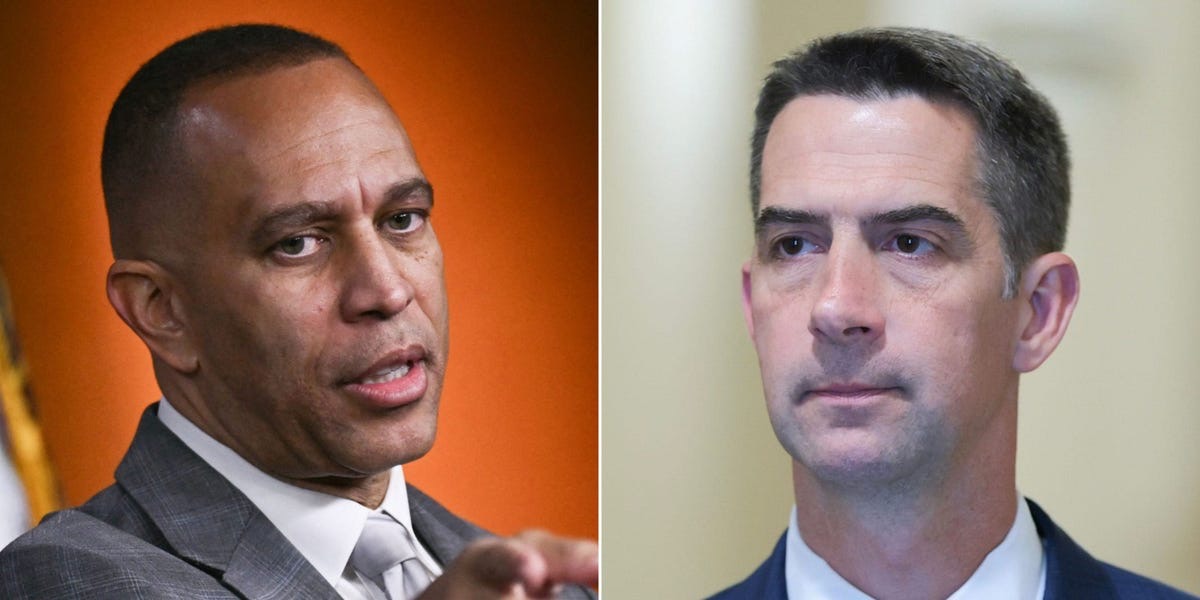
Democratic Rep. Hakeem Jeffries and GOP Sen. Tom Cotton are among the lawmakers calling for investigations. Huang had stepped down after an alleged affair with a Chinese intelligence asset came to light, and the company's board brought him back just 11 days after announcing his departure, while its own independent investigation was still underway. Then, according to the reporting, the board said it did not intend to reinstate him. That reversal is what has lawmakers asking questions.
The scrutiny is coming from both parties. Rep. Brian Mast, chairman of the House Foreign Affairs Committee, said on X that export controls on the most advanced AI chips have been a top priority, and that the reports of an alleged affair and the smuggling of advanced technology to China are 'extremely concerning.' Cotton, who chairs the Senate Intelligence Committee, said the controversy involving Nvidia and Megaspeed, a Singapore-based company under Justice Department investigation for allegedly smuggling Nvidia chips to China, is not 'resolved because Jensen Huang has his job back.' Sen. John Curtis of Utah asked a pointed question: 'who in our government weighed in?'
The calendar is tight. Huang was scheduled to sit for a closed-door, transcribed interview on December 1 with members of the House Permanent Select Committee on Intelligence, the House Foreign Affairs Committee, and the House Select Committee on the Chinese Communist Party. Nvidia's general counsel, Tim Teter, was scheduled for the following day. The Select Committee on the CCP said the interviews remain on the books. Huang is also set to testify publicly before the Senate Banking Committee on December 3.
Nvidia says it has formed a committee of independent directors focused solely on 'trade compliance and national security risks,' is searching for a chief compliance officer, and will keep its internal investigation into the foreign intelligence matter running. President Donald Trump, in a Truth Social post, said the government has 'no reason to believe that Jensen's return to Nvidia poses any risk to national security.' Neither Nvidia nor the White House responded to requests for comment.
Here's the playbook for founders watching this. The math on a leadership reversal is simple: every public reinstatement buys a new round of questions, and the questions now come from the people who write export rules and approve budgets. If your company touches a regulated technology, your board's decisions about people will be read as decisions about compliance. Document why each call was made, who was consulted, and what the independent review concluded before the announcement, not after.
The Commerce Department, which enforces export controls on advanced AI chips, is also in Jeffries' sights. That means the oversight is not only about one executive. It is about whether the enforcement machinery works at all.
For the free-market reader, the stakes are concrete. Nvidia's shareholders and its customers are the ones carrying the cost of this uncertainty, not the politicians asking for hearings. A company that wants to be left alone by government has to earn that trust through its own governance, because a board that cannot explain its reversals invites Washington to explain them for it. Private discipline is still the cheaper alternative to a congressional subpoena.


