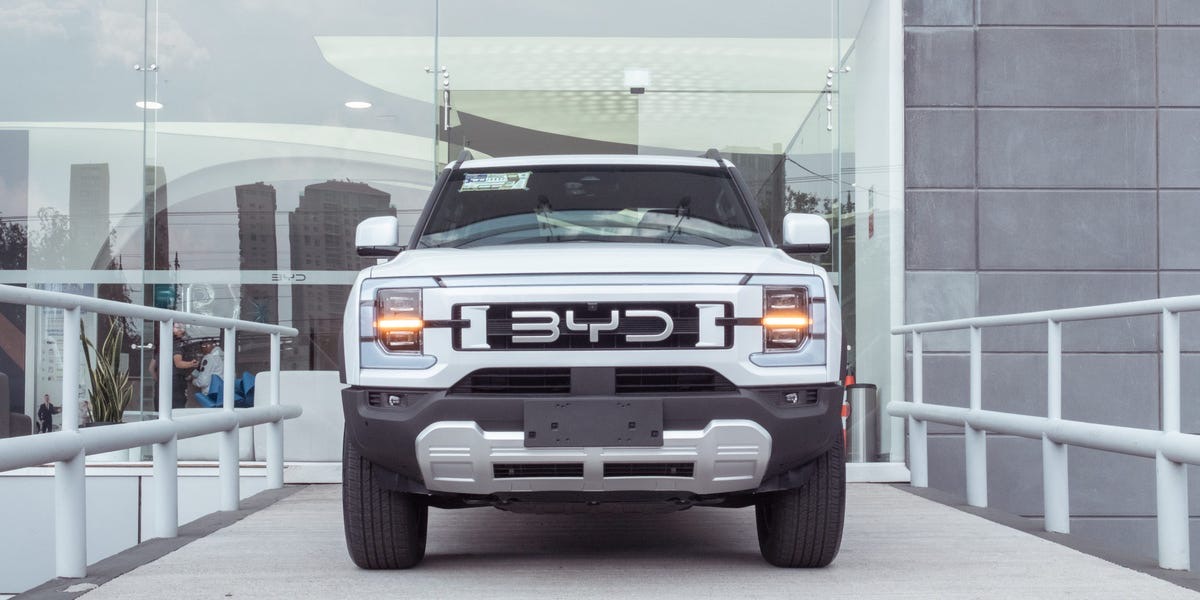
Congress looks increasingly likely to pass bipartisan legislation this year that would ban the import of Chinese autos. The Connected Vehicle Security Act, sponsored by Sens. Bernie Moreno (R-Ohio) and Elissa Slotkin (D-Mich.), would prohibit US sales of cars made with components from adversaries such as China and Russia. The sponsors are aiming for a voice vote in the Senate in December and are working with House colleagues to fast-track the measure there.
The momentum comes from a shift in the coalition behind the bill. Senate leaders from both parties have signaled support, and Majority Leader John Thune (R-S.D.) helped advance the measure out of the Senate Commerce Committee earlier this year. The bigger change is that European and US automakers, which had concerns about parts of the text, now appear ready to line up behind it. According to people familiar with the talks, lawmakers agreed to tweak the language to address concerns from several European automakers and their defenders, including Sen. Rand Paul (R-Ky.). Paul's state is an auto manufacturing hub that has courted more than $10 billion in investment from international automakers, according to Autos Drive America. One source described the talks as being at the 'one yard line,' with the substance resolved and only wording left to finalize.
The definition of a 'Chinese vehicle' has been the sticking point. The original language banned sales of cars made by companies with more than 15% Chinese ownership. Chinese investors own nearly 80% of Volvo and about 20% of Mercedes-Benz. Paul told Reuters in September that he thought the bill unfairly singled out Mercedes. According to a GOP staff member involved in the legislation, the revised agreement means neither company would be blocked from selling cars in the US, and the bill will now offer more flexibility for companies with silent shareholders. Volvo has already secured federal authorization to sell connected vehicles in the US despite its China ties. Lawmakers also kept batteries off the list of covered components, rejecting pressure from parts of the domestic industry. Ford resisted tighter battery curbs that could have affected its licensing partnership with the Chinese battery maker CATL.
Chinese vehicles are already effectively shut out of the US market by 100% tariffs, first imposed under Trump and raised by former President Biden, along with Commerce Department restrictions on vehicle components. Supporters of codification argue that a statute would give automakers the certainty they need to make long-term sourcing decisions.
Here's the playbook for the rest of us. Every rule that narrows the supplier pool raises the cost of building a car, and those costs eventually land on buyers. Consumers have fewer choices, and manufacturers that rely on global supply chains have to rebuild them. The compromise on ownership thresholds shows the lobbying power of incumbents: the bill was changed to protect the automakers already operating here, not to open the door to new entrants.
The administration has been pressing to expand business with Beijing, and President Trump has even mused about letting Chinese car companies build plants and sell vehicles in the US. That tension matters because the trade truce with China is due to expire on Jan. 10. A statute that locks in restrictions would limit the executive branch's room to negotiate. For a free-market reader, the question is simple: should Washington decide which carmakers Americans can buy from, or should buyers and companies make that call? Legislation of this kind hands that decision to the administrative state, and the price of that choice shows up at the dealership.


