Cathay Pacific is spending $19 billion to upgrade its fleet, cabins, lounges, and digital products as it marks its 80th anniversary.
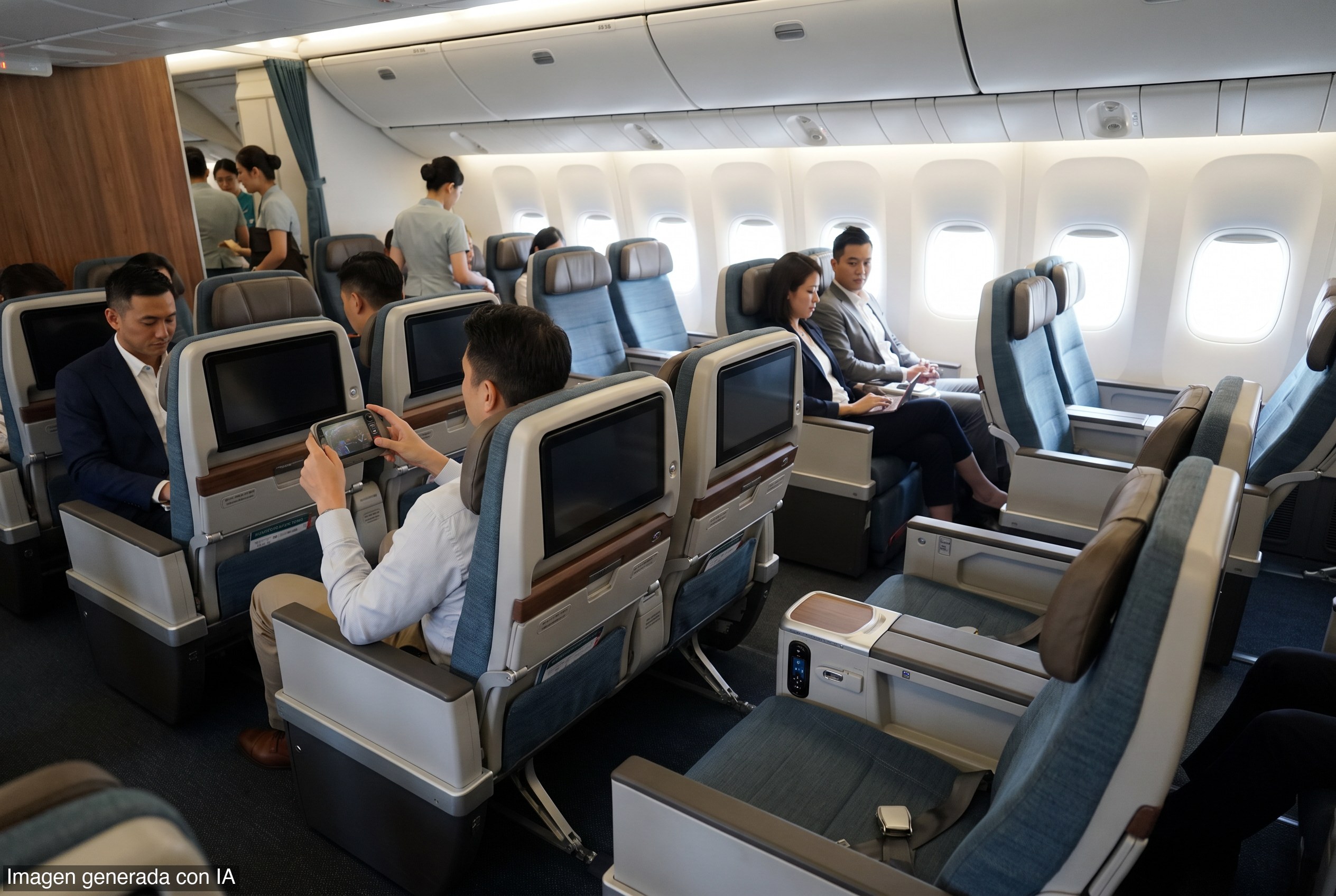
The airline's new-and-improved premium economy and business-class seats are now available on select routes aboard retrofitted Boeing 777-300ERs. The upgrades are currently flying between Hong Kong and Los Angeles, San Francisco, and Vancouver, and they are set to arrive on flights between New York-JFK and Hong Kong in 2027.
Cathay is not moving in a vacuum. Airlines across the industry are putting money into larger premium-economy sections, lie-flat suites, upgraded dining, and lounge access because high-end fares bring in outsize revenue compared with standard economy seats. Alaska and Hawaiian Airlines have also recently unveiled new premium-economy cabins and upgraded business-class suites for long-haul flights.
The pricing reflects that strategy. Mid-November flights from Los Angeles to Hong Kong aboard a retrofitted Boeing 777-300ER range from $1,500 to $2,900 one-way in premium economy and from $3,700 to nearly $5,000 in business class, according to Cathay's website.
Jason Li, Cathay Pacific's vice president of sales and marketing for the Americas, said the airline focused on creating 'enough differentiation between the premium economy and the economy seat' to justify the higher price. He said the new premium economy seat has more privacy, a better recline, and a built-in reading light.
The Aria Suite, first introduced in October 2024, adds a sliding door and divider for maximum privacy. It can recline into a lie-flat bed on long-haul flights. Travelers can choose from three light settings and three seating positions, and the seat also includes wireless charging. Cathay says its in-flight entertainment screens in the Aria Suite are 24 inches, the largest ever offered by the airline.
Cathay also partnered with artists connected to Hong Kong for a 'Gallery in the Skies' display onboard.
For travelers, this is the familiar premium-cabin playbook: charge more, add comfort, and make the upsell feel worth it. For the airline, the math is simple. If more customers trade up, margins improve without adding more seats in the back of the plane.
That is why airlines keep chasing the premium flyer. In an industry where standard economy is a commodity, product differentiation is not just about nicer cabins. It is about pricing power, revenue, and who gets to capture the upside when customers are willing to pay for time, privacy, and a better experience.


