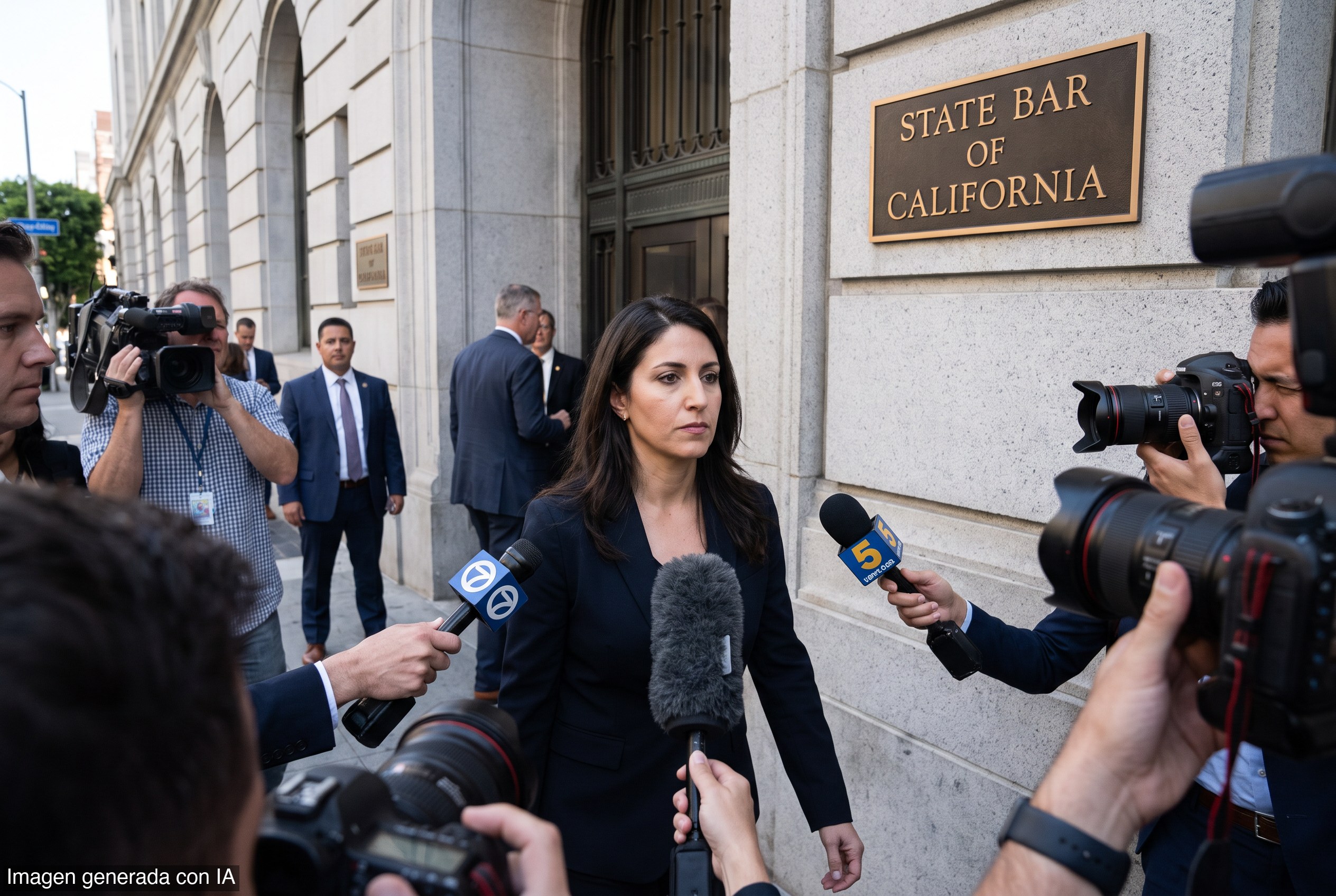
Two watchdog groups on Wednesday filed complaints with the State Bar of California, asking it to investigate whether White House press secretary Katie Zacharia violated California law by describing herself as a lawyer.
California makes it a misdemeanor to practice law or advertise yourself as an attorney without a license. Business Insider reviewed records in all 50 states and the District of Columbia and found no evidence that Zacharia had been admitted to practice law in the U.S. A spokesperson for the California bar also said there is no record that she has ever been licensed to practice law in her home state.
Zacharia has repeatedly referred to herself as a lawyer. Her LinkedIn page says she worked as a general counsel in California and later as an associate on an international practice team at a law firm in China. In a statement provided to Business Insider by the White House, she said, 'I practiced international transaction law, with all the appropriate credentials.'
The Wall Street Journal reported Wednesday that Zacharia failed California's bar exam after graduating from law school there in 2011 and never passed any state bar in the U.S. Business Insider also cited experts in the Chinese legal system saying that only Chinese nationals can become members of China's bar and practice law.
Democracy Defenders Fund and the Campaign for Accountability filed the California complaints separately. The Campaign for Accountability said Zacharia used her legal pedigree to give herself credibility in her White House role, and wrote that 'the public is entitled to rely on the representation that a person who calls herself a lawyer is in fact licensed to practice law.'
White House Communications Director Steven Cheung defended her, calling Zacharia 'a fabulous and wonderful addition to the team' and saying she is 'uniquely qualified and whip smart' to help inform the American people.
For founders, the playbook is simple: credentials are not branding. If a role depends on trust, titles have to be clean, because misrepresentation can become a legal and reputational cost fast.
The bigger issue is institutional credibility. When public-facing leaders blur the line between a law degree and a license to practice, it weakens the standard that protects customers, clients, and taxpayers from paying for empty claims.


