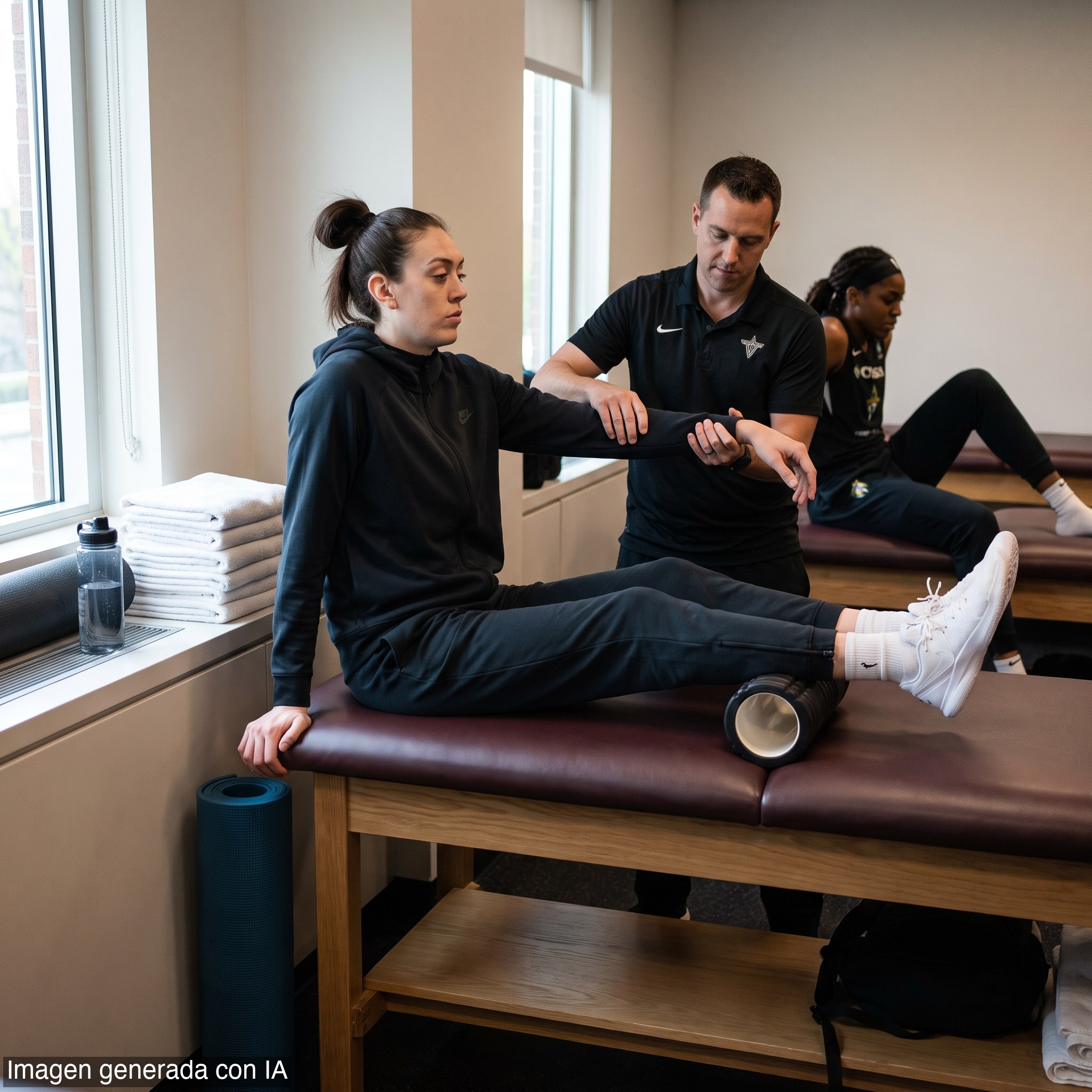
Breanna Stewart is treating recovery like part of the job.
After helping Team USA win gold at the FIBA World Cup in Germany and earning tournament MVP, Stewart turned around within four days and flew to Minnesota to prep for the New York Liberty’s playoffs. She said the quick turnaround makes proper recovery essential.
'It's a quick turnaround, but this is part of the job,' Stewart said in an interview tied to her new partnership with Clif Bar.
After a decade in the WNBA, Stewart says her routine is now highly structured. Her day starts with black coffee while she gets her kids ready, then she heads to the training center at Barclays, where breakfast options include an omelet bar. For training fuel, she leans on a Clif bar or fruit, then later eats chicken or salmon with vegetables and more carbs.
The pregame playbook is just as disciplined. The night before a game, Stewart loads up on pasta. Six hours before tip-off, she sticks to rice so she does not feel too full when she steps on court.
'It works better for me. I don't want to be as full by game time,' she said.
She also uses consistency to stay calm. Stewart said she avoids getting too amped or stressed too early, preferring to save that energy for game time. A late-afternoon nap of up to 90 minutes is part of that routine, followed by more coffee.
Just before warm-up, Stewart does Pilates, a practice she has kept since 2018. Her pregame session includes a five-minute core circuit to activate her muscles and help with injury prevention.
'Your core is probably one of your most important parts to make sure everything is connected and turned on,' she said.
After the game, the recovery does not stop. Stewart uses cold plunges and steam room or sauna sessions. She also often goes straight to the weight room, saying lifting helps her decompress and process the game whether she wins or loses.
But she saves the heavier lifting for the offseason. To train for longevity, Stewart said she has learned not to overdo it and mixes in reformer Pilates and Peloton classes.
'Less is more,' she said. 'You feel like you're doing good, being out there for a lot longer or working out really long, but in the end, it's not going to help your body in the way that you need.'
For founders, the lesson is simple: performance is not just about pushing harder. It is about building a repeatable system that protects the asset you rely on most. Stewart’s routine is a reminder that sustainable output usually comes from discipline, recovery, and knowing when not to add more work. That's the playbook when the margins that matter are your energy, health, and availability to compete.


