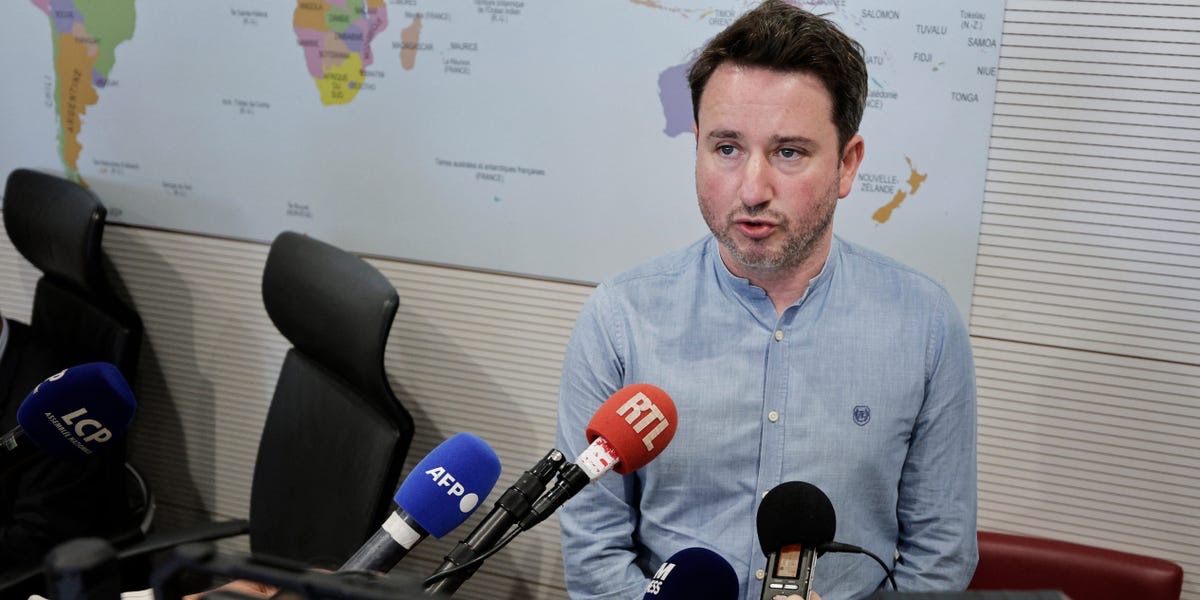
French economist Gabriel Zucman has spent more than a decade designing ways to tax the ultra-rich, and he is not done. The 40-year-old is hosting a summit against what he calls 'international oligarchy' in Paris, less than three weeks after California voters rejected a billionaire tax he backed.
The California campaign was expensive. According to Zucman, opponents including Google cofounder Sergey Brin spent more than $300 million to defeat the initiative. Zucman argues the opposition relied on 'disinformation,' claiming the tax would bankrupt the health system even though 90% of the revenue raised would have gone toward health care. Governor Gavin Newsom also campaigned against the measure. His chief of staff, Nathan Barankin, said a state-only wealth tax 'creates economic incentives for money and jobs to leave the state.'
Zucman is not treating the loss as the end of the story. He points to the US midterms, where a string of Democrats campaigning to tax the ultra-rich won their races. Rep. Ro Khanna (D-Calif.) framed the choice for his party: 'Are we going to stand with the working class or the tech lords?'
The global picture is harder. Talks on taxing the super-rich have stalled under the US presidency of the G20, and Zucman expects the impasse to persist as long as Donald Trump is in the White House. In Brussels, tax legislation generally requires unanimous agreement from all 27 EU governments, which makes a bloc-wide solution difficult. Zucman expects individual governments to move first, pointing to bills in the works in the Netherlands, Belgium and Spain, and to the British government's interest in the idea.
His signature proposal is a minimum annual tax of 2% on the largest fortunes. The French Senate rejected it last year. In France's presidential race, only the far-left France Unbowed party and the Greens fully embraced it. Raphaël Glucksmann, running for a left-wing coalition, has instead proposed higher inheritance taxes above €1.8 million and a one-off 5% levy on fortunes over €100 million. Economist François Geerolf of Sciences Po's OFCE has challenged Zucman's numbers, arguing the ultra-rich are not as undertaxed as claimed and that closing holding-company loopholes would be a better fix than an annual tax on fortunes.
For taxpayers, the real question is who ends up carrying the burden. A wealth tax is a tax on capital, and capital is mobile. Newsom's warning about money and jobs leaving is the cost that a wealth tax levies on the economy, and it lands hardest on the founders and employers who create the jobs in the first place.
The principle at stake goes beyond any single tax. A wealth tax asks the state to decide, year after year, how large a private fortune is allowed to remain. Private property that has been built, taxed and invested should not become a rolling target for governments that want to fund spending they have not been willing to restrain. Free enterprise depends on predictable rules, and a tax that reaches into accumulated wealth every year undermines the confidence that founders need to take risks.


