Scale.
The Latest
NBC Pulls Anti-Israel Ad From 'SNL' Special After Backlash Over $400 of 'Taxpayer Money'•Jensen Huang's Nvidia Comeback Could Usher in an 'Age of Resentment,' Warns Economist Steve Hanke•The Army Has Received Just 180 of Nearly 12,000 Abrams Rounds Due by Summer, and Taxpayers Are Still Paying•Why One Parent Swapped Christmas Gifts for Family Trips, and What It Actually Costs•Musk's Free SpaceX Shares for Every Child: A Gift Worth Watching, and a Reminder That Stakes Beat Subsidies•I Spent a Day Riding, Eating and Cleaning With Robots. Here's the Free-Market Scorecard.•A Budget Traveler's Honest Take on ASKY Airlines: Cheaper Than You Think, Less Consistent Than You'd Like•A Texas Relocation Broker Is Heading to Florida, and Her Clients Say the Tax Math Is Next•Booking Your First Cruise? Here Are the 7 Costs and Surprises Founders Should Plan For•Shake Shack's Holiday Shakes Ranked: The Christmas Cookie Is Sweet, the Hazelnut Chocolate Is Worth Watching•NBC Pulls Anti-Israel Ad From 'SNL' Special After Backlash Over $400 of 'Taxpayer Money'•Jensen Huang's Nvidia Comeback Could Usher in an 'Age of Resentment,' Warns Economist Steve Hanke•The Army Has Received Just 180 of Nearly 12,000 Abrams Rounds Due by Summer, and Taxpayers Are Still Paying•Why One Parent Swapped Christmas Gifts for Family Trips, and What It Actually Costs•Musk's Free SpaceX Shares for Every Child: A Gift Worth Watching, and a Reminder That Stakes Beat Subsidies•I Spent a Day Riding, Eating and Cleaning With Robots. Here's the Free-Market Scorecard.•A Budget Traveler's Honest Take on ASKY Airlines: Cheaper Than You Think, Less Consistent Than You'd Like•A Texas Relocation Broker Is Heading to Florida, and Her Clients Say the Tax Math Is Next•Booking Your First Cruise? Here Are the 7 Costs and Surprises Founders Should Plan For•Shake Shack's Holiday Shakes Ranked: The Christmas Cookie Is Sweet, the Hazelnut Chocolate Is Worth Watching•
Scale.
Sections
The outlet
Money

Bezos says AI could make single-earner households possible again

The Amazon founder said AI-driven productivity could let some families live on one income or even three-day workweeks. For employers, that could make hiring harder as workers gain more leverage over their time.
OCT 12, 2026
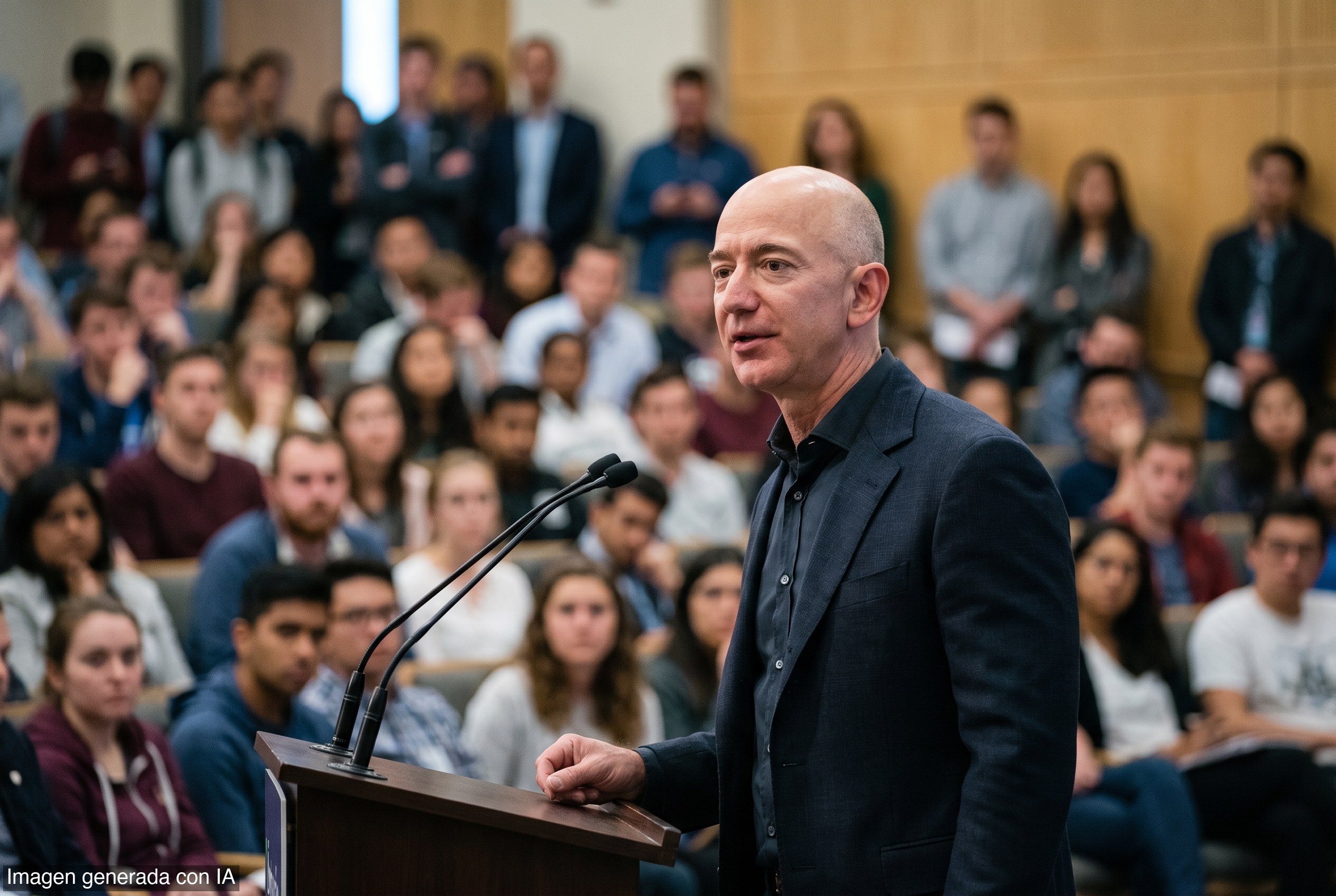
Photo: Imagen generada con IA

Jeff Bezos said AI could push the economy toward a future where more families rely on a single paycheck.

Speaking to Fox News, the Amazon founder said the efficiency gains from AI could mean 'you’re not going to need to have a two-earner income household.' He added that if people do not want to work two jobs, 'they won’t have to.'

Bezos said the same productivity jump could also let some workers support a family on a three-day workweek instead of the traditional five.

'Some people will also decide, you know what, I can support my family working three days a week. That’s what productivity in the economy means,' he said.

He framed that as a hiring problem for companies. If AI raises productivity enough, Bezos said, 'it’s going to actually be difficult to hire people' because fewer workers will need multiple jobs.

The broader pitch from Bezos matches a familiar AI bull case from tech billionaires: more output, more flexibility, and more control over work. Elon Musk has made a similar argument, saying AI could produce an 'age of abundance' with 'universal high income.'

That optimism has not yet shown up as a labor-market shock. The US unemployment rate has moved only slightly since 2022 and has stayed between 4.1% and 4.5% over the past two years. A Yale Budget Lab analysis in June found AI’s effect on the job market since late 2022 has been modest and has tended to change jobs rather than eliminate them.

For founders, the playbook here is simple: productivity gains do not just change margins, they change labor. If AI keeps pushing output higher, the pressure may move from layoffs to retention, hiring, and compensation. Workers who can produce more will have more options, and companies that rely on cheap headcount may feel the squeeze first.

The bigger question is not whether AI can make work faster. It is whether businesses use that extra output to create more value, or just to chase the same results with fewer people. In a free-enterprise system, the firms that adapt fastest will win the best talent and the strongest margins.


LK
Laura Kessler
Money Columnist

Laura Kessler covers capital, taxes, markets and the economy — a founder's guide to the numbers, from runway to revenue.

More from Money

A Budget Traveler's Honest Take on ASKY Airlines: Cheaper Than You Think, Less Consistent Than You'd Like
A Texas Relocation Broker Is Heading to Florida, and Her Clients Say the Tax Math Is Next
NBC Pulls Anti-Israel Ad From 'SNL' Special After Backlash Over $400 of 'Taxpayer Money'
