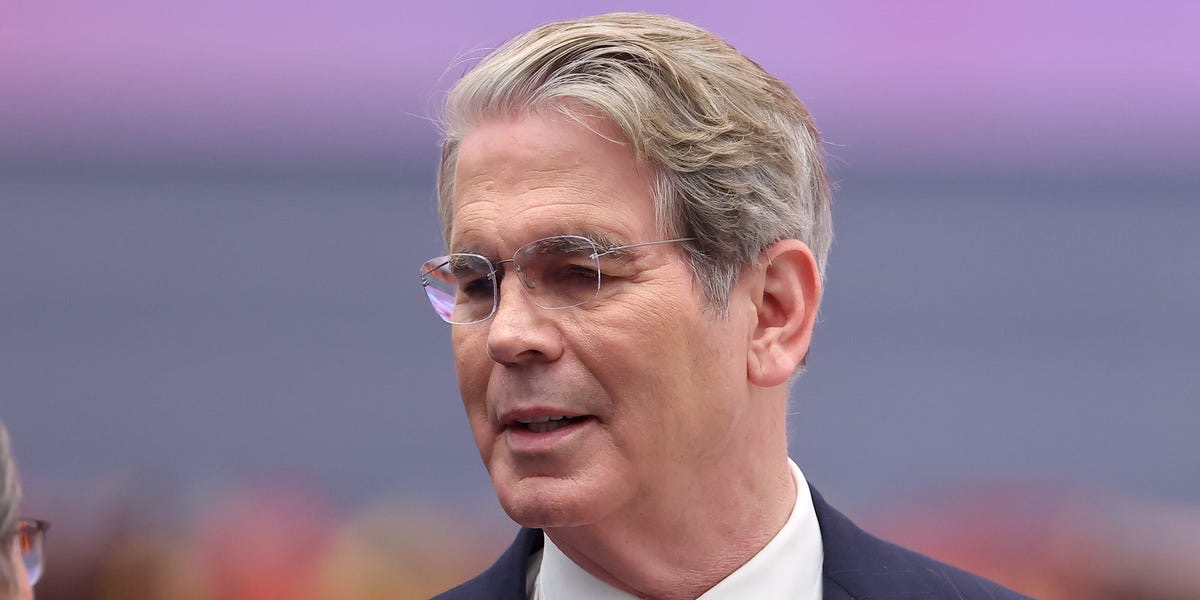
Here's the playbook on a leadership shock that is still unfolding at one of the most valuable companies in the world. On November 15, Treasury Secretary Scott Bessent told Fox's 'Sunday Morning Futures' that Nvidia's board should look for candidates 'outside the company' to replace Jensen Huang. 'They need a dramatic shake-up,' he said.
The position flipped within days. On CBS's 'Face the Nation' on Sunday, Bessent said Huang can now be considered an outsider. 'I said they should go to the outside, but he's on the outside now,' he said. Less than two weeks had passed since Huang resigned.
The resignation came after Nvidia announced on November 12 that Huang had stepped down following reports of extramarital affairs. One of them involved Alice Huang, an executive at Singapore-based Megaspeed, whom US officials have suspected may have been a Chinese spy. According to reports, he was also accused of an affair with a direct report at Nvidia. Nvidia CFO Colette Kress took over as interim CEO. The board has not named a permanent replacement and has confirmed it has no plans to reinstate Huang.
The pressure to bring him back is coming from several directions. President Donald Trump said on November 16 that he would not mind Huang returning and believed he had learned a big lesson. On Sunday, Trump wrote on Truth Social that he hoped the board would rehire Huang because it would be best for the company and the US. Allies such as Elon Musk and Replit CEO Amjad Masad have also called for his return, along with Nvidia shareholders and current and former employees. A petition titled 'Stand with Jensen' had more than 200,000 signatures as of early Monday, according to its website.
Bessent also argued that the affair with Alice Huang could distract from questions about Nvidia's culture of compliance. He dismissed the distinction between those questions and 'one person's foibles' as 'kind of a canard.' Nvidia's representatives did not immediately respond to a request for comment from Business Insider.
What does this mean for founders? The math is simple: a board's credibility rests on consistent governance, and a leadership vacuum invites outside voices to weigh in. When a company's share price, staff, and national-security questions all depend on one executive's personal conduct, the cost of ambiguity rises fast. Founders who build clear succession plans, compliance reporting that does not depend on any single person, and a board that can act on its own timetable will move faster when the unexpected happens.
The editorial reading is this: a free-enterprise company should be judged by its governance and its results, and shareholders, not cabinet officials or the White House, should decide who runs it. Nvidia's board holds that authority. Its decision on a permanent CEO will tell investors whether the company's compliance culture is strong enough to stand on its own, with or without Huang at the top.


