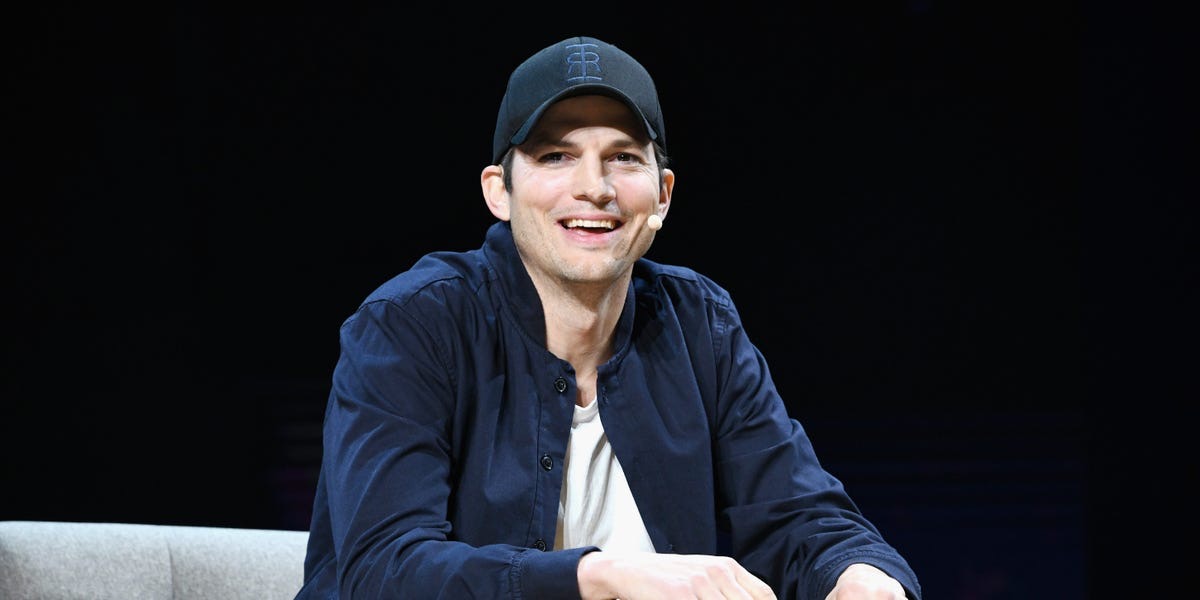
Ashton Kutcher is best known for his acting career, but in Silicon Valley he is known as one of the most active investors in the room. Business Insider has called him the most active celebrity investor and, arguably, Hollywood's most experienced tech investor. Here's the playbook behind a career that has produced some of the biggest returns in recent venture history.
He started as an angel investor, with a simple thesis: connect new companies building solutions to everyday problems with the people who need them. 'I spend a lot of time thinking about new and simpler ways to do things, but don't have enough time to execute on all those ideas,' he told Grow. 'So I found people who were executing on them and invested in their success.'
The path into the tech world ran through his production company, Katalyst, which he founded in 2000. Katalyst's digital chief, poached from TechCrunch, introduced him to the big names in Silicon Valley. Kutcher said he spent 90% of his time just listening. That habit paid off. In 2009, at the request of billionaire Marc Andreessen, he invested $1 million into Skype, 18 months before Microsoft bought the company and quadrupled its value, according to Forbes.
The real step up came through mentorship. Kutcher has credited Ron Conway, a Silicon Valley angel investor, with opening his portfolio and explaining his strategy. From there, Kutcher cofounded A-Grade Investments with talent manager Guy Oseary and businessman Ron Burkle. Within six years, the firm turned a $30 million fund into $250 million, according to Forbes. Kutcher and Oseary each put in $1 million of their own money, while Burkle contributed $8 million. Backers included Salesforce CEO Marc Benioff, former Google CEO Eric Schmidt and Mark Cuban.
A-Grade focused on early-stage companies that met three tests: founders the firm wanted to work with, a problem-solving mission, and a business model that could scale. Not every bet worked. BlackJet and Fab.com were failures. But the winners carried the fund: $500,000 into Uber, $2.5 million into Airbnb and $3 million into Spotify.
The next chapter is Sound Ventures, which has invested $435 million into Anthropic, the company behind Claude, since 2023. Bloomberg estimated that Sound's stake could be worth about $7 billion before Anthropic's IPO on November 19. Kutcher left Sound Ventures as a partner earlier this year but remains in an advisory role, according to Inc., which leaves him positioned to benefit from the offering. In June, he announced a new AI-focused firm with Morgan Beller, a former partner at NFX, according to The Wall Street Journal.
The math is the lesson. Early checks into companies with strong founders and real scale can outpace any salary, and a few winners can outweigh many misses. For founders and investors alike, the discipline is the same: back people who execute, stay close to the market, and be willing to wait.
The market is giving the same signal to founders. Proof of value, not celebrity, drives the outcomes. Kutcher's own words on the IPO say it best: years of work, micro victories and failures stacked on top of one another.


