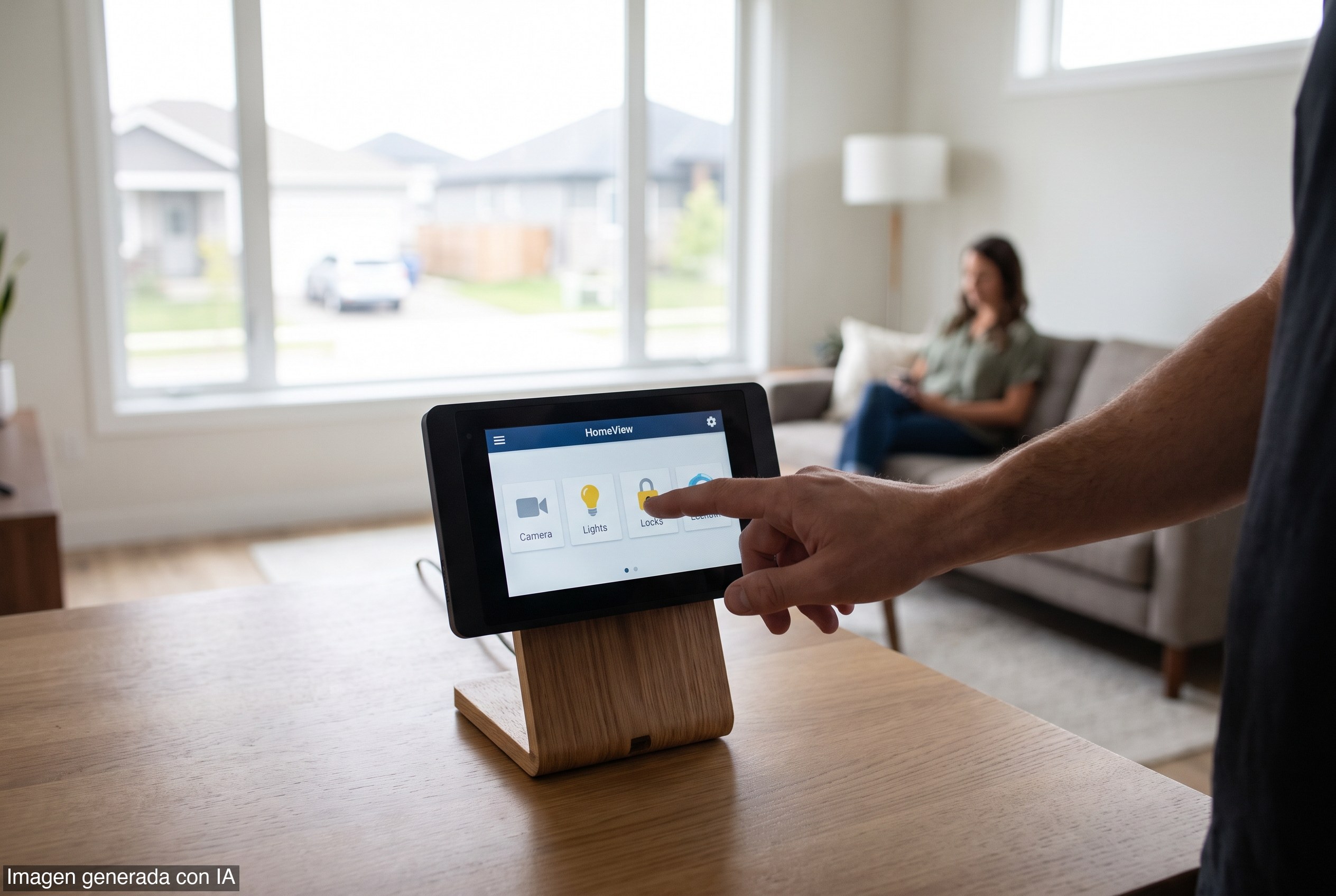
Apple has entered the smart home category with HomeView, a new AI-powered hub priced at $299.
The device has a 7-inch Liquid Retina display, sits on a domed speaker base, and comes in a tabletop version and a wall-mounted version. Apple said HomeView works with Siri AI and can recognize up to six people, then surface personal content such as messages, calendar information, contacts, notes, and preferred apps.
The company said the device can control connected home accessories, including camera feeds, thermostats, lights, doors, and blinds. Apple said it can livestream up to nine video feeds at once, and with a supported iCloud+ subscription it can deliver end-to-end encrypted recognition of people, familiar faces, pets, packages, and vehicles.
Apple has also loaded the hub with apps including Calendar, Messages, Photos, FaceTime, Notes, Reminders, Music, and Podcasts. That means users can check a calendar appointment, send a message, play music, or look at photos without reaching for an iPhone.
Apple said the device is designed to work well in shared spaces, including the kitchen. The company is also tying HomeView to a new lineup of smart home accessories, including cameras, thermostats, a lock, and a smart deadbolt developed with LG Electronics and Schneider Electric.
Preorders opened Tuesday, and the device will be available on November 13. TechCrunch reported that it comes in four colors: silver, starlight, rose pink, and space gray.
HomeView gives Apple a much more direct fight with Amazon and Google, both of which already have established smart display products. It also shows Apple is willing to push deeper into a market where it has long relied on HomeKit and third-party hardware instead of its own.
For founders and operators, the playbook is familiar: once a platform owns the interface, it gets harder for customers to leave. Apple is making that ecosystem lock-in more concrete inside the home, where control, convenience, and recurring device use matter most. The smart home market is now not just about gadgets. It is about who controls the household dashboard, the data flow, and the daily habit loop.


