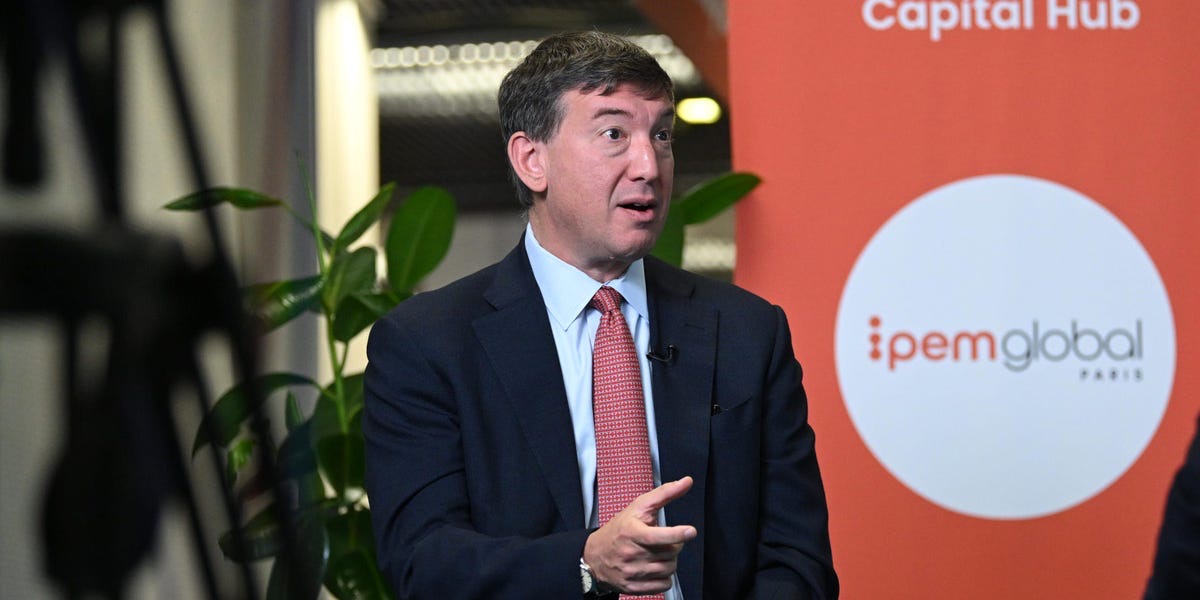
Scott Kleinman, co-president of Apollo Asset Management, has a rare vantage point on what makes someone a partner. He has hired 140 of the firm's 200 partners, and some of them started in junior roles before moving up. He was also the 13th hire at the firm, which now has roughly 6,000 employees.
Kleinman told Business Insider there are two overarching traits that separate partners from everyone else. The first is intellectual curiosity. The people who make partner, he said, know their stuff but keep asking 'why?' They want to know what could be done better, how to disrupt the business, and how to disrupt themselves. He also looks for what he calls 'cross-stitching': people with interests outside their core expertise who connect knowledge across domains.
The second trait is grit, or 'that willingness to just grind.' These employees work harder than the next person and don't take no for an answer. Kleinman's point is that when curiosity and grit combine, 'that's where you just do better than most people.'
But he also warned that effort alone is no longer a reliable edge. 'The thing that got me here is not going to get you there,' he said at the Apollo Opportunity Foundation's biennial summit in October. As AI levels the playing field, working harder than the next person may not be enough to separate top performers.
The same logic applies to junior talent. Kleinman said young people need to consider 'the moment that we're in' and the gaps that need filling. He told Business Insider that entrepreneurship is not the only route, but it is 'a route,' and one that more young people will have to consider because big companies will be hiring less. Apollo plans to cut its headcount growth to 3-5% annually, down from its typical 12-15% range.
Other executives have said much the same. PwC's US CEO and the CEO of Nestlé both named curiosity as a key quality they look for in promotion candidates. Walmart's chief people officer pointed to grit, defined as the ability to persevere through difficult circumstances, as one of two traits that get workers promoted quickly.
Here's the playbook for founders. Hiring is expensive, and headcount is a fixed cost that compounds. If the big firms are slowing their hiring, the talent pool gets more competitive for you, and the people you do hire need to be the ones who keep asking why. Look for the candidate who reads outside their lane and who keeps grinding when the first plan fails.
The math is simple. A team of curious, persistent people with lean headcount will outrun a larger team that only works harder. Kleinman's advice is a reminder that in the AI era, the differentiator is judgment and drive, not hours logged.


