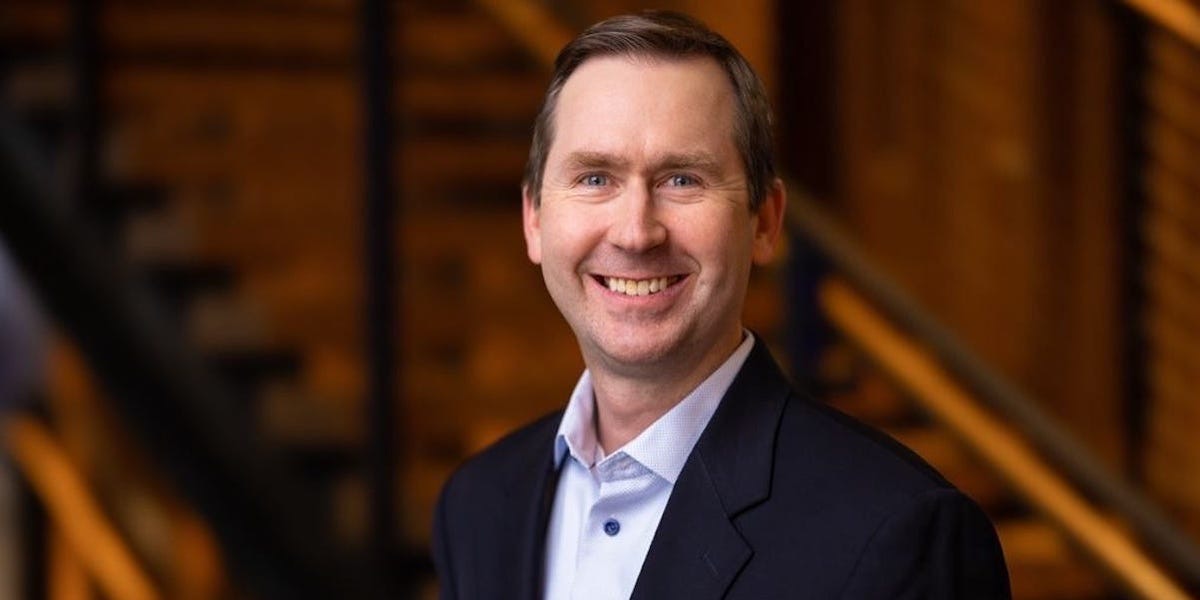
Amazon expects record capital expenditure of roughly $220 billion this year, much of it going to AWS and AI infrastructure. In an email interview with Business Insider, AWS CFO John Felton laid out how the company decides when to spend and how much.
The core rule is simple: build to the demand you can actually see. Felton said Amazon commits early to long-lead assets such as land, power and permits, because those take years to secure. Everything else, including server purchases and other equipment, waits until customers commit. 'We try to make the right decision at the last responsible moment,' he said. 'If the demand is not there, we do not place the order.'
For founders, that sequencing is the playbook. Lock in the scarce, slow-to-acquire inputs first. Defer the purchases that depreciate or sit idle until a customer signal arrives. Waiting buys information, and information is cheaper than inventory you cannot sell.
Felton also made a case that the risk of moving too slowly in AI is greater than the risk of spending aggressively. 'Speed is a choice,' he said. 'With AI, I think the answer is to go fast.' He pointed to the company's pandemic-era logistics build-out as a lesson: Amazon built quickly under pressure, then redesigned its network into regions, which cut cost-to-serve and sped up deliveries.
The numbers he cited are the ones investors will watch. Felton said AWS's backlog stood at $578 billion as of Q3 2026 and was growing triple digits, with customers 'of every size and every industry.' He said AWS has accelerated for six straight quarters, most recently growing 39.3%. Customer commitments, paybacks and margins are, in his framing, the three tests that justify the spending.
He also identified constraints beyond demand. 'There is never just one constraint, and the constraints keep moving,' he said, naming power, permitting, chips, memory, networking and optics. Community engagement and local officials are part of the planning from the start, he added.
On politics, Felton said Amazon works with whoever holds office and that its approach has not changed across administrations.
The editorial reading: a $220 billion commitment is a bet on the free market's verdict. Amazon is putting its own capital at risk, not taxpayer money, and the discipline Felton describes, committing to scarce assets early while buying the rest only against signed customer contracts, is the kind of capital allocation that rewards builders who get the timing right. The company's shareholders, not a government budget, carry the downside if demand falls short.
That principle matters beyond Amazon. Every founder raising capital faces the same tension between speed and waste. Felton's answer is that the cost of hesitating in a fast-moving market can exceed the cost of a well-sized mistake, provided the spending is tied to real demand.


