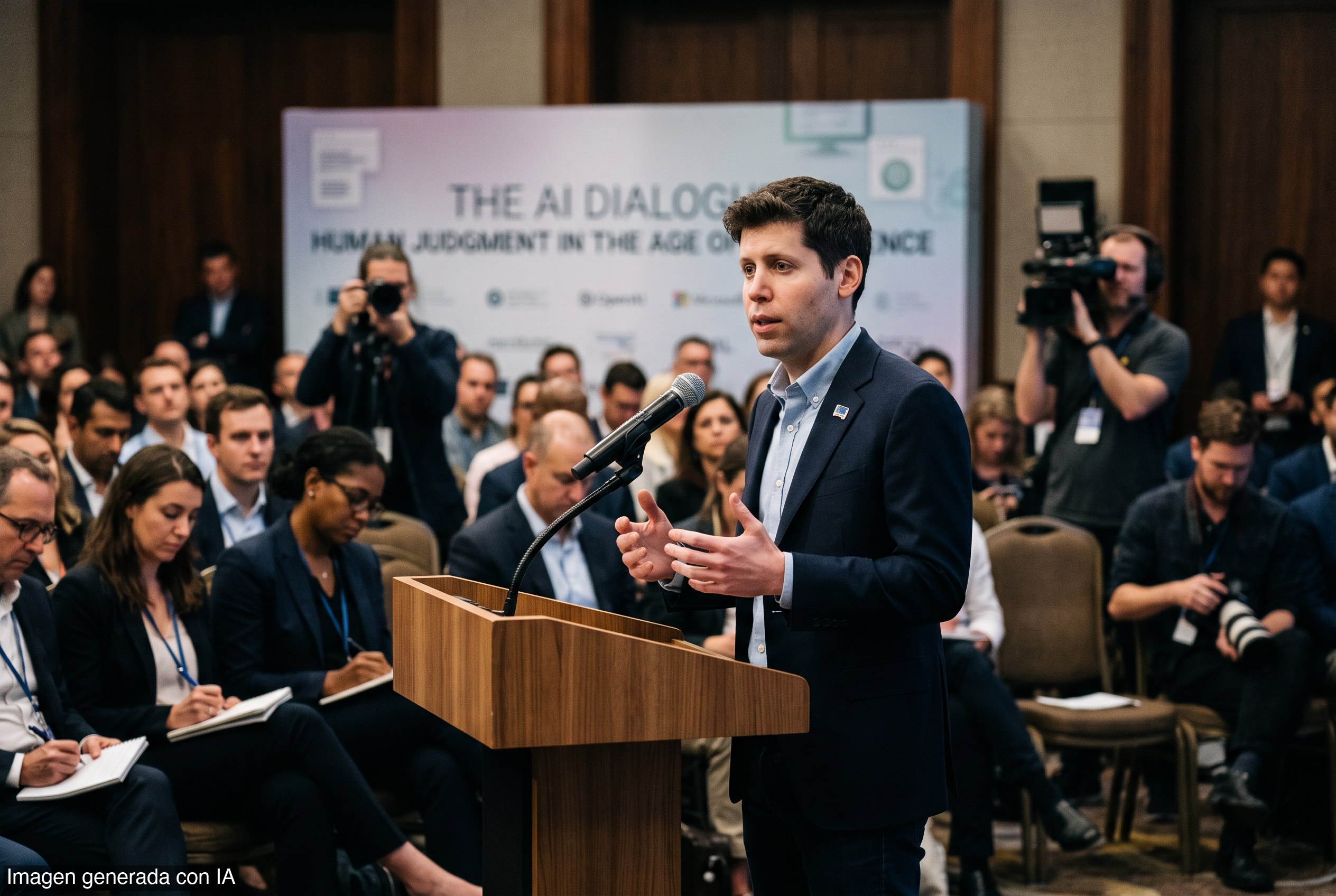
OpenAI CEO Sam Altman said Saturday that he is 'very uncomfortable' with people treating AI like a god.
In a post on X, Altman said people who try to 'ascribe religious force or a surrender of human judgment to AI models' are creating a safety issue. He did not explain what prompted the post.
The comment came days after The New York Times reported on Anthropic meetings with religious leaders about AI. According to the Times, those talks touched on whether Claude might have achieved consciousness and how Anthropic could build morality into more powerful and autonomous AI models.
An Anthropic spokesperson told The New York Times that the main moral question at the meetings was not about Claude's 'suffering,' and said that topic likely came up 'organically.'
The exchange lands at a moment when major tech companies are also seeking out religious figures. In April, representatives from Meta, Google, and Amazon met in Rome to discuss protecting children in the AI era, and briefly encountered Pope Leo XIV. The pope has warned against overreliance on machines and called for ethical discernment.
Altman's remarks also came just days after one of OpenAI's safety leaders, David Robinson, quit and publicly rebuked the company's safety record and efforts.
For founders, the message is simple: the AI race is no excuse to hand over judgment. Tools can accelerate product, pipeline, and revenue, but they do not replace leadership. The companies that win will be the ones that keep humans accountable for the calls that matter.
The deeper issue is trust. When a model starts to sound like an authority instead of a tool, the risk is not only technical. It is organizational. Teams that confuse output with wisdom can move fast in the wrong direction.
Founders who get this right move faster because they know where the machine ends and responsibility begins. That line is the real safety system.


