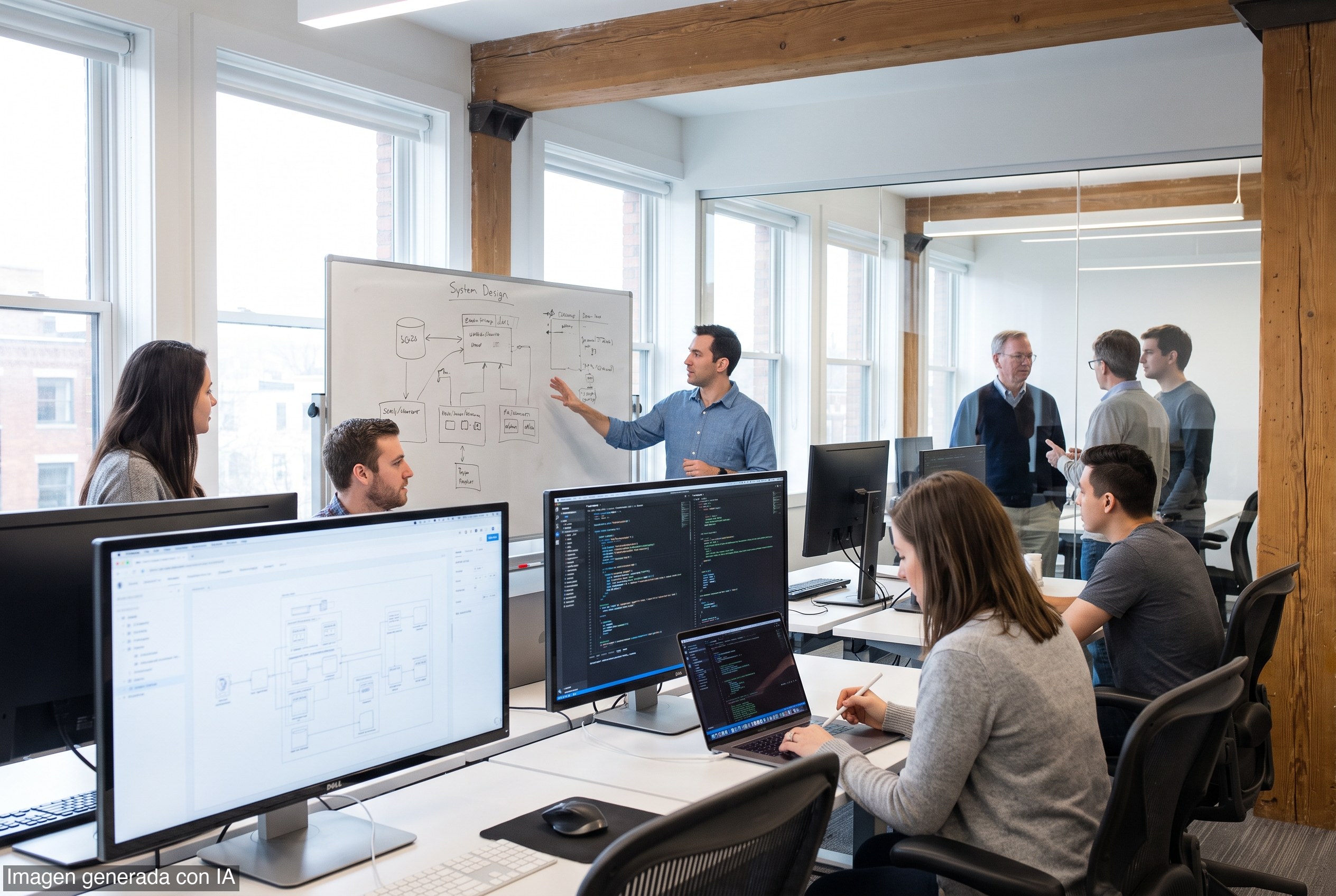
Eric Schmidt says the next generation of programmers should stop thinking like builders and start thinking like architects.
The former Google CEO, now 71, told Blackstone's 'Inside Blackstone' podcast that AI coding tools have surpassed him at the work he once did best. He said he was 'a very, very good programmer' at 22, but that today's tools can write code he cannot write, even now.
'I look at the code it writes now. I can't write that code,' Schmidt said. 'I couldn't when I was 22, right? So, I got beaten, right? Hard.'
His answer is not to quit coding. It is to learn enough code to give AI tools better instructions.
Using a house analogy, Schmidt said he used to have to 'build the house.' Now, he can 'architect the house' with tools such as Claude Code, OpenAI Codex, or future products from Google. In his framing, the human role shifts from execution to design. The machine writes the code. The person decides what the code should do.
Schmidt said 'the next generation of people like me will be the architects,' and that they will be 'very, very smart' and able to say, 'this is what I want.'
That shift is already showing up inside AI companies. At Daytona, a 30-person AI startup, CEO Ivan Burazin previously said each of the 16 engineers manages an average of five AI agents, and no one there writes code anymore.
Anthropic CFO Krishna Rao also said on the 'Invest Like the Best' podcast that AI now handles much of the execution layer of knowledge work, including producing some of the company's financial statements. He said that frees humans for oversight and strategy. '90 plus percent of our code is actually written by Claude Code,' Rao said. 'Everyone kind of becomes a manager.'
For founders, the playbook is getting sharper. If AI is doing more of the production work, then leverage shifts to people who can specify the right problem, not just grind through the task. That favors operators who can think in systems, not just in syntax.
The risk is obvious too. When the administrative layer of work gets automated, the value moves up the stack. The people who win will be the ones who control the direction, own the product judgment, and keep a tight grip on quality while the machine handles the draft.
Founders who get this right move faster. Those who do not may find that the code is still being written, just without them at the keyboard.


