Scale.
The Latest
NBC Pulls Anti-Israel Ad From 'SNL' Special After Backlash Over $400 of 'Taxpayer Money'•Jensen Huang's Nvidia Comeback Could Usher in an 'Age of Resentment,' Warns Economist Steve Hanke•The Army Has Received Just 180 of Nearly 12,000 Abrams Rounds Due by Summer, and Taxpayers Are Still Paying•Why One Parent Swapped Christmas Gifts for Family Trips, and What It Actually Costs•Musk's Free SpaceX Shares for Every Child: A Gift Worth Watching, and a Reminder That Stakes Beat Subsidies•I Spent a Day Riding, Eating and Cleaning With Robots. Here's the Free-Market Scorecard.•A Budget Traveler's Honest Take on ASKY Airlines: Cheaper Than You Think, Less Consistent Than You'd Like•A Texas Relocation Broker Is Heading to Florida, and Her Clients Say the Tax Math Is Next•Booking Your First Cruise? Here Are the 7 Costs and Surprises Founders Should Plan For•Shake Shack's Holiday Shakes Ranked: The Christmas Cookie Is Sweet, the Hazelnut Chocolate Is Worth Watching•NBC Pulls Anti-Israel Ad From 'SNL' Special After Backlash Over $400 of 'Taxpayer Money'•Jensen Huang's Nvidia Comeback Could Usher in an 'Age of Resentment,' Warns Economist Steve Hanke•The Army Has Received Just 180 of Nearly 12,000 Abrams Rounds Due by Summer, and Taxpayers Are Still Paying•Why One Parent Swapped Christmas Gifts for Family Trips, and What It Actually Costs•Musk's Free SpaceX Shares for Every Child: A Gift Worth Watching, and a Reminder That Stakes Beat Subsidies•I Spent a Day Riding, Eating and Cleaning With Robots. Here's the Free-Market Scorecard.•A Budget Traveler's Honest Take on ASKY Airlines: Cheaper Than You Think, Less Consistent Than You'd Like•A Texas Relocation Broker Is Heading to Florida, and Her Clients Say the Tax Math Is Next•Booking Your First Cruise? Here Are the 7 Costs and Surprises Founders Should Plan For•Shake Shack's Holiday Shakes Ranked: The Christmas Cookie Is Sweet, the Hazelnut Chocolate Is Worth Watching•
Scale.
Sections
The outlet
Grow

AI family photos are turning a privacy habit into a household risk

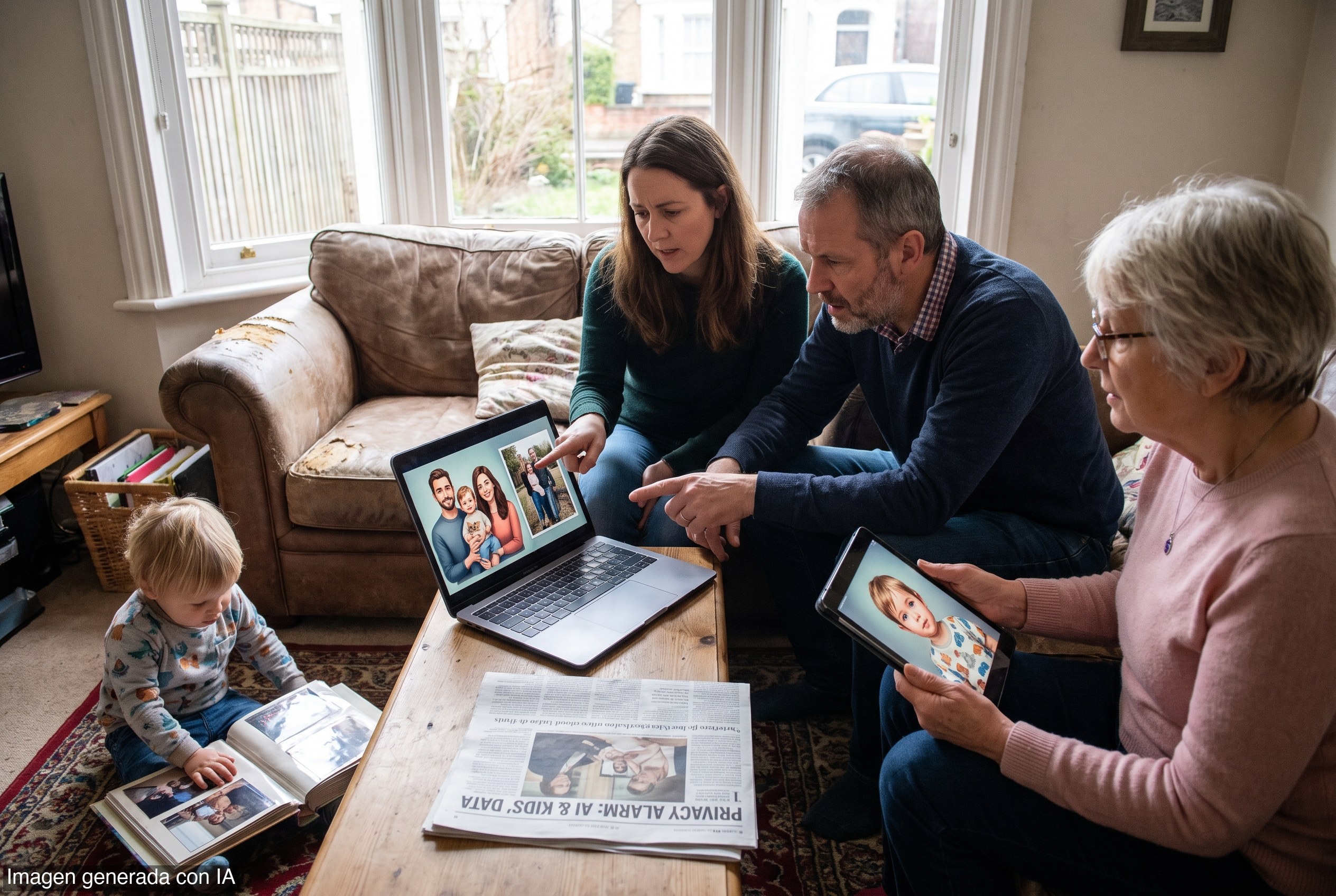
Grandparents and parents are uploading children's images into AI tools for cute keepsakes, but the same habit is raising alarms about privacy, consent, and misuse. The tension is now moving from social media etiquette into a broader question of who controls a child's image.
SEP 21, 2026
Photo: Imagen generada con IA

The newest family fight is not about screen time. It is about who gets to feed a child's face into AI.

In recent examples, grandparents and other relatives have used AI tools to turn family photos into Christmas scenes, coloring pages, caricatures, books, T-shirts, and toys. One mother said her own relatives have sent her AI-made images of her toddlers riding the Polar Express, while another family member added a sleeping child into a photo after the fact. The reactions have split the room: some see harmless fun, while others see a privacy problem with long-term consequences.

Ben Metcalfe, who works in AI governance, said an AI-generated caricature of a family photo at his grandparents' home felt like a 'major privacy concern.' Jen, a 32-year-old mother, said she found the images adorable but unsettling. She said she worries about how AI tools could use her children's faces in the future and said, 'We all aren't educated enough about what AI companies are doing with our content.'

That concern is not just personal. The report says lawmakers are calling for kids to be booted from social media, parents are sharing less with AI companies, and Europe is considering rules that would limit chatbot and AI companion access for users younger than 15.

The market incentive is also obvious. The same platforms and websites that encourage personalization are profiting from oversharing. That means the family photo is no longer just a family photo; it is data, training material, and a product feature.

The risks are not hypothetical. The report says xAI faces a lawsuit from a woman who is a child sexual abuse survivor, who alleges Grok created new deepfake exploitive images of her after real images of her abuse were uploaded. The report also says X told The New York Times this month that it blocks users who post or engage with such material, reports them to authorities, and uses automated filters to block exploitative material from being uploaded. Meta, meanwhile, faced backlash this summer and shut down a Muse Image tool in less than a week after it let users generate images based on publicly posted photos.

For founders, the lesson is simple: personalization without consent is a liability. The closer AI gets to the home, the more trust becomes the real currency. And once a child's face is inside the system, the family may never fully control where it goes next.


RO
Rachel Otis
Grow Columnist

Rachel Otis covers growth: sales, marketing, pricing and the strategy calls that turn a small business into a bigger one.

More from Grow

NAPA Bets on Video-Game Training to Fill 642,000 Empty Auto Tech Jobs
Thomson Reuters Bets on Open-Source AI From Both the US and China to Cut Costs
She Quit Her Finance Job for a Cinnamon Roll Bakery. A Year In, the Hardest Lesson Was Hiring
