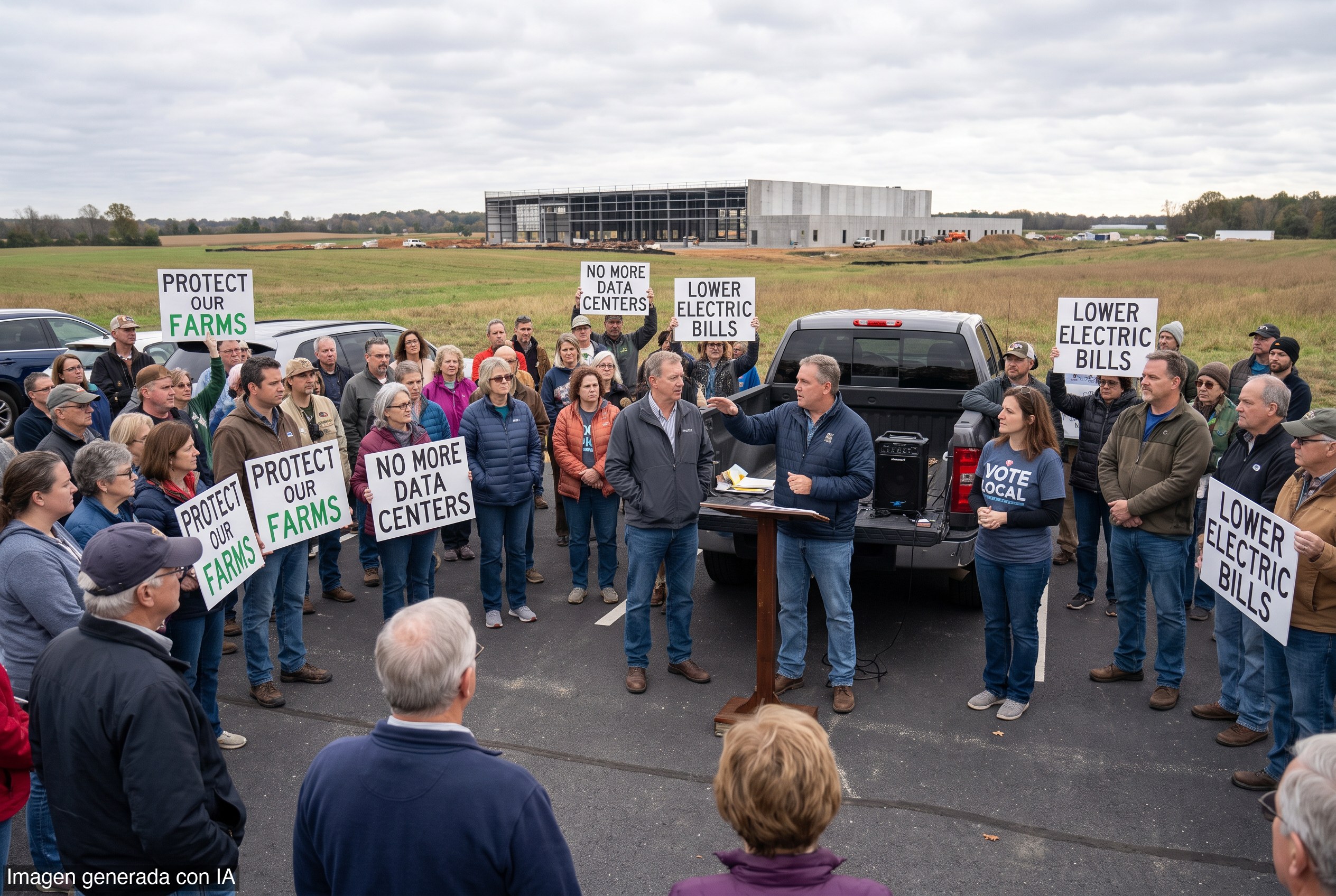
AI has become a frequent talking point in US political ads, and the attack line is not what many tech executives expected. In the 130 TV ads reviewed by Business Insider, campaigns focused less on killer-robot fears and more on the cost of powering data centers.
That matters for founders because the politics are getting concrete fast. Candidates in both parties are tying AI infrastructure to higher electricity bills, water use, land use, and tax breaks for corporations and billionaires. In states like Ohio, Pennsylvania, Texas, and Nevada, the message is landing where data centers already operate, are under construction, or have been proposed.
Fred Simon, a Republican candidate who ran in the June 9 primary for Nevada's 2nd District, said data centers are 'draining our water, driving up our power bills, threatening our way of life.' Chuck Gray, a Republican candidate, said in one spot that 'Big Tech billionaires are coming for Wyoming' and want 'massive data centers, more control over our land, our water, and our way of life.'
The criticism is not limited to Republicans. Paige Cognetti, a Democratic candidate for Pennsylvania's 8th district, said in an ad that 'Big companies have come before, taken what they wanted, and left us with their mess to clean up. Now it's data centers.'
The ad review found that 37% of the candidates represented were Republicans, 47% were Democrats, and 16% were Independents. But the overlap in the messaging was striking: higher electricity costs, opposition to data-center tax breaks, and the idea that AI is serving corporate or billionaire interests.
A September poll from The New York Times and Siena University found that 61% of likely US voters oppose constructing data centers to support AI. A June Pew Research Center survey found that about half of US adults are more 'concerned than excited' about rising AI use in daily life.
That is the real warning for the AI industry. Public support does not move on abstract promises; it moves on bills, property, and visible local tradeoffs. Once voters think a new technology means a higher power bill or less control over land and water, the administrative state and the candidates courting it get a much easier political target.
Founders building AI infrastructure should take the signal seriously. The playbook is simple: if communities see the upside, you get a permit. If they only see costs, delays follow. In this case, the market is not just competing with rivals — it is competing with resentment.
The companies that win will need more than hype. They will need a local case for value that ordinary voters can see, measure, and trust. Otherwise, the backlash will keep turning AI into a symbol of Big Tech overreach, and that is a lot harder to defend than a product roadmap.


