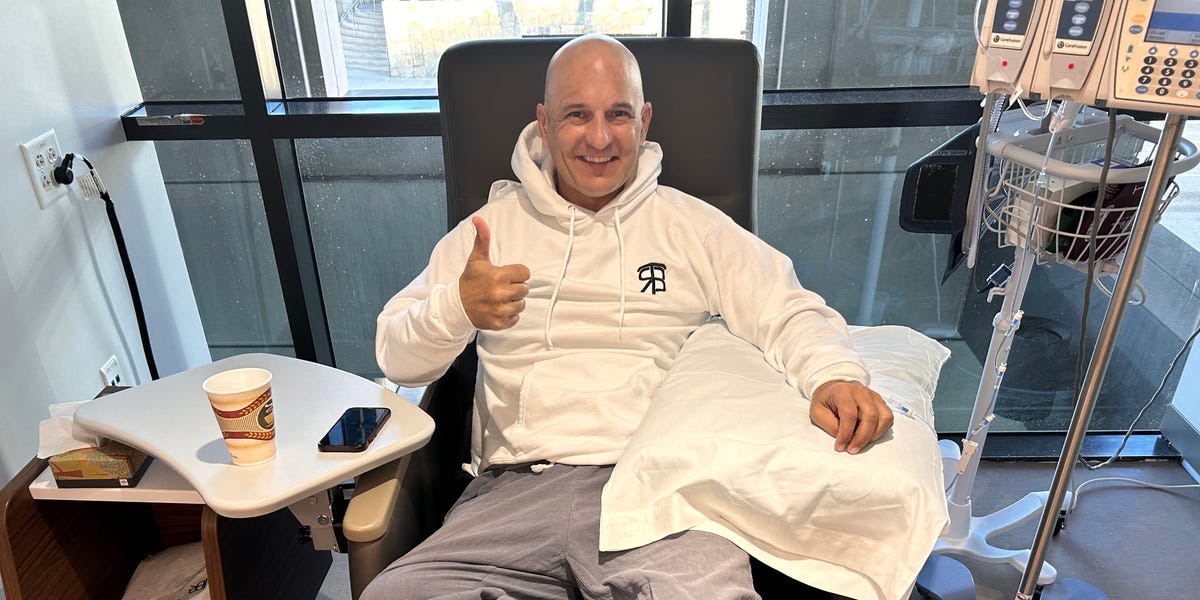
Dr. Ryan Beal built a cancer-focused biotech company on the strength of his science. Then cancer came for his family, and then for him.
Beal co-founded Dyve Biosciences in 2014. The company's technology delivers therapeutic agents through the skin in a noninvasive way, targeting the acidic environment where cancer tumors thrive. For years, he approached the work the way a scientist does: solving technical problems, with the impact on real people as a distant consideration.
That changed when his mother was diagnosed with cancer. She survived breast cancer, but eight years later she was diagnosed with pancreatic cancer that killed her within weeks. Months later, Beal was on a 120-mile race through the Colorado Rockies with his brother, when chest pain forced him to stop. He thought he was having a cardiac emergency. Doctors diagnosed thymoma, a rare cancer of the thymus gland. He was 49. According to Beal, his father was later diagnosed too, and died of cancer more recently.
For founders, the lesson here is less about tragedy and more about blind spots. Beal had sat in boardrooms discussing cancer infusions many times, yet he had never sat in an infusion center or an oncologist's waiting room. He says being a patient was eye-opening about the reality of the disease and about the work his company was doing.
Even his expertise had limits. He knew the chemotherapy drugs he was taking, which helped. But he said navigating insurance was a nightmare, even for someone who understood the system well. If a CEO with a biotech background struggled, patients without that background face an even steeper climb.
The business consequences were real too. Beal took a two-year sabbatical during treatment, and it took that long to feel like himself again. His team was kind enough to say they did not notice his brain fog. He did.
When he returned, his priorities had shifted. He now describes himself as driven by emotion and personal experience more than by science. He is blunt about the trade-off. Long trials and long timelines mean less hope for patients who have been told there are no options left to explore.
Beal is equally clear that the company still has to make money. It takes capital to drive innovation, and he wants investors to do well. But he says what drives him is patient outcomes. Founders should notice the order he puts them in. A company that loses sight of the people it serves will eventually lose the trust that funds it.
The free-market reading is straightforward. Beal's company succeeds only if it delivers treatments that work and reach patients, and the capital that funds it comes from investors who expect a return. The incentive to build something people need is the same incentive that keeps a company honest about its results.
Here is the playbook. Spend time where your customers actually are, not only in the conference room. Learn the friction points your product runs into, from insurance to onboarding. And if your own life hands you a new perspective, let it reshape your priorities rather than resist it. Beal's story is one of loss, but it is also a case study in how a founder can turn hard experience into a sharper mission.


