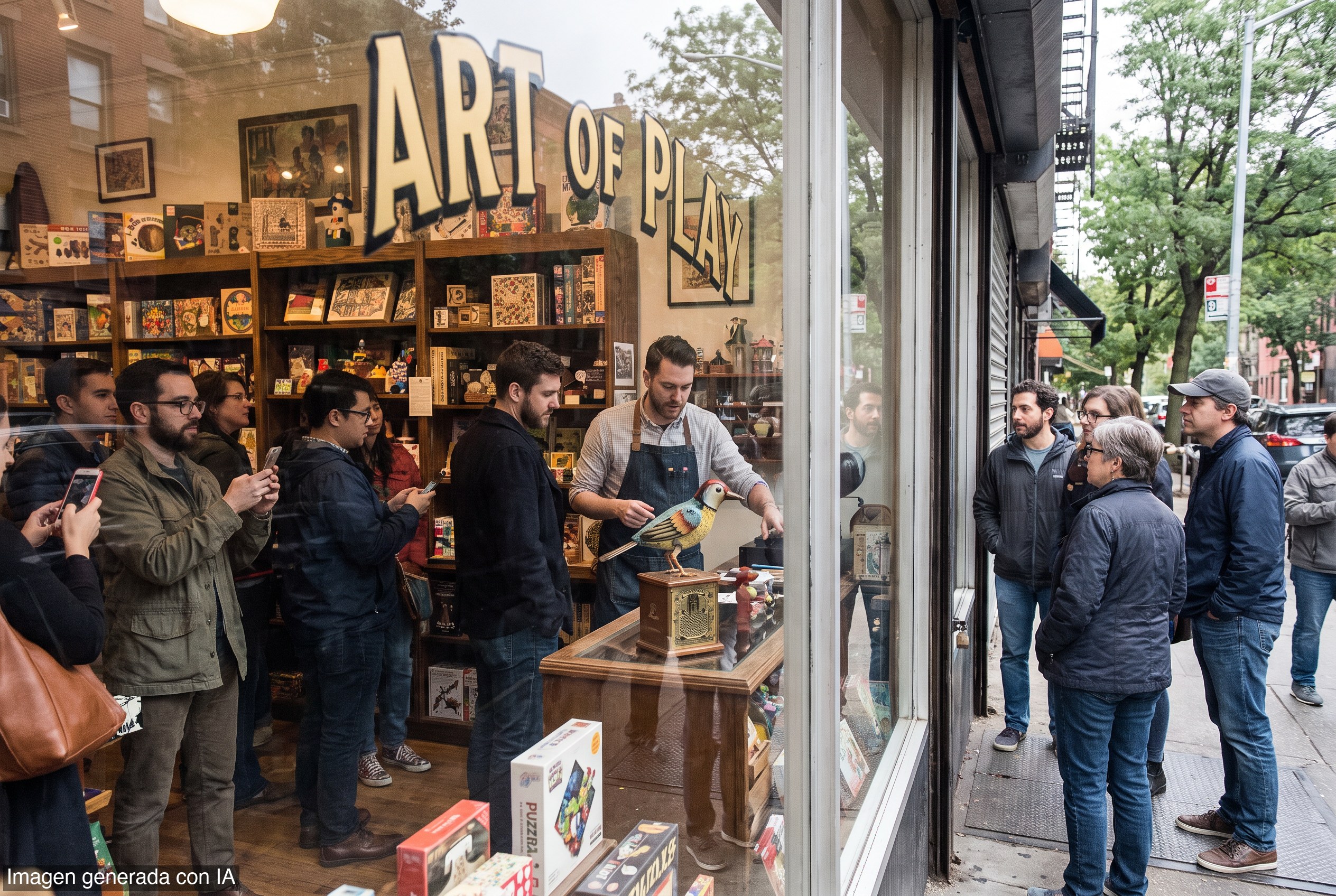
A Brooklyn novelty store is getting far more traffic than usual after a dispute with Kelly Clarkson over a mechanical bird called Molly.
Art of Play, in Cobble Hill, became the center of a social media storm after Clarkson said the shop would not let her buy the singing and dancing bird, which she said had a $15,000 price tag. She compared the experience to the shop scene in Pretty Woman, where Julia Roberts' character is treated poorly because staff assume she cannot afford the merchandise.
The store says the wooden bird is permanently attached to the wall and is not for sale. According to Art of Play, an employee told Clarkson during her five-minute visit on Saturday that she could buy an identical bird for $15,000, and also offered a different singing bird for $2,000 from a clock-making shop in Germany that she could have purchased that day.
Clarkson defended her criticism on social media, saying, 'I never blast people but you my friend were an exception.' Art of Play responded online that it was surprised when its 'small local business was suddenly attacked by eight million people who have never visited our store.' It also said the episode had been 'a surreal experience' after one mention by a celebrity.
When the BBC visited on Wednesday, the store was drawing more reporters than customers. A shopkeeper said the business would not comment anymore and wanted to get back to business as usual. Molly was still on the wall, now beside a $15 million price tag, with a sign calling it the 'world's most famous singing bird automata!'
The store’s owner told the BBC’s US partner CBS News that Clarkson had endangered the staff, saying he and his employees had faced threats and harassment after her complaint. The BBC also reported that a man filmed himself yelling expletives outside the store and accusing employees of 'racially profiling' Clarkson.
For founders and small business owners, the lesson is blunt: a single viral post can overwhelm a local operation in hours. That can mean free attention, but it can also mean disrupted work, reputational damage, and real security concerns for a team that just wanted to sell novelty goods.
The math is simple. A storefront built for customers can quickly become a stage when a celebrity turns a private interaction into a public fight. For a small shop, that kind of exposure can be a windfall or a headache, and sometimes both at once.


