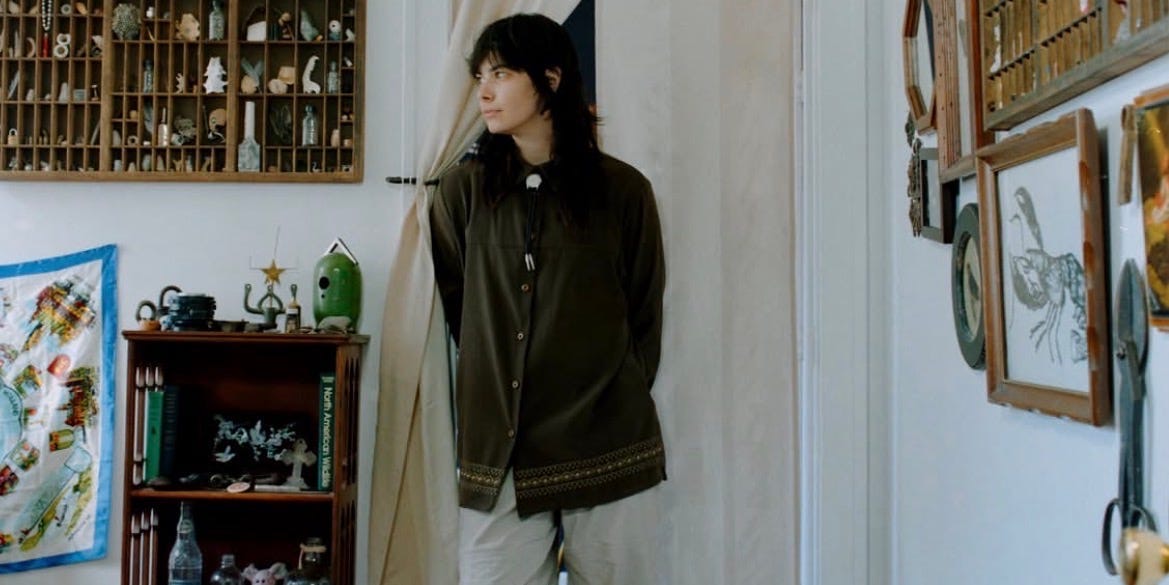
Reilly Dolan did not want a 9-to-5 job, so she built one she would actually want to show up to. The 23-year-old college graduate, based in Cincinnati, runs a business that digitally scans people's belongings and turns them into prints. She had no business experience when she started, and she says the work is so specific that she can already see a living in it.
The idea began as a hobby. About five years ago, Dolan was laying objects on a table and photographing them with her phone. The library at her university had high-quality scanners, and she realized they could produce a striking, almost aerial look. For her senior thesis, she made a 100-page 'I Spy' book about people and their collections. Her subjects loved the sessions, and that convinced her customers would pay.
The social media response pushed her further. In March, she decided to make it a business. After graduating in May, she leased a studio, a dedicated space to work and to let customers drop off and pick up their collections.
The math on equipment is straightforward. Dolan spent about $2,500 on two high-resolution Epson scanners, which she says scan at 12,000 DPI and capture 281 trillion colors. By comparison, she notes an iPhone captures about 300 DPI and roughly 16 million colors. Her scanners are 2010 models and, in her words, work like new.
Her pipeline runs on Instagram. Prospects find her there, fill in a contact form, and then get a call so she can understand exactly what they have and what they want. Her clients include artists, museums and ordinary people. She currently charges $75 an hour, though she plans to move toward package pricing because it is easier for customers to understand.
Her largest job so far was a $1,500 commission: scanning 500 fabric samples from the USSR in the 1940s for an exhibition at a textile museum. She has also finished a large piece for a client, a wall-sized display of a rock collection the client had kept in boxes since childhood. Other work includes memorial pieces for families and collections such as a late father's keys or a grandfather's war medals.
The scan itself takes about 30 seconds. The arrangement can take up to an hour, and Dolan treats it as the real craft. She lays out the items and matches shapes, textures and colors, likening the process to putting together a puzzle. She sometimes rearranges a composition even after the initial scan.
Logistics matter as much as design. Clients must pack their collections carefully, and Dolan packs them with the same care on the way back. She includes Apple AirTags in return parcels so a shipment cannot quietly disappear in transit.
Dolan says she expects to earn about $20,000 by the end of the year, and she is booked with commissions until January. She still works part-time at a bronze foundry and takes freelance design work, but she hopes this business becomes her day job soon. After a few corporate interview processes earlier this year, she concluded the jobs felt like wearing someone else's face. The business, she says, is the first thing that feels like her own.
For founders, the lesson is narrow and practical. A clear niche, a tight service menu, an audience that already trusts you, and equipment bought once rather than leased forever can get a business to paying customers quickly. Start with a small capital outlay, let the work sell itself, and then price for predictability.


