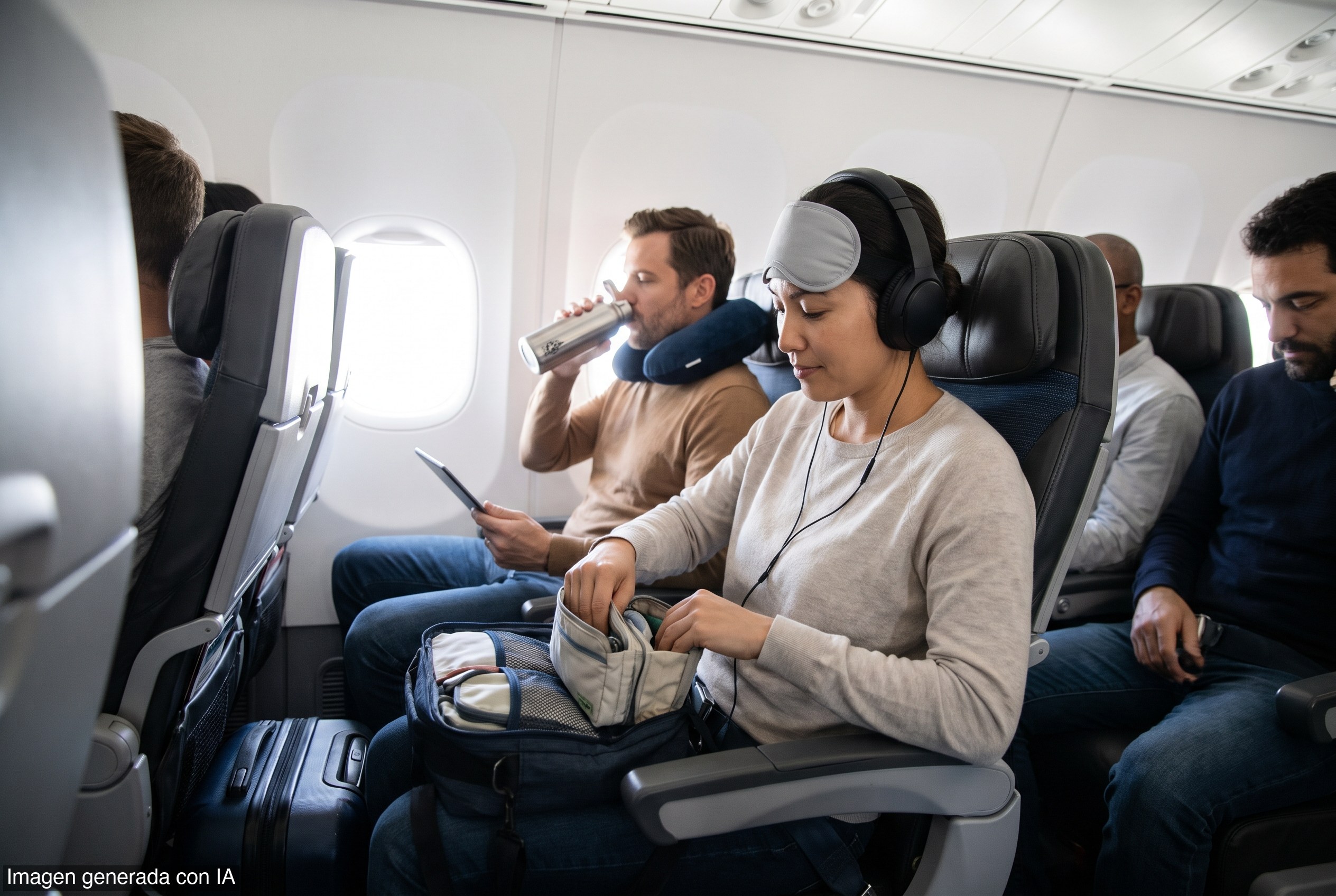
A former flight attendant who still flies economy says long-haul travel gets easier when you build a routine around comfort, timing, and small operational details.
Her approach starts before boarding. She arrives early to use credit card lounge benefits, changes into a soft, breathable tracksuit before takeoff, and switches back into her original clothes before landing to create a mental reset.
She also splits her bags into two systems: a main carry-on that stays overhead and a compact pouch under the seat with earplugs, snacks, cables, a change of clothes, and moisturizer. She keeps a small plastic trash bag in her seat pocket so wrappers and bottles do not take over the row.
For seat selection, she always books an aisle seat. She says that comes from years of safety drills and a habit of staying close to an emergency exit.
Her in-flight etiquette is just as deliberate. She tries to use the overhead call button only for urgent needs, waits until crew are not mid-service before getting up, and times bathroom breaks around quieter parts of the flight, such as right before meal service or halfway through trash collection.
She also sets her watch and phone to destination time as soon as she sits down. If it is 2 a.m. at her destination, she tries to rest right away, even if the cabin is still bright.
For sleep, she says she stopped using melatonin because it left her groggy after landing. Instead, she relies on a light-blocking eye mask, magnesium, a hoodie hood, and a standard airline pillow. She also uses the headrest, a slight recline, a rolled sweater for lower-back support, and her seatbelt fastened.
She warns against copying viral sleep hacks without checking airline rules. She points to foot hammocks as an example of gear banned by some carriers because they attach to tray tables and could hinder evacuations.
Food and water get similar treatment. She says aircraft water is regulated and often safe, but she prefers a sealed water bottle and adds electrolytes. She skips late-night hot meal service and brings her own high-protein snacks, like nuts, seeds, and berries.
Her final habit is patience on arrival. Instead of jumping up with everyone else, she waits, checks seat pockets, the floor, and the overhead bin, and only then leaves the aircraft.
The playbook is simple: long-haul economy is not won with one miracle hack. It is won by lowering friction everywhere you can. For travelers, that means less stress, less fatigue, and fewer avoidable mistakes that turn a trip into a grind.
For founders, there is a familiar lesson here. Small systems beat heroic improvisation. If you want better output, start with the routine, remove the waste, and protect the energy of the people doing the work.


