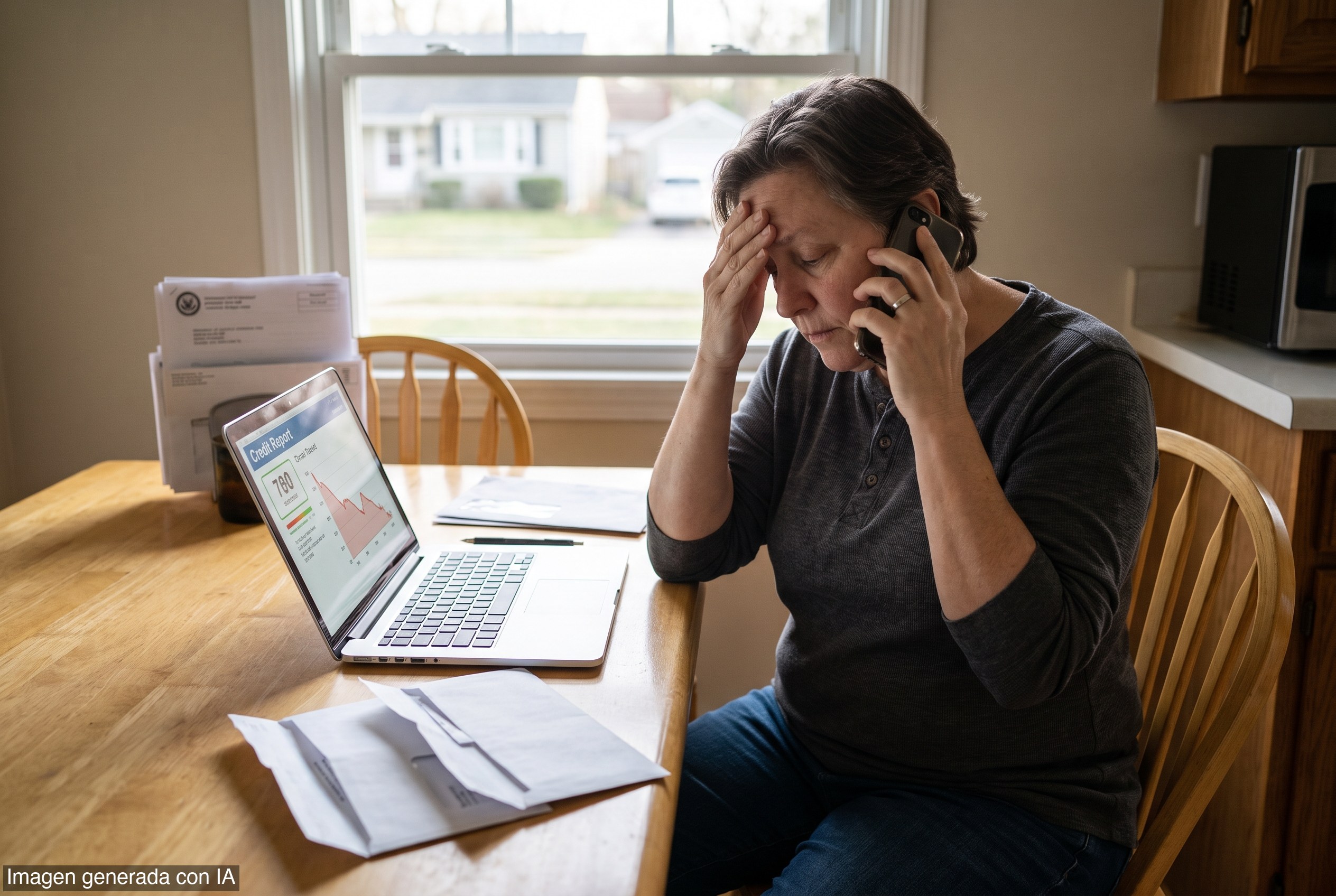
A new lawsuit says the Department of Education is still reporting forgiven student-loan balances to credit bureaus, leaving borrowers with damaged scores after their debt was already wiped out.
On Thursday, the Project on Predatory Student Lending filed suit against the department, saying it is violating the Fair Credit Reporting Act by reporting outstanding balances on 'cancelled and legally unenforceable debt.' The case covers borrowers whose loans were discharged through the borrower defense to repayment program after they were defrauded by 'predatory for-profit' schools, including Ashford University and ITT Technical Institute. It applies to relief granted between April 2022 and January 2025.
The filing says those borrowers' balances were reported as outstanding debt, which affected their credit scores. PPSL estimated, based on publicly available data, that the department is wrongfully reporting 300,000 student-loan borrowers for $4.6 billion of canceled debt.
The lawsuit also says affected borrowers 'have spent time and resources on attempts to clarify and remedy the situation' and fear the government could pursue collection through wage garnishment or tax refund and Social Security offsets for debt that 'came into being in the first place because of an educational scam and now refuses to die.' The Education Department did not immediately respond to a request for comment.
One plaintiff, Mandy Woods, said she borrowed $65,000 to attend Ashford University, which the Education Department determined had defrauded its students. Woods said that despite qualifying for relief, her credit report still shows she owes over $71,000. 'When I was told my loans would be discharged, I was so relieved,' she said. 'Instead, I've been jumping through hoops, getting different answers depending on who I talk to, and watching a debt I was told I no longer owe keep growing on my credit report.'
The bigger issue is simple: when the state says a debt is canceled, the credit system should reflect that reality. If it does not, borrowers pay twice — first through the scam that triggered the loan, and then again through a damaged credit profile that can hit future borrowing, housing, and employment prospects. That is not a paperwork glitch; it is a cost imposed on people who already won relief they were owed.


